







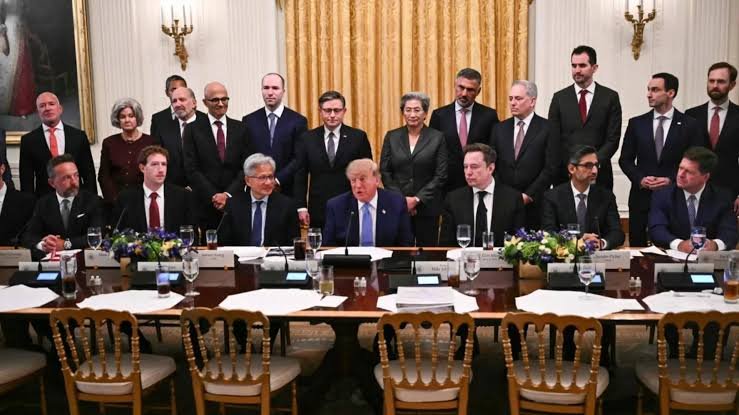
Washington, United States – During a closed-door meeting at the White House, officials from U.S. President Donald Trump’s artificial intelligence task force recommended that government agencies relax their policies regarding legal liability for cybersecurity incidents. This strategic approach is intended to encourage major AI companies to promptly report serious security incidents, ensuring they do not fear immediate regulatory penalties.
A shift toward incentives rather than penalties
According to a U.S. administration official cited by Bloomberg, the existing criteria used by agencies to take regulatory action in response to cyber incidents may have become outdated. Furthermore, these criteria could discourage companies from sharing vital and important information. Officials have called on government agencies to establish specific limitations on legal liability regarding such incidents for the next 12 months—with the possibility of an extension. This move toward offering incentives to artificial intelligence companies marks a clear shift from the administration’s previous public statements, in which it had expressed a willingness to penalize firms that develop unsafe products or fail to report vulnerabilities.
Ramifications of the Nvidia Executive’s Resignation and the Background to the Task Force’s Formation
This high-profile meeting—the details of which were previously reported by the website *Semafor*—took place amidst broad political and technical repercussions following the resignation of Nvidia CEO Jensen Huang, which stemmed from his involvement in romantic relationships, including one with a woman suspected of spying for China. This matter, coupled with Huang’s close ties to President Trump and senior administration officials, has drawn intense scrutiny—particularly concerning Secretary of Commerce Howard Lutnick, who was present at the White House meeting.
It is worth noting that President Trump established a task force—known as the “Superintelligence Force” (SIF)—at the end of last September. This move followed growing public concern regarding the catastrophic risks posed by artificial intelligence and coincided with the signing of a non-binding agreement with leaders of major companies in the sector, including Nvidia, Anthropic, OpenAI, Alphabet, and Meta. The agreement supported the use of independent auditors and the implementation of preventive measures, covering areas such as cybersecurity and biosafety.
Common standards and upcoming security tests
In a related context, Jay Clayton—head of the task force and Director of National Intelligence—noted during the meeting that additional private companies might join the agreement in the future. He also emphasized ongoing communication with the signatory companies to establish common industry standards. Furthermore, officials—including Deputy Secretary of Defense and task force vice-chair Emil Michael, Federal Trade Commission Chair Andrew Ferguson, Office of Science and Technology Policy Director Michael Kratsios, and National Cyber Director Sean Kirkcross—discussed mechanisms for developing incident-reporting protocols and testing AI models before they are released to the market. These efforts stem from an executive order issued last June and are based on voluntary participation.