








The consumer technology story around generative AI is moving from “what can it make?” to “what can I do with it?” That distinction matters in games. People do not experience a game as a collection of generated assets; they experience a loop of movement, choice, feedback and discovery. A new class of tools is trying to connect those parts. Instead of using one service for an image, another for code and a separate game engine for testing, an AI game maker can start with a sentence or image and produce a playable first build. The creator can then continue the project through chat, asking for changes to levels, characters, rules or pacing. The useful output is a prototype that someone can actually try. It should make the central interaction clear enough to test, while leaving room for revision. A polished screenshot may communicate a setting, but a working draft reveals whether the setting supports a meaningful choice or challenge. That distinction helps consumers judge a tool by its results rather than its promotional examples.
Why this is different from a chatbot that writes code
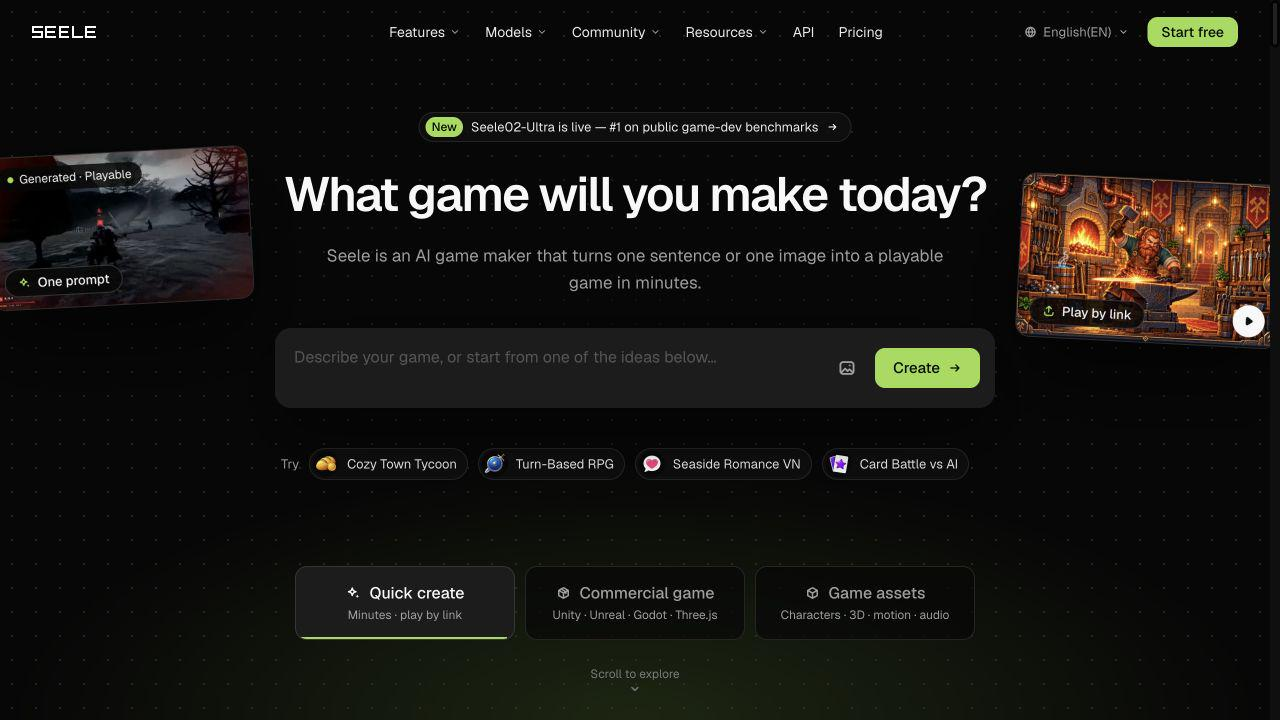
A coding assistant can produce a function, but a game is a system. The camera, input, level layout, character behavior, audio cues and UI all affect one another. When a creator asks for a change, the useful answer is not only a code snippet; it is an updated experience that can be tested. An integrated workflow can combine code, visual assets, sound and levels in a single project. Some tools also accept an image or sketch as a starting point. For a consumer, that may reduce the setup that normally comes before testing: configuring an engine, finding starter assets, wiring a scene and preparing a build. The important question is how much of the resulting project can be inspected and changed. The interface is also designed for iteration. A creator can play a generated game, notice that enemies are too slow or a room is hard to read, and describe the change in ordinary language. That makes the tool approachable for people who have ideas but do not identify as programmers.
A practical test for AI creativity
The fastest way to evaluate a generative game tool is to give it a small, specific brief. Try a one-room puzzle, a short platforming challenge or a compact turn-based encounter. Ask whether the first build communicates the objective, whether the controls make sense and whether the experience is easy to share. Browser play is a major advantage here. A link can be sent to a friend or posted in a group chat without asking everyone to install a development environment. The creator gets feedback on the idea itself rather than feedback on whether other people managed to open the project. People who want to develop a prototype further should check the handoff before choosing a tool. Can they retrieve project files? Which engine versions and asset formats are supported? Does a working browser demo remain editable after export? These details determine how much of an experiment can be carried into a longer project.
An AI game maker is most useful at the beginning of a project, during rapid exploration and when a team needs a shareable proof of concept. It can help a solo developer test several mechanics, a designer communicate an interaction to an engineering team or a marketer build a small playable activation. It is less useful when the brief is vague and the creator expects a finished game without review. The quality of the result still depends on the clarity of the prompt, the size of the first slice and the quality of the feedback. The best process treats generation as the opening move, followed by playtesting and editing. That is a familiar lesson from other consumer creative tools. Smartphone cameras did not remove the need for composition; video editors did not remove the need for pacing. They changed who could begin. AI game makers are doing something similar for interactive prototypes.
The next step for consumer AI
The most compelling consumer AI products will help people complete a meaningful task from start to finish. In games, that means moving from an idea to something another person can play, then making the next version based on what happened. One example of this category is SEELE AI, whose official site describes text- and image-driven generation, browser play and conversational editing. Those are vendor-described capabilities, rather than results from an independent review. Readers comparing tools can apply the same small brief and evaluation criteria to each service, then judge the playable result and the editing process themselves.