








Our luck turns during a smoke break. It is hot and dry for Papua New Guinea, and we are resting on the shoulder of a gravel road, bags and cardboard biscuit boxes scattered on limestone bedrock. The boxes, in rough shape from travel, are printed with a cartoon of a man named Henry Wopa, whose bulging muscles advertise that his eponymous product is enriched with vitamins and protein. This has made the brand a staple in parts of Melanesia where deforestation has hurt food security, including here on New Britain, an island four times the size of Puerto Rico that accounts for a majority of PNG’s raw log exports. Still, the biscuits are bland and difficult to swallow without coffee, which is running out. I am hungry, but not hungry enough for more Wopa. Instead, as my colleagues squat in broken shade rolling cigarettes, I scan the canopy, ragged from decades of selective logging.
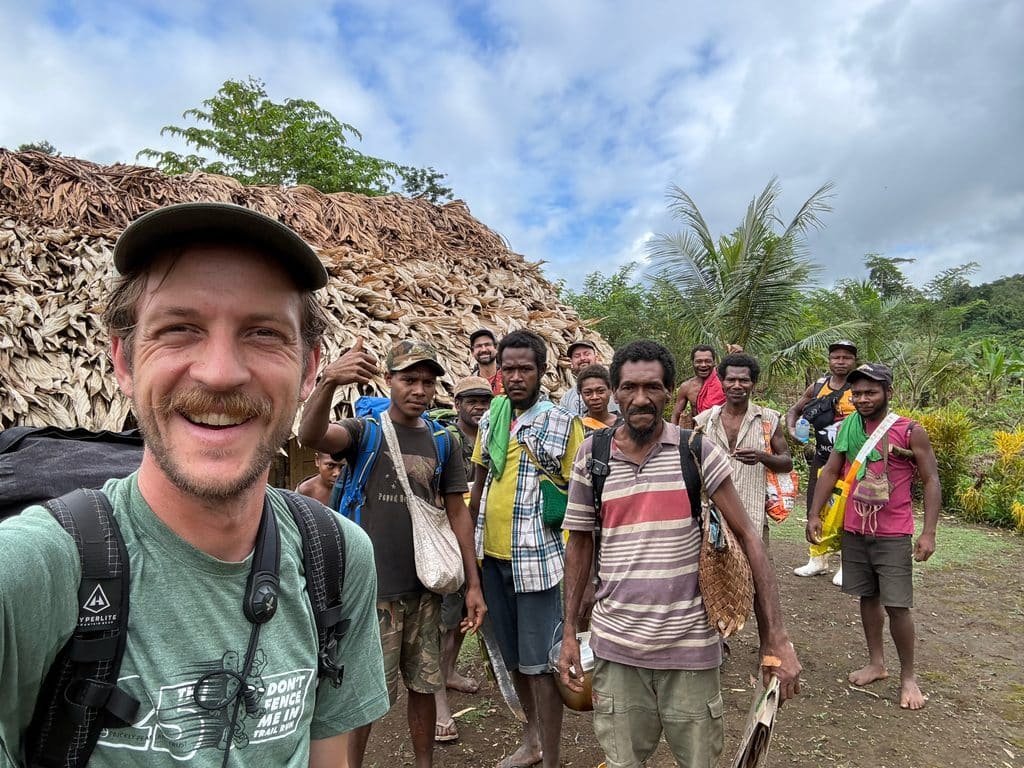
There are 10 of us in total: six Sengseng-speaking Arawe and four outsiders, including me—an evolutionary biologist from Montana—gathered to search for a poorly known bird called the New Britain bronzewing (Henicophaps foersteri). This large, glimmering pigeon, endemic to its namesake island, was last confirmed alive through a specimen collected by ornithologist-turned-author Jared Diamond in 1972. The bronzewing has been seen occasionally in the years since but was never again collected and has never been photographed. This is cause for some concern. As Joe Wood, an expedition member who manages international conservation programs for the Toledo Zoo & Aquarium in Ohio, put it: “It would be nice to check in on it.”
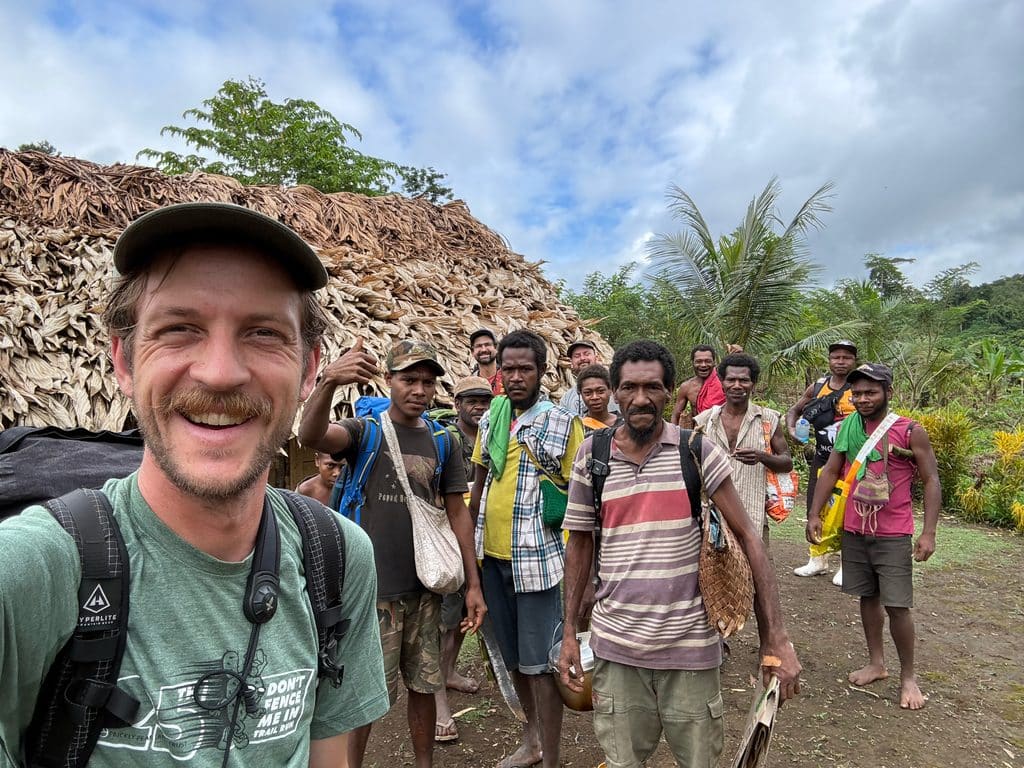
But how, exactly, do you check in on a handful of shy birds in tens of thousands of square kilometers of forest? By asking around, to start. Jason Gregg, a graduate student in my lab at Montana State University and the expedition’s leader, has spent years thinking about how to incorporate local ecological knowledge into biodiversity surveys, along with spending many hours interviewing our Arawe crew members. About half say they’re familiar with the species—known locally as kau—but communicating across gulfs of language and culture about a bird of which there are no photographs is challenging. The night before, Thomas Sunamli, who is letting us stay on his land, explained that the bronzewing is common in disturbed habitat and feeds on the red, pine-cone-like flowers of a plant called shampoo ginger (Zingiber zerumbet). This contradicted our own limited understanding of the bird’s diet and need for old growth.
“It’s hard to imagine what they could be getting out of [those flowers],” Wood had said, frowning as he prodded a clump of shampoo ginger at the edge of camp. Since nectar is rarely an important part of a pigeon’s diet, I was inclined to agree.
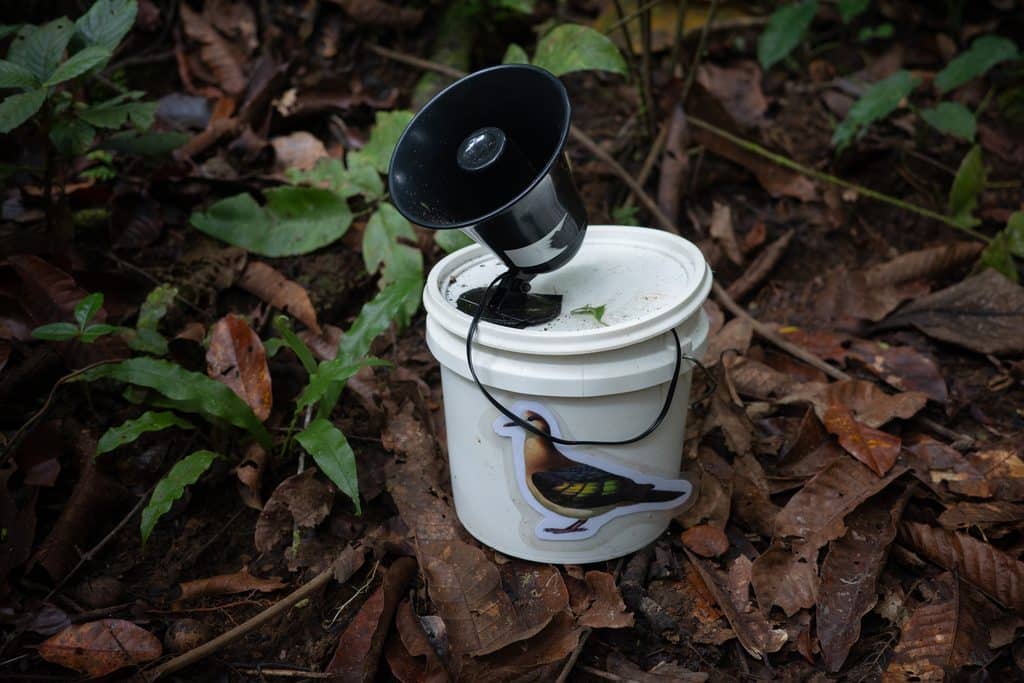
Western methods for locating the bird have so far proven ineffective. A week of constant observation, camera trapping, and attempts to attract the bird by playing the call of its closest relative through a makeshift speaker we’ve dubbed the Bronzewing Blaster 5000 have amounted to nothing. Nor is history in our favor. In the late 1950s, zoologists Thomas and Margaret Gilliard spent three months within a few dozen kilometers of our camp, collecting some 500 specimens representing 98 species for the American Museum of Natural History. Among their findings were two species new to science. Absent was a single bronzewing. To our knowledge, no ornithologists have visited here since.
The Gilliard expedition was one of the final episodes of a heyday of scientific exploration in Melanesia that had a profound influence on the fields of ecology and evolution, arguably birthing theories such as island biogeography. This era ended in 1975, when Papua New Guinea gained independence and ended colonial license to travel freely in a region that now has near-complete Indigenous land tenure. In the interim, logging corporations felled the last grand forests of Borneo and Sumatra and began working their way through New Britain. Today, cost, logistics, lack of infrastructure, and sporadic violent crime discourage many foreign biologists from studying how the logging is affecting the island’s biodiversity.
All of this amounts to a quest that can feel alternately urgent and trivial. Here, a species with millions of generations of independent evolutionary history—a grand arc of life and death, of bird and place—may be nearing an end in obscurity. Here, too, is just one more threatened species among millions, one with no special importance to any ecosystem, culture, or scientific problem. On the road cut, the sun is directly overhead, and I give up on looking for birds. Instead, I reflect on what feels, at this exact moment, like flimsy reasons for arduous work: my own curiosity and some ineffable sense of obligation.
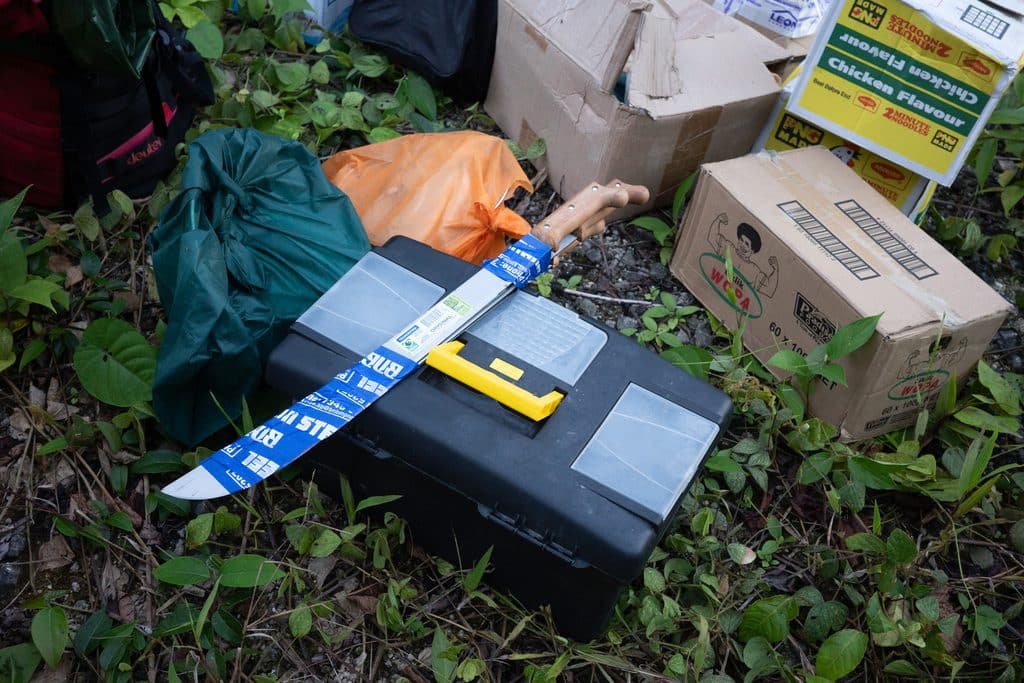
Meanwhile, the rest of the team has embraced the break. Sylvester Maikli, who is in his late teens or early twenties and wears a dead ringer for Mr. Wopa’s trademark yellow shirt, dries tobacco over a twig fire behind me. To his right, Wood squats with his own leaf, waiting his turn. Once a heavy smoker, Wood—who grew up in Wales and works remotely from Australia—now indulges only on work trips, or so he explained while buying mentholated Pall Malls from a hotel bar nine days ago. These have since run out, so he has been bartering for brus, a ubiquitous bush tobacco typically smoked with rolling papers cut from old newspapers, zealously horded. In some cosmic joke, the broadsheet he has slowly been working through is his adopted hometown’s Blue Mountains Gazette.
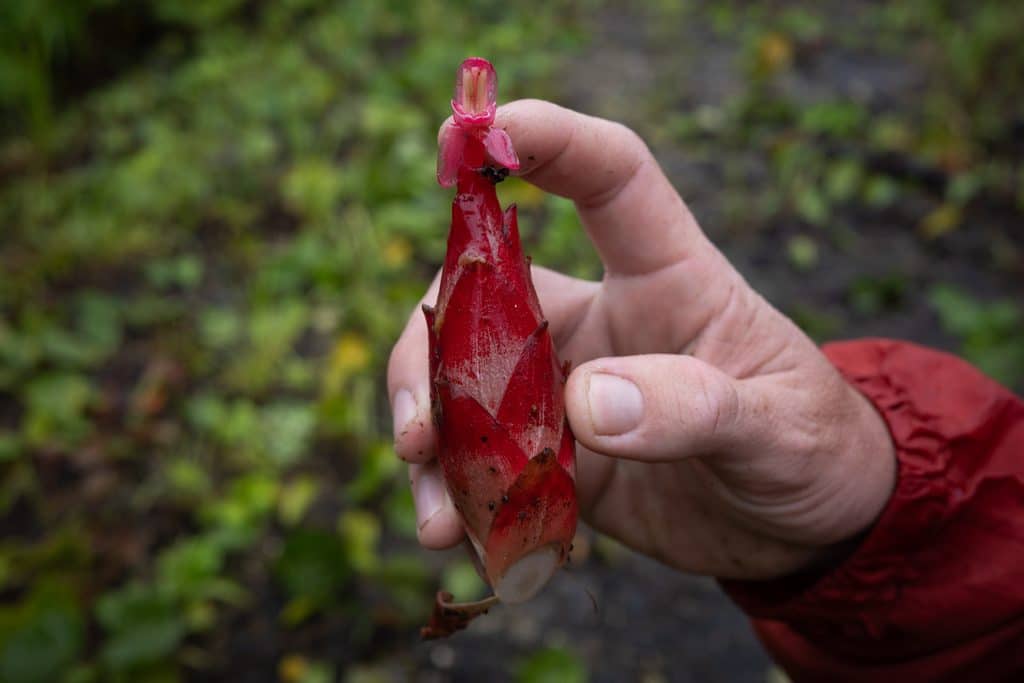
His own tobacco now dry, Maikli pockets it, stands up, and wanders down the road to the forest. A few minutes later, he returns with a handful of uprooted plants and says something to me in passing. Because he has been splitting his time between our camp and his home, where he has been caring for his pregnant wife, we have spoken little, and I struggle to understand his quiet Tok Pisin. “That bird you are looking for is in there,” he says again, pointing over his shoulder.
I am skeptical. Judging by their expressions, so are my Western colleagues. But Maikli has turned and continues to gesture, so I nudge Gregg forward to take a look, watching as he bears left off the road and onto a path flattened through shoulder-high pitpitgrass. Wood and I follow, our eyes adjusting to the forest’s soft green light.
The understory is open, and across a mud pan covered in the scratch marks of foraging chicken-like birds called megapodes I see Maikli pointing into the midstory. Gregg is next to him, genuflecting, binoculars raised. From the grin spreading across his face, I know he is seeing the bronzewing, and though I hold back, I can imagine it: sparking green iridescence, tan feathers fading to khaki, three seconds of grace. Over the course of the next week, we will manage to record and photograph this bird before the rainy season strikes and a four-day trip back home begins. For the moment, though, the forest is still, a rapturous insect whine rising to fill the silence.
Gregg lowers his binoculars; the bronzewing must have flushed. But Wood is still smiling, pointing. I follow his finger, recognizing the tall stalks and lanceolate leaves of the plant Maikli brought back. Sure enough, we are surrounded by shampoo ginger.
An urge to laugh strikes me. I am already wondering what, if anything, we have accomplished. Produced a single data point? Found a bird that local people always knew was here? The editors of the Bulletin of the British Ornithologists’ Club will be interested to learn there are kau in Thomas Sunamli’s backyard, we hope. We have flown around the world to carry this news back to a computer. But maybe this is how science often works—stumbling forward not through epiphany but by connecting people who simply know different things.
Photograph by Jason Gregg