









Research on smartphones and children points in one direction: the World Health Organization advises no screen time for babies, and OECD data link heavy screen time to lower school results, though most studies show correlation rather than cause.
The question matters to parents and schools everywhere as phones reach younger children. More than half of the world’s education systems now restrict phones in school, according to UNESCO, up from fewer than one in four three years ago.
What does the WHO say about screen time for young children?
The WHO’s guidelines for children under five, issued in 2019, say screen time is not recommended for babies under one, and that one-year-olds should not spend time sitting in front of screens. For children aged two to four, sedentary screen time should be no more than one hour a day, and “less is better”.
The WHO’s concern is as much about what screens replace as the screens themselves: physical play, sleep and time with carers. It recommends that quiet time be spent on reading, storytelling, singing and puzzles with an adult, which it calls very important for child development.
How does screen time affect children’s learning?
The OECD’s PISA 2022 assessment of 15-year-olds offers the largest data set. On average across OECD countries, 65% of students said they were distracted by using digital devices in at least some maths lessons, and 59% said other students’ devices distracted them. Students distracted by classmates’ devices scored 15 points lower in maths than those who rarely were, after accounting for social and economic background.
How much screen time children have matters. Students who used devices for leisure for up to an hour a day scored 49 points higher in maths than those who spent five to seven hours, the OECD found. And 45% of students said they felt nervous or anxious when their phone was not near them.
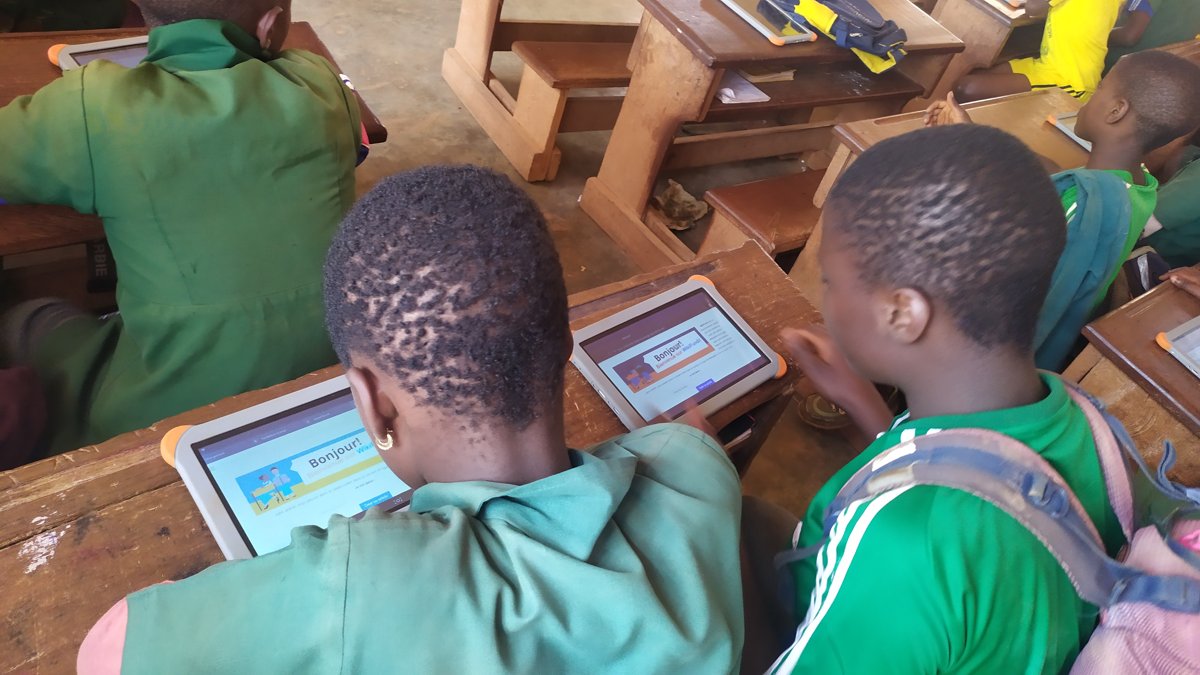
The picture is not simply against technology. Students who used devices for learning at school for up to an hour a day scored 14 points higher than those who did not use them at all, the OECD said. The research on smartphones and children therefore points to moderate, purposeful use rather than none.
Are schools banning smartphones?
Increasingly, yes. UNESCO’s Global Education Monitoring Report on technology in education, published in 2023, found that the mere presence of a phone nearby distracted students and harmed learning in studies across 14 countries. It argued that technology should be used in class only when it clearly supports learning.
When the report was published, fewer than one in four countries had a national ban on phones in schools. That share rose to 40% by early 2025, and the report’s team said in March 2026 that 114 education systems, about 58% of countries, now had one. Others require schools to write their own rules instead of imposing a national ban.
What are the limits of the research on smartphones and children?
Most of the findings show links, not cause and effect. The OECD’s figures adjust for family background but cannot prove that phones lower scores; children who struggle at school may also turn to screens more. The WHO’s guidance is based on expert review of evidence on sleep, activity and development, rather than on phones alone.
The research also says little about what children do on screens. A video call with a grandparent, a maths app and hours of short videos all count as screen time. Parents who give children phones can at least make the accounts safer: DNE Africa’s guide explains how to turn on two-step verification, and the FBI’s latest warning on AI hacking tools shows why account security matters.
FAQ
How much screen time does the WHO recommend for young children?
None for babies under one, no sedentary screen time for one-year-olds, and no more than one hour a day for children aged two to four, with less being better.
Do smartphones and children’s school results go together?
OECD data show students distracted by devices, or using them for many hours a day, score lower in maths, but the figures show a link rather than proof of cause.
How many countries limit screen time by banning phones in schools?
About 58% of countries, or 114 education systems, had a national ban by March 2026, according to UNESCO’s education monitoring team.
Is any screen use good for learning?
The OECD found students who used devices for learning for up to an hour a day at school scored higher than those who used none.