









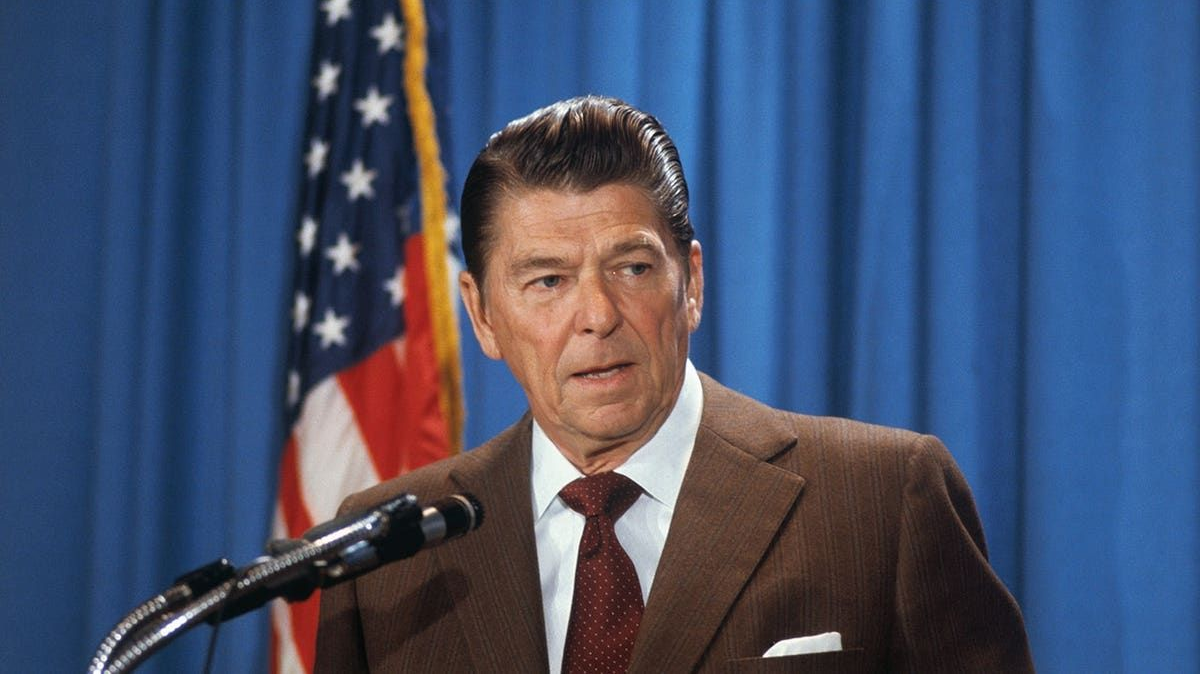
America’s efforts to modernize its military capabilities are facing renewed political and financial challenges, reviving questions about the defense strategy that helped Ronald Reagan confront the Soviet Union during the Cold War. A November 19, 2026, commentary by Hugh Hewitt examines these challenges through a new book by Roger Zakheim about Reagan’s military expansion. Zakheim, director of the Ronald Reagan Institute, documents how Reagan developed and implemented a major defense buildup during his presidency.
His book, “Peace Through Strength: How Reagan’s Military Buildup Won the Cold War,” explores the political strategy, advisers, and congressional negotiations behind the initiative. The military expansion began taking shape years before Reagan entered the White House in 1981. According to Hewitt, Reagan’s commitment to rebuilding American military capabilities developed following Jimmy Carter’s election victory over Gerald Ford in 1976.
The book examines influential figures involved in developing the strategy, including Richard Allen, William Van Cleave, Fred Iklé, and John Lehman. Their work helped establish the policy framework behind Reagan’s approach to national security.
Reagan relied on senior administration officials and bipartisan congressional support to advance the defense program. Defense Secretary Caspar Weinberger, Deputy Secretary Frank Carlucci, and lawmakers John Tower of Texas and Sam Nunn of Georgia played important roles. Weinberger, whose nickname was “Cap,” worked alongside Carlucci to support the administration’s military expansion. Congressional negotiations also produced setbacks, including disputes over the MX missile program.
Other initiatives advanced despite political resistance. The deployment of Pershing II missiles in Europe and the development of the Strategic Defense Initiative became significant elements of the administration’s defense policy. Hewitt also credits President George H.W.
Bush with maintaining the military capabilities developed during Reagan’s presidency. The resulting arsenal represented a substantial investment in American national security.
However, military equipment requires continuous maintenance and replacement. Hewitt points to nuclear-powered aircraft carriers as an example, explaining that congressional requirements to maintain 11 carriers cannot extend the operational life of their nuclear reactors beyond their designed limits. Federal finances also present a different challenge today.
According to the commentary, America’s national debt stood below $1 trillion in 1981 but has since exceeded $40 trillion. President Trump has secured initial funding for renewing America’s national security infrastructure, but the future of the broader modernization effort remains uncertain. Hewitt identifies the expected arrival of new Democratic congressional majorities in January as a potential obstacle to continued defense spending.
The commentary highlights growing concerns about Russia and China, describing both countries as major challenges to American national security. It also identifies disagreements over federal spending priorities as a significant factor in the congressional debate.
Zakheim’s book, “Peace Through Strength,” arrives as lawmakers consider additional Pentagon funding. Hewitt argues that preserving the initial investment in military modernization should remain a priority for the Republican-controlled Congress during its final 50 days. The article also connects the historical defense debate with the 2028 presidential election. Reagan’s 1980 campaign placed military readiness and the condition of America’s all-volunteer force among its central issues, providing a historical example for candidates preparing to seek the presidency after Trump.