







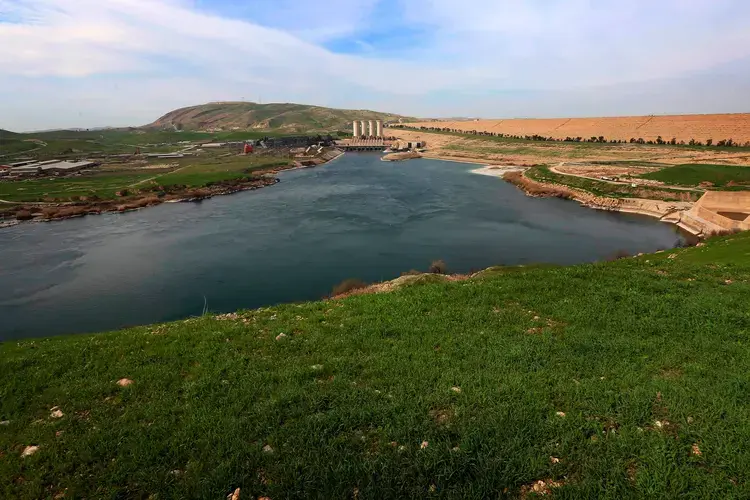
ERBIL, Kurdistan Region – Water treatment stations and distribution projects across Nineveh province were temporarily shut down after repairs to a major pipeline caused an oil slick to spread in the Tigris River – the country’s largest drinking water source.
“We immediately decided to shut down all water stations” after being notified of the oil slick in the Tigris, Nineveh Water Director Muayyad Elias told Rudaw’s Malik Mohammed on Sunday, explaining that the measure was intended to prevent oil from entering neighborhood water distribution networks and protect residents’ health.
The leak occurred near the village of Ashiq, northwest of Mosul, where a significant amount of oil leaked from a pipeline undergoing maintenance and accumulated in several valleys and pools before reaching the Tigris River.
The Tigris River is the longest river, stretching 1,300 kilometers in Iraq alone and passing through Baghdad. The incident raised concerns over its contamination, a primary source of drinking water for residents across Nineveh, leading the provincial water directorate to suspend operations at all water stations as a precaution.
Elias said the water directorate had been informed by the province’s oil sector that cleanup teams were in the final stages of removing the oil residue from the river, adding that authorities expected the situation to return to normal within the next few hours, allowing water distribution to resume.
Meanwhile, Omar Shalawi, assistant director of Nineveh’s environmental directorate, said a technical field team had been dispatched to assess the extent of the environmental damage. North Oil Company was ordered to immediately collect the oil slick and remove any traces of the spill.
The order aims to protect soil and water resources, particularly the Tigris River, from any potential long-term environmental risks, he said.
The spill comes amid growing concerns over pollution.
In October, Prime Minister Ali al-Zaidi chaired a meeting of the National Higher Water Committee that approved measures requiring government institutions responsible for pollution sources to reduce discharges into the Tigris and Euphrates and requiring governorates to establish and operate wastewater treatment plants, according to the Environment Ministry.
Iraq’s Environment Minister Sarwa Abdulwahid has also warned about untreated medical waste entering the Tigris. In October, she identified municipal authorities, sewage departments and several government ministries among the contributors to river pollution.