







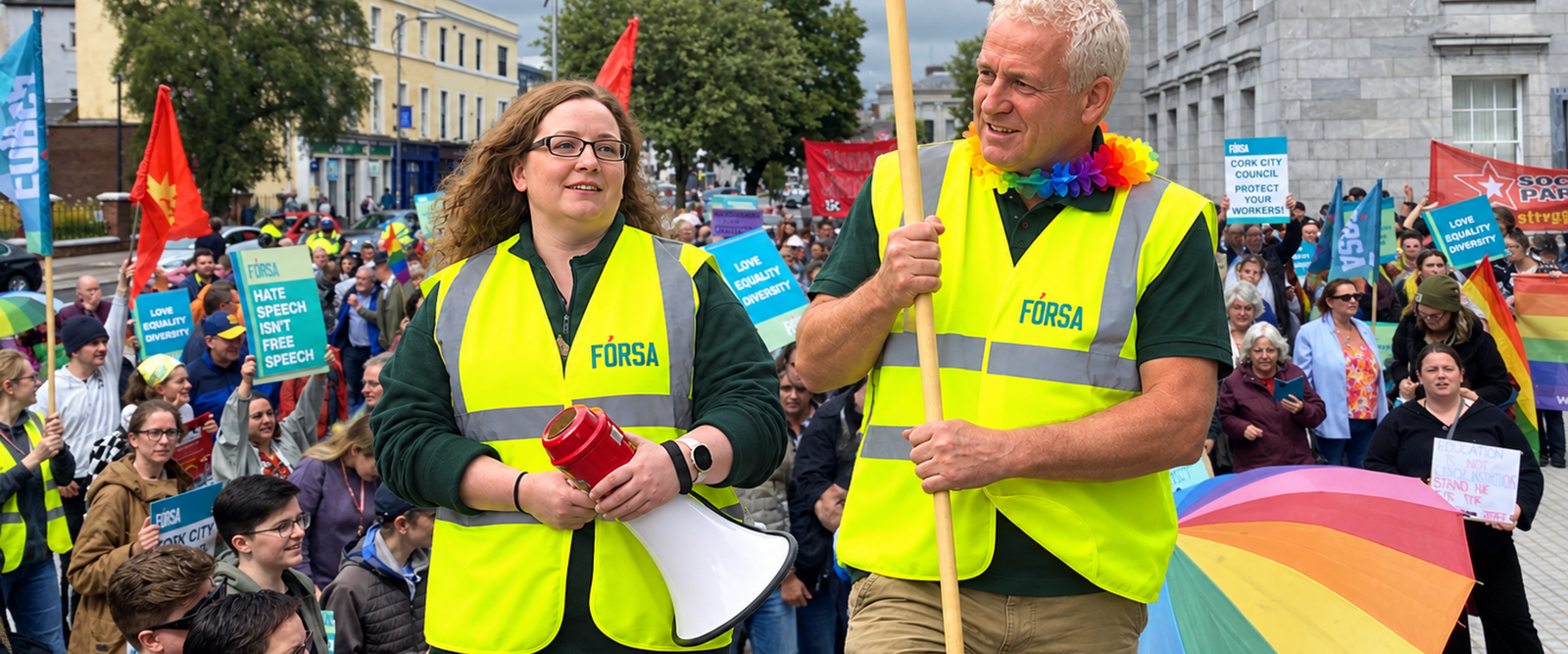
Their struggles underscore the vital role of strong trade unions in halting the far-right’s advance and safeguarding peace and democracy in our communities.
Back to the Past: The Return of the Far-Right on the World Stage
Trade unions are, by their very nature and mission, guardians of democracy and social justice. By harnessing the power of collective action to defend human and labour rights, they serve as strongholds of the public interest. Through the exercise of freedom of association and collective bargaining, they drive one of the most powerful mechanisms for income redistribution and the reduction of inequalities. It is precisely for this reason that trade unions and their fundamental rights are among the first targets of authoritarian, far-right, ultra-conservative and populist governments.
Deepening inequalities, the rule of the fittest, identitarian politics, systemic discrimination, religiously motivated ultra-conservatism, climate change denial and masculinism are among the key factors driving the current resurgence of populism, far-right ideologies, and authoritarian parties and governments. These forces undermine democracy, human rights, social justice and the protection of the planet. Amid profound geopolitical, socio-economic and technological transformations, the world faces a crisis marked by growing anxiety and levels of violence.
The multilateral order grounded in universal human rights is under unprecedented pressure, while an emerging multipolar world increasingly favours confrontation and competition over the cooperation and solidarity essential to humanity’s survival. Widening inequalities, corporate capture of democratic institutions, the unregulated and biased use of social media and AI, declining access to quality public services, and the growing normalisation of discrimination based on ethnicity, gender, appearance or language are further eroding democracy, social cohesion and the foundations of peace.
Across the world, many countries and societies are witnessing the rise of new forms of far-right movements and party politics, often amplified by social media and unregulated AI. In established democracies, this resurgence has come as a shock, particularly in countries with histories of authoritarian rule, far-right governments and violent repression. In several countries, populist, ultra-conservative and far-right parties or political movements have already held or currently hold power, including in the United States, Italy, Chile, Brazil, Peru, the Philippines and Tunisia, among others. Elsewhere, far-right parties are gaining electoral support and seeking to enter government through democratic elections. Examples include France’s National Rally (RN), Germany’s Alternative for Germany (AfD), Spain’s Vox, Finland’s Finns Party and Reform UK.
At the same time, recent examples offer hope in the power of collective mobilisation to defend democracy and advance social justice. The South Korean people’s determined resistance to President Yoon Suk Yeol’s failed martial law attempt in 2024, the Social Democrats’ electoral victory of a parliamentary majority in September 2026 in Sweden, Lula’s comeback in the second presidential round of Brazil in October 2026, and – during the same period – the Serbian student movement’s challenge to a conservative nationalist government dominated by the same ruling party for nearly 15 years all demonstrate the potential of collective action to challenge entrenched political power.
Youth-led uprisings in Morocco and Nepal as well as India’s Cockroach protesters have expressed frustration over issues including public services, employment, corruption and political accountability. These movements also offer hope for a more progressive, equitable and people- and planet-centred vision of the future. In Spain, the housing crisis has fuelled demands for legislation to curb the financialisation of housing. Proposals put forward by Prime Minister Pedro Sánchez’s socialist-led government have faced opposition from the conservative and far-right alliance of the People’s Party (PP) and Vox. These mobilisations reflect a broader reaction to the cumulative impact of multiple crises, including declining access to quality public services, widening inequalities, the climate emergency, and the lack of educational opportunities and decent work prospects for future generations.
As countries approach pivotal elections, this disconnect between popular demands and institutional responsiveness risks further weakening democratic trust. The challenge is not simply to mobilise citizens, but to ensure that democratic institutions can translate collective demands into meaningful, accountable and lasting change. Within this context, defending trade union freedoms and strengthening collective action become essential to resisting authoritarianism and safeguarding democracy, equality and social justice.
Public service unions are fighting back
Within this landscape, trade unions remain defenders of democracy at the forefront of the struggle to protect it. Launched in 2024, the International Trade Union Confederation’s (ITUC) For Democracy campaign brings together, amplifies and strengthens the many initiatives undertaken by trade unions worldwide to defend democracy, at both confederal and sectoral levels.
Public service workers play a particularly important role in defending democracy, as they are responsible for implementing public policies and ensuring the delivery of public services. Yet speaking out against threats to democracy can come at a high collective and personal cost, both for workers and their unions. Moreover, statutory or contractual obligations of institutional neutrality (known in French as devoir de réserve), together with inadequate whistleblower protection in many countries, can significantly constrain public service workers’ ability to speak out against democratic backsliding and the rise of far-right parties.
The PSI Public Services Fightback Conference builds on this important role and seeks to strengthen it across all PSI sectors, fostering a collective fightback movement to defend and advance public services. The conference showcased numerous successful examples of how local and regional government (LRG) unions are organising, mobilising and fighting back.
The role of local and regional government (LRG) workers’ unions
Among public service workers, local and regional government (LRG) workers and their unions are particularly exposed to the consequences of the ascent of the far-right and its ensuing policies. Given the proximity-based nature of their work, they are on the front lines of multiple crises, interacting directly with citizens and service users and serving as the primary point of contact between communities and government policies. Indeed, they are often the first to witness and bear the consequences of austerity-driven and ideologically motivated cuts to public service staffing and provision, including those introduced following far-right parties’ electoral victories at the local level.
LRG unions have therefore developed and are implementing strategies to educate, mobilise and empower members to resist. Through their daily work and collective action, LRG workers and their trade unions help counter the far-right by defending public services in their workplaces, communities and networks, challenging racism and xenophobia, protecting trade union rights, mobilising communities, and demonstrating that economic insecurity can be addressed through solidarity rather than scapegoating.
United Kingdom: UNISON provides guide to counter far-right party
In the United Kingdom, UNISON has given its activists a guide to taking on the far-right party Reform UK in their workplaces and communities, with the facts they need to cut through Reform’s slogans: in Derbyshire, Reform has said it plans to cut 2,000 local council jobs. “Trade union power lives in our branches and workplaces – where trusted colleagues inform, educate and organise,” said Chris Birks, who works on UNISON’s Responding to Reform elections campaign.
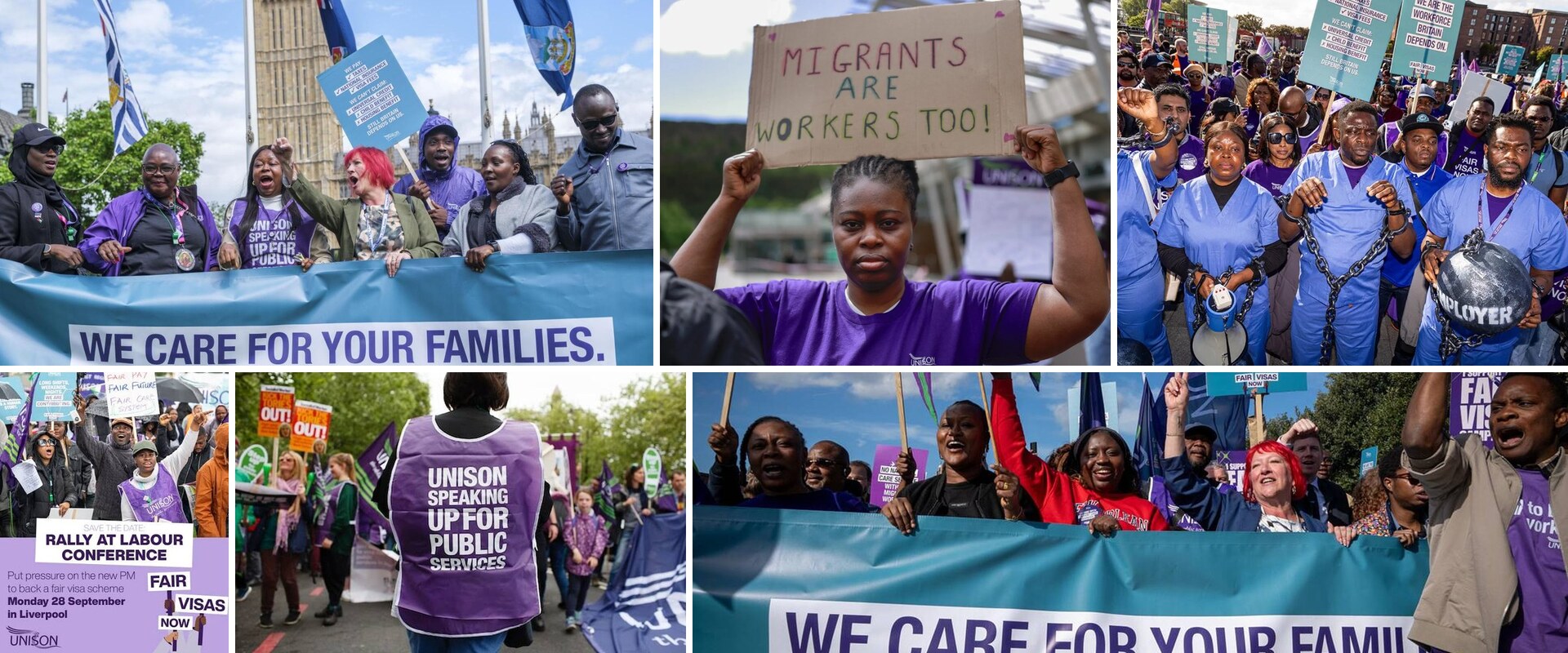
UNISON is also defending the rights of migrant workers. Through its Fair Visas Now campaign, care workers have taken to the streets, from Westminster to the Labour Party conference in Liverpool, to demand a fair visa scheme for the migrant care workers Britain depends on. Unions are fighting for the rights of migrant workers around the world, from sub-Saharan Africa to northern Europe.
Brazil: São Paulo’s Municipal Workers’ Union, SINDSEP, Stands Up for Workers’ Rights and Public Services
The outcome of the second round of the Brazilian elections that confirmed Lula for another term, defeating the far-right candidate Bolsonaro Jr. was largely due to the mobilisation of the so-called “Lula’s Army” of supporters who reached out and organised in their communities, families, and workplaces and brought 4 million more voters to cast their ballot in one of the world’s largest democracies. This community-based organising played an important role in building support for Lula and countering the far-right challenge.
Trade unions have traditionally been an important source of support for Lula. Among them, the São Paulo Municipal Workers’ Union (Sindicato dos Servidores Municipais de São Paulo – SINDSEP), affiliated with PSI, played an important role in mobilising local and regional government (LRG) workers and their networks across Brazil’s largest city. Through an intensive social media campaign, workplace conversations and grassroots mobilisation, SINDSEP played a key role in engaging its members and rallying their support.
SINDSEP’s initiatives included brochures, videos and memes that made technical information about candidates’ policy proposals accessible and comparable. These materials explained candidates’ positions on public services, highlighted the risks that far-right electoral victories could pose to public service jobs, and exposed the broader social costs of regressive tax cuts.