







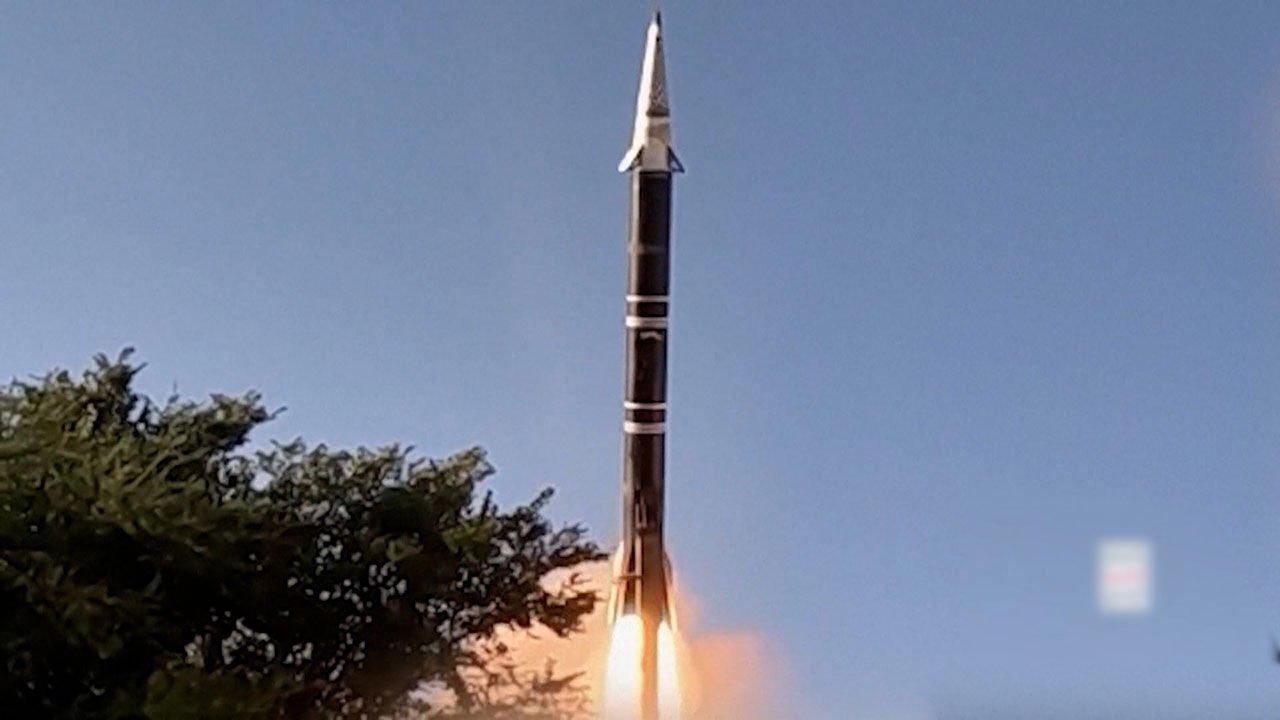
▲ Houthi Ballistic Missile Attack (File Photo)
As technological advancements make ballistic missiles cheaper and more precise, the military doctrine that the United States and its allies have maintained since World War II is being shaken, the Wall Street Journal (WSJ) reported on the 11th (local time).
Ballistic missiles, once the exclusive domain of nuclear-armed superpowers, are now possessed by Iran and Yemen’s pro-Iranian Houthi rebels, enabling them to strike US military bases in the Middle East and US allies.
The United States and its allies find themselves vulnerable to these attacks due to shortages of Patriot and Terminal High Altitude Area Defense (THAAD) interceptor missiles, which are primary defense assets against ballistic missiles.
US and allied military officials acknowledge the need for a fundamental review of their military posture and doctrine maintained for decades in the face of this new reality, the newspaper reported.
Along with the drone revolution underway in Ukraine, the advancement of ballistic missiles carries new strategic implications globally.
As major military and infrastructure facilities become increasingly vulnerable to attacks, it is also impacting the US military posture.
“Advances in ballistic missile technology have allowed even non-state actors to acquire significant range,” analyzed Martin Sampson, a retired UK Air Marshal and head of the Middle East branch at the International Institute for Strategic Studies (IISS). “Defense against these missiles has not kept pace with the changes, and now every fixed facility is a target.”
Following the outbreak of the war with Iran, Iran used ballistic missiles to strike the US Air Force’s Muwaffaq Salti Air Base in Jordan in July, killing three US service members and injuring four.
Iran has attacked US bases in the Gulf region, including Kuwait, the United Arab Emirates (UAE), Saudi Arabia, and Bahrain, as well as Jordan, and threatened earlier this month that if the US attacks again, it would strike US bases in Europe as well.
The Houthis have also mobilized ballistic missiles and other weapons to attack Saudi Arabian airports and energy facilities.
As the United States and its Gulf allies continuously use Patriot and THAD interceptors to defend against successive attacks, interceptor missile stockpiles are running dry.
As a result, Ukraine, which is at war with Russia, has not been properly supplied with interceptor missiles, leaving major energy facilities, bridges, and factories exposed to Russian missile attacks.
The war with Iran has exposed the vulnerability that not only Iran, which has a massive military power gap with the US, but even the Houthi non-state actors can attack US bases, placing the US in a position where it must comprehensively review its military posture.
Since World War II, the US has protected allies and deterred rival nations through a network of US military bases around the world, but this system no longer functions properly.
China, Russia, and North Korea possess larger and more sophisticated ballistic missiles, and their missile production speeds far outpace the production rates of interceptor missiles by the US and its allies.
“The war with Iran showed not only that the US is vulnerable in weapon stockpiles, but also that the US way of waging war no longer works,” pointed out Jennifer Kavanagh, director of military analysis at the US security think tank Defense Priorities. “As we saw in the Middle East, today’s US bases cannot be defended even against a weak enemy.”
The WSJ reported that US and allied military officials acknowledge the need to review the US military posture worldwide due to ballistic missile threats, but have not yet made decisions on how to respond.
Amid this, Western military officials anticipate that US bases could be established in countries that possess their own ballistic missile defense systems.
US military activities are increasingly growing in Israel, which has already established a multi-layered air defense network famous for the Iron Dome.
Many military officials question whether it is sensible to pour massive defense budgets into interceptor missiles, arguing that focusing on strengthening deterrence is instead the best approach.
“I question whether it is worth trying to defend ourselves against these kinds of weapons,” said Michel Yakovleff, a former French army lieutenant general. “We are returning to the logic of inter-state deterrence.”
※ Please note: This article was translated by AI and may contain errors.