









The EU on Sunday rejected a climate deal that omits any mention of fossil fuels as the UN climate talks in Turkey pushed into record extra time.
Ireland’s climate and energy minister Darragh O’Brien, whose country holds the rotating EU presidency, said the EU and its member states “object” to the pact because it “does not meet the moment”.
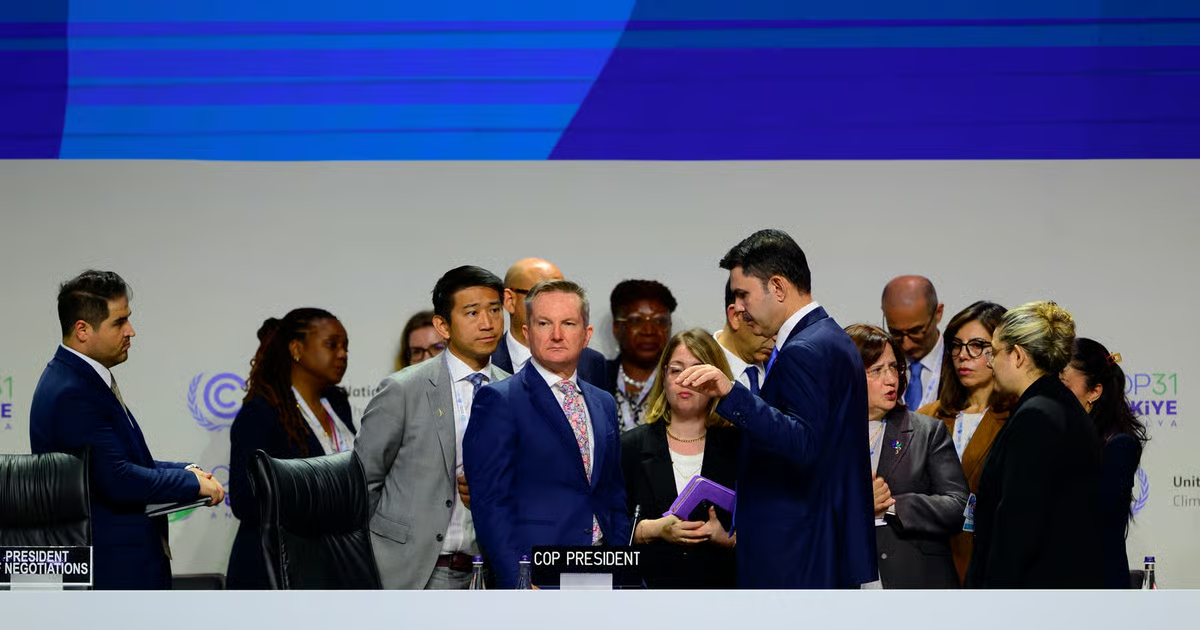
“We will not endorse a cover decision, or an Antalya Pact, that does not even mention fossil fuels, which is the key driver of climate change,” O’Brien told a chaotic closing session a record 44 hours after the summit’s official end.
Panama, a vocal critic of the COP process that had threatened to walk away from the talks, also formally objected to the proposed deal as the summit plunged into a tumultuous finale.
The proposed deal needs consensus approval from nearly 200 nations, but many states had expressed frustration as the draft did not make reference to coal, oil or gas.
“We will not accept negotiating backwards in time. And we will not accept a COP that greenwashes fossil fuel,” said O’Brien.
Ahead of the closing session, COP31 president and Turkey’s environment minister Murat Kurum had urged parties to find compromise after nearly two weeks of grinding negotiations led to a complete stalemate in the final moments.
“We had negotiations and we listened to everyone patiently,” Kurum told the final plenary. “We wanted to give a good message to the rest of the world,” he said.
Fossil fuels are a flashpoint at the climate talks, which come against a difficult backdrop of soaring energy prices and geopolitical tensions stemming from the war in Iran.
‘Licence to keep polluting’
With expectations low, negotiations chief Australia had sought an overarching political agreement to capture what countries agreed at COP31 and send a signal about the future course of climate action.
However, the EU and island nations threatened by rising seas protested after a proposed text did not mention fossil fuels by name.
Language around fossil fuels is fiercely opposed by petrostates oil-rich states such as Saudi Arabia. A Saudi official declined to comment when approached by AFP.
Threats of a walkout Saturday prompted Turkey and Australia to convene a hurried meeting between the EU and Saudi Arabia but a compromise remained elusive.
The latest text introduces an oblique reference to a previous global deal in 2023 to shift the world away from fossil fuels – but stops short of naming them explicitly.
The text also proposed retaining a contentious push to expand carbon capture, a technology championed by the fossil fuel industry but criticised as costly and ineffective in cutting emissions.
Climate campaigners had urged countries to reject the deal.
“This text isn’t a climate plan. It’s a licence to keep polluting,” said Sara Shaw of environmental group 350.org.
Goal to electrify
The summit had been under pressure to show progress on tackling soaring greenhouse gas emissions in a year of climate-linked disasters from Europe to Nepal and Indonesia.
Facing blowback over fossil fuels, Turkey and Australia pointed to “electrification” as a way to cut heat-trapping emissions and bolster energy security.
This works by replacing technologies that burn fossil fuels directly – like diesel cars and gas heating – with electric alternatives.
The draft calls for global efforts to boost the share of electricity in total final energy consumption to 35% by 2035 and the expansion of “clean energy”.
However, it does not explicitly require that electrification be powered by renewable energy.
Around one-third of global electricity is produced using coal and another fifth using fossil gas.
Attempts by Saudi Arabia, India and Kenya, meanwhile, to delay the next major reports by the Intergovernmental Panel on Climate Change (IPCC) have been another major source of friction at the talks.
The draft text “highlights the importance” of these reports for an upcoming stocktake of global carbon-cutting efforts in 2028.
Dozens of countries across Europe, Africa and the Pacific want these assessments by the IPCC, the global authority on climate science, published in time for that crucial stocktake.
Countries have also disagreed at COP31 over how to respond to the looming breach of the 1.5°C warming target set under the Paris climate accord.
The latest draft expressed “deep concern” that global warming would cross 1.5°C above pre-industrial levels in the next few years.
The talks also jammed over long-running complaints that rich nations are shirking their obligations to help developing nations confront climate change.
The removal of a US$120 billion target for climate adaptation angered developing nations.