








The European Space Agency has selected the Plasma Observatory as its seventh medium-class science mission, deploying a seven-satellite constellation to track solar-wind energy flows across Earth’s magnetosphere, according to official proceedings published by the European Space Agency on November 19, 2026. The decision unlocks payload funding for Europe’s Voyage 2050 programme, shaping consortium deliverables and data governance across university space laboratories.
Science Programme Committee Selects Plasma Observatory for M7 Slot
Meeting at the conclusion of extensive Phase A feasibility evaluations, delegates from all 23 ESA Member States convened under the Science Programme Committee (SPC) to approve the final mission downselection on November 19, 2026. The decision concludes a competitive evaluation cycle originating in December 2021 with a call for medium-class proposals. Of 27 initial submissions evaluated across astrophysics, planetary science, and solar physics, five concepts received Phase 0 study contracts in late 2022, before ESA selected three finalists in 2023 for Phase A maturation: the Transient High-Energy Sky and Early Universe Surveyor (THESEUS), the Mars-Magnetosphere ATmosphere Ionosphere and Space-weather SciEnce (M-MATISSE) dual-probe concept, and the Plasma Observatory.
Following recommendations submitted by ESA advisory panels during the summer 2026 Tenerife session, the SPC formally ratified Plasma Observatory as the definitive M7 mission. As the seventh medium-class flight programme within the agency’s scientific directorate, Plasma Observatory succeeds operational missions Solar Orbiter (M1) and Euclid (M2), as well as pipeline missions PLATO (M3), Ariel (M4), and EnVision (M5). While M1 through M5 originated under Cosmic Vision 2015–2025, M7 represents the first medium-class mission selected under Voyage 2050, the agency’s strategic framework for space exploration through mid-century.
Constellation Architecture, Multi-Scale Coupling, and Instrumentation
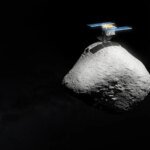
The Plasma Observatory introduces a tailored constellation comprising one heavily instrumented primary “mother” spacecraft and six smaller, highly coordinated “daughter” satellites. Operating in high-eccentricity Earth orbits that thread the solar wind, the bow shock, the magnetopause, and the geomagnetic tail, the seven probes fly in interlocking, nested tetrahedral formations. This geometric design enables simultaneous in situ sampling at two distinct spatial scales: the larger fluid and magnetohydrodynamic (MHD) scale spanning thousands of kilometres, and the smaller ion kinetic scale spanning tens to hundreds of kilometres.
To capture rapid plasma transformations, the constellation carries complementary instrument packages distributed across the seven platforms. Key instrumentation includes the Ion Mass and Composition Analyser (IMCA), dedicated to recording the energy distribution, flux, and composition of positively charged plasma ions. Coordinated electron spectrometers measure electron distributions to detect particle acceleration, while triaxial fluxgate magnetometers and search coil sensors capture static and fluctuating magnetic fields. Multi-probe electric field antennae complete the field suite, enabling instantaneous calculation of Poynting flux, wave-particle resonances, and generalized Ohm’s law terms.
| Mission & Agency | Spacecraft Number & Role | Geometric Formation | Target Measurement Scales | Launch Window & Architecture |
|---|---|---|---|---|
| Cluster II (ESA) | 4 identical satellites | Single deformable tetrahedron | Single scale at a time (100–10,000 km) | Launched 2000; retired 2024 |
| MMS (NASA) | 4 identical spacecraft | Single tight tetrahedron | Electron kinetic scale (~10 km) | Launched 2015; operational |
| THEMIS (NASA) | 5 micro-satellites | In-line apogee alignment | Macroscopic magnetotail substorms | Launched 2007; extended |
| Plasma Observatory (ESA) | 7 spacecraft (1 mother + 6 daughters) | Nested dual tetrahedra | Simultaneous fluid & ion kinetic scales | Targeted late 2030s (~2037) |
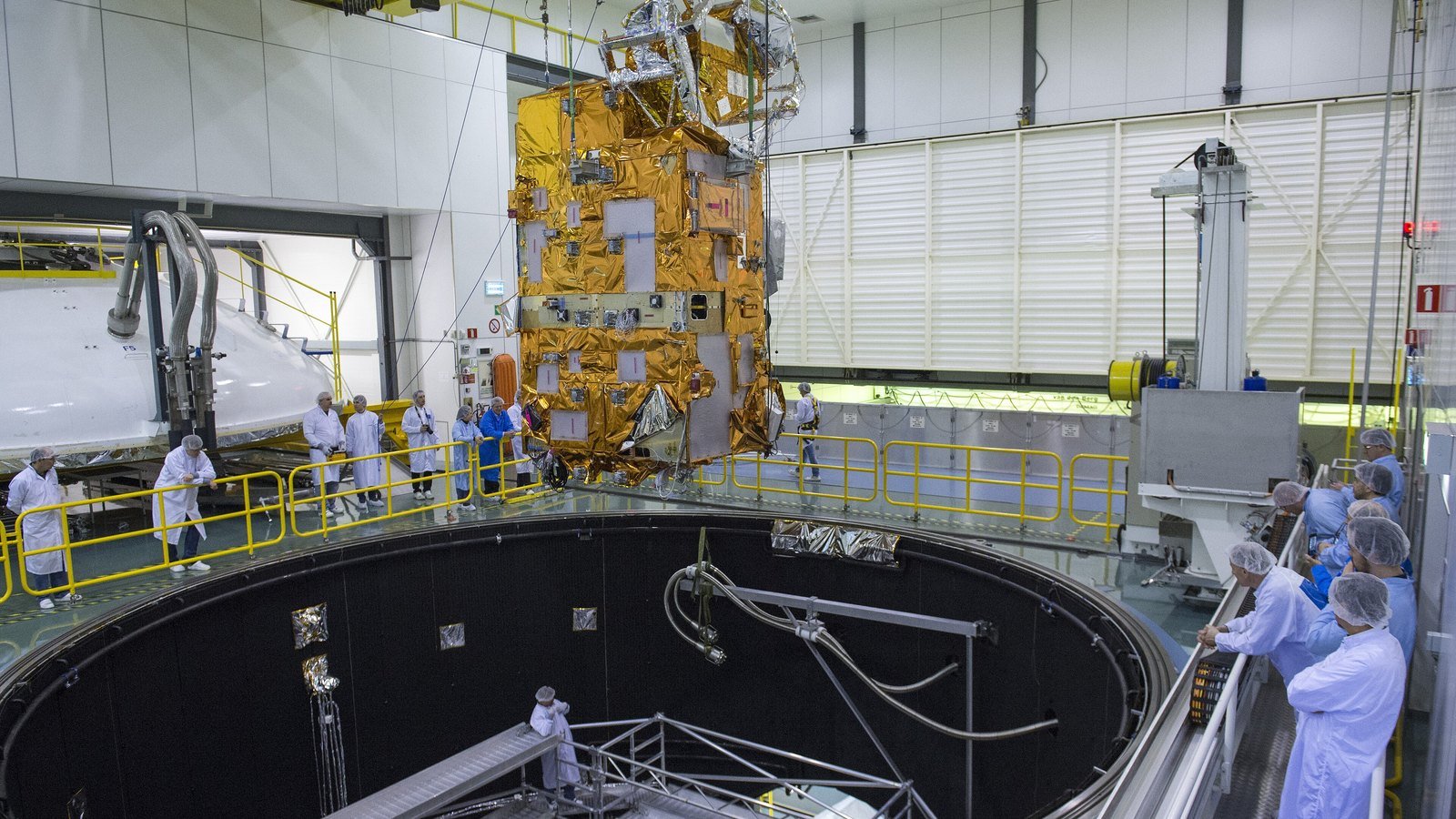
Engineering the seven satellites requires precise formation flight autonomy and inter-satellite cross-link telemetry. The mother craft serves as the primary communications node to the Deep Space Network and ESA Estrack stations, consolidating orbital technical metadata and synchronizing precision clocks across all six daughter probes to ensure sub-millisecond timestamp correlation across magnetospheric boundaries.
Precursor Missions: Bridging the Gap from Cluster to Voyage 2050
Plasma represents the fourth state of matter, encompassing more than 99% of visible matter across the cosmos. Near-Earth space serves as an accessible natural laboratory to study magnetized, collisionless plasma dynamics without terrestrial wall effects. Over two decades, ESA’s four-spacecraft Cluster mission transformed scientific understanding of the magnetosphere by resolving three-dimensional spatial gradients. However, because Cluster flew as a single four-point tetrahedron, researchers had to adjust satellite separations periodically between tens and thousands of kilometres, preventing simultaneous observation of how microscopic turbulence triggers large-scale magnetospheric reconfigurations.
Similarly, NASA’s Magnetospheric Multiscale (MMS) mission achieved high temporal cadence at electron scales but lacked simultaneous fluid-scale coverage. Plasma Observatory resolves this constraint by observing cross-scale coupling—the physical mechanism transferring kinetic energy from macroscopic solar wind streams into energized particle beams, auroral currents, and geomagnetic storms that disrupt satellite communications and terrestrial power transmission networks.
Scientific Community Leadership and Agency Reactions
European space officials and academic stakeholders highlighted the strategic value of the decision for international space physics. Prof. Carole Mundell, ESA Director of Science, underscored the community evaluation supporting the mission: “After rigorous scientific and technical assessment, the European science community has determined that Plasma Observatory will enable us to understand how our planet interacts with the sea of plasma around it in greater detail than ever before. Building on the exceptional results of ESA’s Cluster quartet, Plasma Observatory will take European leadership in heliophysics into the next decade and beyond.”
Highlighting the multi-scale physics breakthrough, Dr. Matt Taylor, ESA Study Scientist for the Plasma Observatory, noted: “Plasma Observatory’s simultaneous measurements of magnetic and electric fields and particles in seven places at once will reveal how small, fast events connect to much larger changes across key regions of the magnetosphere. It will be like seeing both the fine detail and big picture at the same time and how they are connected, providing the missing link across scales.”
Aerospace reporting in Aviation Week noted that selecting a multi-satellite constellation reflects maturing European industrial capabilities in commercial small-satellite production and constellation operations. Strategic coverage by Geopolitiki emphasized that along with the M7 decision, ESA successfully narrowed its future pipeline by shortlisting four candidates for the M8 slot (CALICO+, FOSSIL, PRIAMOS, and SPARK) and three candidates for the F3 fast-class opportunity (GRINTA, MUSTI, and SIRIUS), demonstrating strong momentum across European space science.
What the Selection Means for University Consortia and Research Offices
The selection of Plasma Observatory carries immediate operational consequences for university departments, research institutes, and technology transfer offices across ESA member states. Institutional research divisions must now mobilize academic instrument consortia to formalize multi-national payload development arrangements. Participating laboratories, including the Royal Belgian Institute for Space Aeronomy (BIRA-IASB), will spearhead instrument control software and processing firmware for the IMCA sensor, delivering identical sensor suites across seven spacecraft under shared calibration baselines.
Research teams at the Paris Observatory – PSL, operating through the Laboratory for Instrumentation and Research in Astrophysics (LIRA) and the Laboratory of Plasma Physics (LPP), are leading flight software architecture for particle instrument suites and developing compact 3DCAM particle camera sensors. To manage the distribution of intellectual property, hardware milestones, and funding allocations across national space agencies (such as CNES, BELSPO, ASI, DLR, and the UK Space Agency), university sponsored project offices must execute a binding consortium agreement governing academic team responsibilities.
Furthermore, research offices must align data handling with open-science mandates. The multi-point data streams generated by seven spacecraft across high-apogee orbits will produce extensive time-series records. Principal investigators must structure data curation pipelines to deposit calibrated datasets into a qualified open-access data repository such as the ESA Science Data Archive. Adhering to recognized FAIR data principles ensures that cross-calibrated electromagnetic and particle telemetry remains findable, accessible, interoperable, and reusable for international heliophysics researchers developing predictive space-weather algorithms.
From an engineering perspective, coordinating thermal, structural, and electromagnetic cleanliness across seven spacecraft simultaneously requires European aerospace faculties to deepen collaborations in advanced spacecraft design, training graduate researchers in multi-agent constellation flight dynamics.
Adoption Timelines, Industrial Procurement, and Launch Roadmap
With the Science Programme Committee’s formal selection completed, the Plasma Observatory transitions into Phase B1 preliminary design studies. During 2027 and 2028, ESA engineering directorates and consortia will refine spacecraft requirements, validate mass and power budgets, and finalize interface control documents. Formal mission adoption is projected for late 2028, committing Member State capital budgets to tender prime contractor contracts for satellite platform fabrication.
Following adoption, industrial manufacturing and environmental testing will proceed through the 2030s ahead of a targeted late-2030s launch aboard an Ariane 6 vehicle from Kourou, French Guiana. Simultaneously, ESA will progress evaluations for its M8 medium-class mission slated for selection in 2030, cementing a predictable cadence for European fundamental space research.