









Durham County officials are bracing for possible changes that would entrench the Trump administration’s policy positions into federal grant regulations and could have a major impact on the county’s federal funding and overall budget.
In May, roughly 40 federal agencies, led by the Office of Management and Budget (OMB), proposed rewriting Federal Uniform Guidance that governs how federal grants are applied for, spent, monitored, and audited by local governments across the country. Currently, each federal agency has some discretion over how it administers grants, but the new proposal would create a government-wide regulatory framework that would act less like guidance, and more like concrete rules.
The proposal contains over 120 substantive changes. Durham County Manager Claudia Hager calls it the biggest overhaul of federal grant guidance since 2013, when the provisions were first implemented. The new regulations could be finalized as early as December 11.
The sweeping proposal puts more restrictions on how local governments use federal grants and creates burdensome oversight requirements for when local governments distribute federal funding to “sub-recipients” like nonprofits and when events are held on county property.
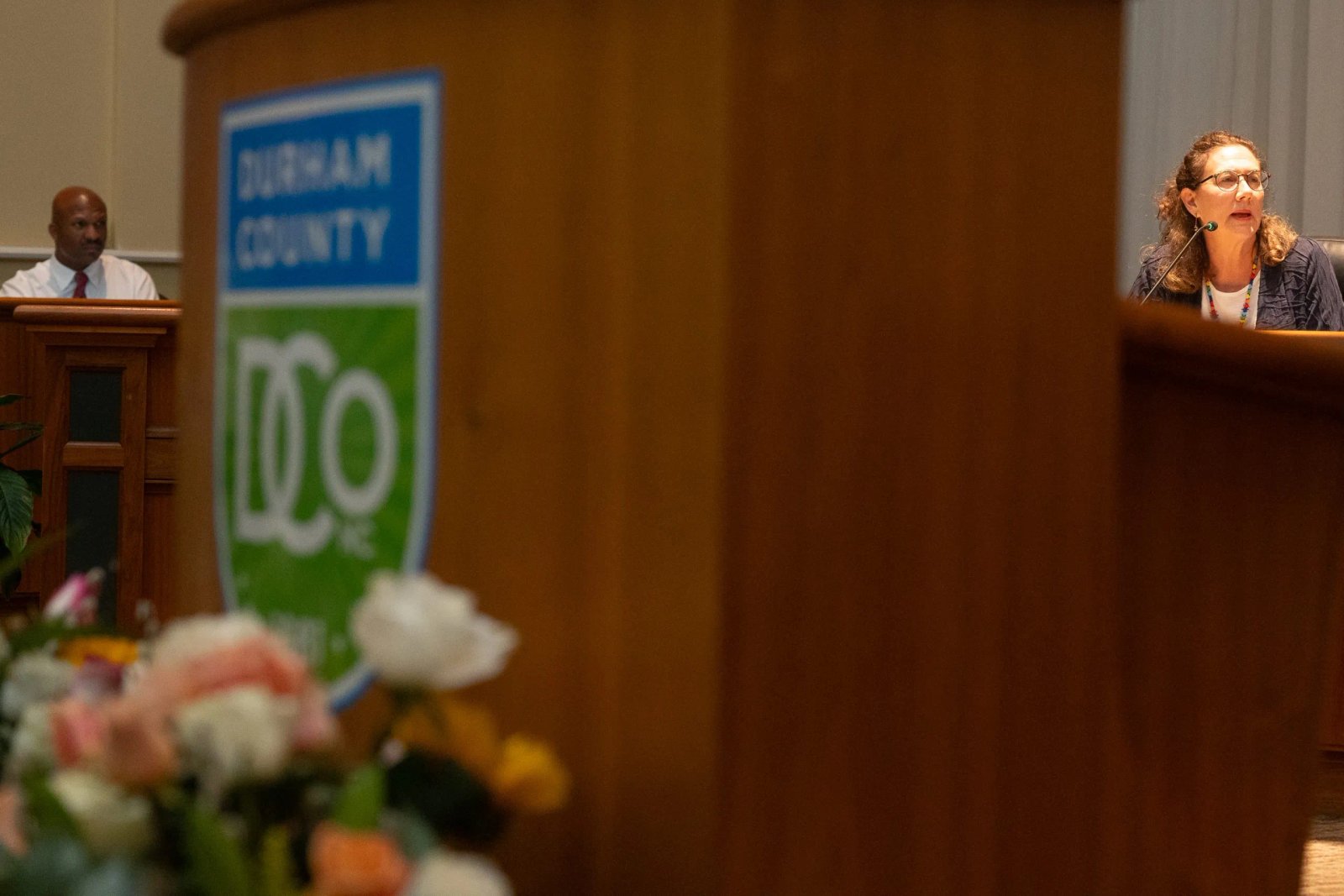
Durham County received roughly $67.6 million in federal funding last fiscal year. In a presentation to county commissioners this week, county staff said the changes could be widespread not only for the county, but other Durham organizations, including nonprofits, the city of Durham, Durham Public Schools, and local higher education institutions.
“We have quite a few organizations that receive federal funding through grants and contracts and some of the changes throughout these sections of the federal regulations will have downstream impacts on those organizations as well,” said John Keefer, director of organizational effectiveness for Durham County at the November 9 meeting. “So this is a very important topic for the Durham community and is one that could potentially have a very sizable fallout on lots of good work that goes on in Durham.”
Grant applications would be reviewed by political appointees and judged based on whether the applications are “consistent with applicable law, federal agency priorities, and the national interest,” according to a memo from the Congressional Research Service. Any grant awards that the senior appointees deem out of step with the President’s policy priorities could be suspended or terminated at any time.
“Durham County builds multi-year budgets and staffing plans, including in public health and housing programs, around the expectation that a properly performing, compliant award will run its full term,” Hager wrote in a memo to commissioners. “A termination-for-convenience standard converts every multi-year federal award into a year- to-year contingency, undermining the County’s ability to commit to sustained services for residents.”

The proposed changes would codify the administration’s executive orders on diversity, equity, and inclusion and gender policy into federal grant regulations by prohibiting grants from being used to “fund, promote, encourage, subsidize, or facilitate” DEI, without defining the term.
The proposal would also require the county to undertake oversight of organizations that receive federal funding from the county. If those organizations are cited for things that the federal government claims cause “reputational harm” the county’s entire federal award could be terminated.
“This provision would effectively require counties to surveil the public conduct of every subrecipient organization on an ongoing basis as a condition of receiving federal funds, a standard no county has the capacity to meet and one that creates significant due process concerns,” Hager wrote in a July letter to OMB director Russell Voight laying out how the proposed changes would negatively impact the county’s ability to manage federal funding.
Another provision would impose new “viewpoint neutrality requirements” on events held at properties owned by a public entity that receives federal funding—like libraries or other county buildings—whether the event uses federal funding or not.
In her letter to Voight, Hager repeatedly asked for “clear” and “objective” criteria for how counties’ grant applications and and performance would be evaluated, and criticized the proposed rules for creating uncertainty during budget planning, shifting administrative costs onto the county, and inserting political review into decision making that should be “made on the merits.”
Once these new rules are finalized, they would be immediately applicable to all current and prospective federal grant awards. Keefer said that implementing new rules this quickly without an onboarding period is unusual compared to previous OMB regimes.
“When the current administration came into power in January of 25, they tried to do lots of different things,” Keefer said. “A lot of that was blocked by the courts because it was not in alignment with the uniform guidance … and other statutory authorities. And so as part of their response they have apparently decided to undertake some thorough revisions through formal rulemaking.”
Since the second Trump administration took over, county commissioners have worried that Durham and other progressive cities could be the target of retaliation by the federal government. Last year, Durham County chose not to sponsor Durham Pride because of what county commissioner Nida Allam described at the time as “the threats from the Trump administration and his vague executive orders that are threatening to claw back money.”
The Department of Government Efficiency (DOGE) eliminated billions in federal funding to health care, research, and education, jeopardizing programs that have been around for years, and putting thousands of Triangle residents out of a job. Programs seen as supporting DEI drew particular attention from DOGE during its purge of grant awards.
With only a month until the proposed grant regulations could be implemented, the county is making preparations. At the November 9 meeting, staff said departments are building contingency plans in the event the county loses federal funding, and agreed to produce a list of grants for each department, with a plan to reach out to nonprofits that could be affected. Commissioner Wendy Jacobs also asked that Hager’s letter be sent to North Carolina state and federal representatives; Democrats will take control of the North Carolina House and both chambers of Congress in the new year.
“I hope the public will be listening and be educated as well because we need people to call Congress, to call our representatives, and express their opposition to these new rules,” said County Commissioner Wendy Jacobs. “We saw what already has happened over the last two years and the devastating impact of federal grants being eliminated and the chaos of agencies being dismantled. And this is just taking it one step further. And we cannot underestimate what the plans are. We saw who’s been appointed chief of staff so I think we have to really fight this in every way that we can.”
Comment on this story at [email protected].