









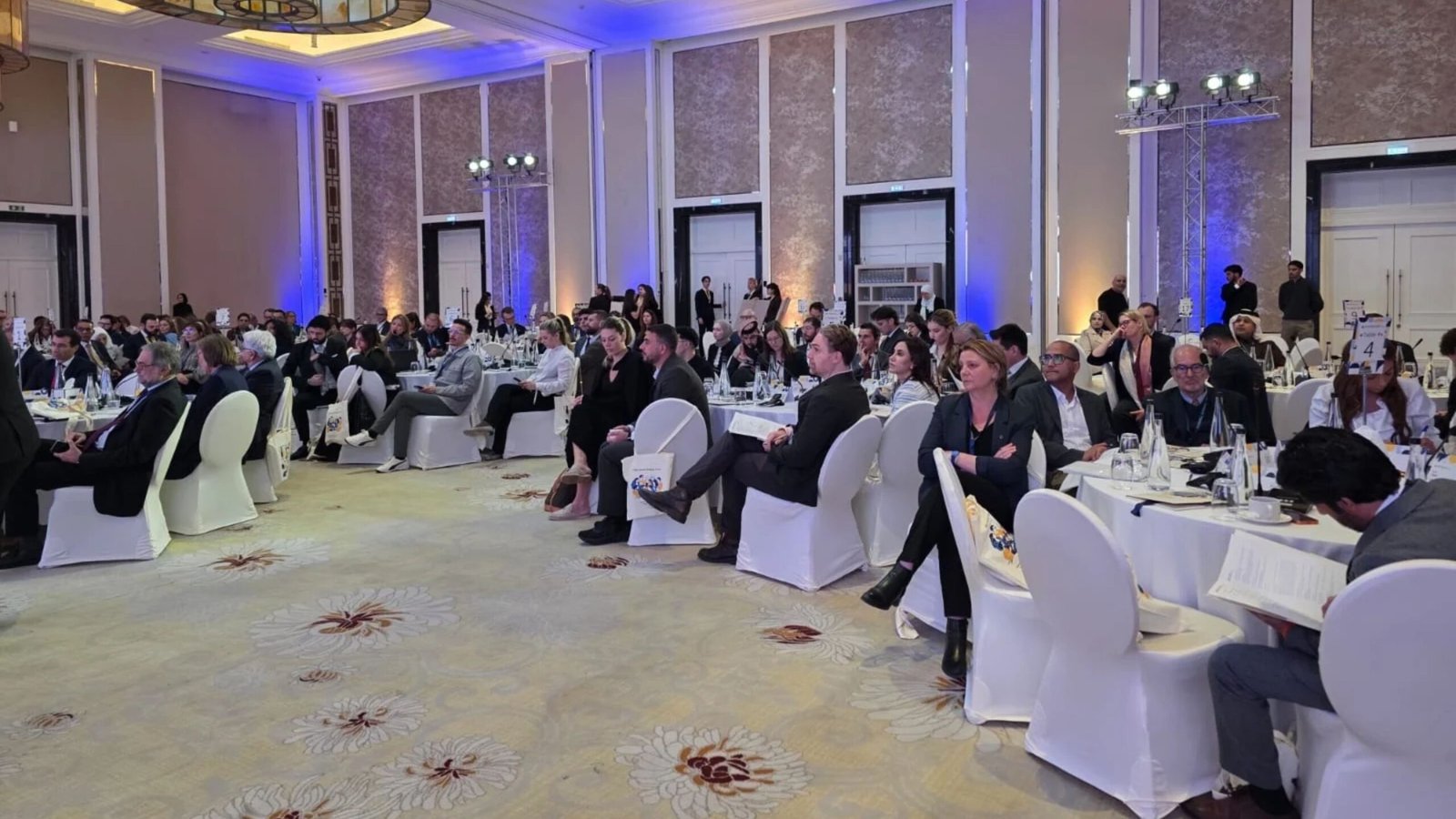
Amman, Nov. 17 (Petra) — The Swedish Dialogue Institute for the
Middle East and North Africa held its fifth annual Dialogue Forum in
Amman on Tuesday to explore ways to strengthen cooperation between
Europe and the region on shared security, economic and humanitarian
challenges.
Policymakers, diplomats, experts, civil society representatives and
business representatives took part.
Her Royal Highness Princess Rym Ali, the forum’s guest of honor,
delivered the keynote address at the opening session of the event,
titled “Navigating Geopolitical Headwinds: Europe and the Middle East
in a Changing Strategic Landscape.” She stressed the importance of
dialogue, justice and accountability in achieving lasting peace.
Princess Rym said lasting peace requires dialogue between peoples and
civil society institutions, grounded in justice and equality and
built on accountability. She praised the institute for providing a
space to hear diverse voices, discuss current geopolitical challenges
and explore prospects for genuine peace.
Institute Director Ann Måwe said shared challenges require shared
solutions. Bringing together representatives and practitioners from
civil society and the public and private sectors, alongside academics
from both regions, helps build cooperation on regional peace and
security, economic resilience and the responsible use of technology,
she said. Such engagement also renews efforts to advance humanitarian
action, recovery and reconstruction, she added.
The forum provides a space for dialogue, exchanging expertise and
building partnerships among participants, Måwe added. This
strengthens opportunities to address the two regions’ challenges
jointly, she said.
Nassif Hitti, chair of the institute’s advisory committee and a
former Lebanese foreign minister, said Europe and the Middle East and
North Africa face wide-ranging, interconnected security and
governance challenges that cannot be addressed in isolation.
Hitti said the partnership between the two shores of the
Mediterranean began with the Barcelona Process and continued through
the Union for the Mediterranean. Despite persistent challenges, it
rests on mutual trust, wider economic opportunities and political and
cultural dialogue, he said.
He stressed that the discussions held in Amman highlighted the urgent
need to broaden cooperation across multiple fields and rebuild trust
between the two regions.
European Union Ambassador to Jordan Pierre-Christophe Chatzisavas
said the core principles of the Union for the Mediterranean and the
goals of the Pact for the Mediterranean reinforce one another.
He said sustained political dialogue, fair economic partnership and
genuine people-to-people contact are essential pillars of a stable,
prosperous Mediterranean region grounded in mutual respect and
responsive to citizens’ aspirations.
The forum offered opportunities to exchange information, discuss
shared concerns and develop approaches to translate political will
into lasting cooperation, he said.
The forum program focused on four themes. The first addressed
regional security and the role of diplomacy, mediation and
confidence-building in supporting de-escalation efforts and creating
conditions for more sustainable regional security arrangements.
The second examined economic security and cooperation between Europe
and the Middle East and North Africa on strategic diversification to
address disruptions to trade and supply chains and tackle food
insecurity.
The third covered humanitarian protection, including the role of
diplomacy in protecting civilians and humanitarian workers and
strengthening compliance with international humanitarian law and
accountability.
The fourth focused on using artificial intelligence to support
recovery and reconstruction in conflict-affected environments.
//Petra// NQ