






The Conference of the Parties (COP) is the supreme decision-making body of the United Nations Framework Convention on Climate Change (UNFCCC), in which all states and parties to the Convention are represented. It has made significant contributions to global efforts to combat climate change.
At COP21, the international community witnessed the adoption of the Paris Agreement, which aims to limit global warming to 1.5°C above pre-industrial levels. COP26 called for a transition to clean energy and the rapid ‘phase-out’ of coal, a commitment that was subsequently weakened by replacing ‘phase-out’ with the less ambitious term ‘phase-down’. Prime Minister Shehbaz Sharif was nominated as Vice-President of COP27, which established the Loss and Damage Fund to help developing countries recover from climate-related disasters, including floods, droughts and storms. At COP28, countries agreed to transition away from fossil fuels for the first time, alongside a pledge to triple renewable energy capacity by 2030. In 2026, COP31 successfully launched the Second Global Stocktake (GST2), a periodic five-year assessment of whether the world is meeting the climate goals set out in the Paris Agreement.
Unfortunately, COP31 became the first UN climate summit since COP15 in Copenhagen in 2009 to break down over a final agreement. This happened after European and vulnerable nations rejected a proposed agreement following Saudi Arabia and other oil-producing countries’ opposition to any reference to phasing out coal, oil and gas. In 2024, the Vatican aligned with Saudi Arabia, Russia, Iran and Egypt to obstruct an agreement that would have provided greater support, including financial assistance, to women on the front lines of climate change at COP29.
At COP30 in 2025, disagreements emerged over the use of the term ‘gender’. Conservative states sought to interpret the term narrowly, while delegations from the European Union, Norway and Canada pushed for a broader understanding. They called for the inclusion of language on ‘intersectionality’, references to women and girls ‘in all their diversity’, and recognition of ‘gender-diverse’ people.
At COP31, Russia and the Vatican sought to block most references to gender in negotiating texts, while the European Union opposed these efforts. The Sustainable Development Goals (SDGs) Pavilion at COP31 seeks to promote action, mobilise support and deliver progress on the SDGs, particularly gender equality. Goal 5 of the SDGs aims to achieve gender equality and empower all women and girls. However, achieving this objective is easier said than done.
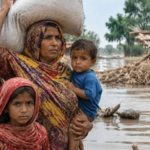
According to the United Nations Development Programme (UNDP), 80 per cent of people displaced by climate change are women. Furthermore, women and children are 14 times more likely than men to die during extreme natural disasters. Among its other information sessions, COP31 has also organised an Information Session on Gender and Climate Change. However, there are several reasons why Pakistan should have highlighted the adverse impact of climate change on women at COP31, particularly in the aftermath of the devastating floods of 2022.
In 2022, World Weather Attribution found compelling evidence that climate change had exacerbated the devastating floods in Pakistan. It also urged Pakistan to seek compensation from developed countries through loss and damage support, alongside an immediate push to reduce carbon emissions. In rural areas of Pakistan, women are responsible for fetching water and securing food. However, these tasks become increasingly difficult because of water scarcity and declining agricultural yields. This demonstrates how Pakistani women bear a disproportionate burden of climate change due to entrenched gender roles and socioeconomic inequalities.
According to UNDP, 80 per cent of people displaced by climate change are women, while women and children are 14 times more likely to die than men during extreme natural disasters. These figures underline the urgent need to place gender equality at the centre of climate policy.
Pakistan has some of the highest rates of period poverty in the world. During the 2022 floods, more than eight million women were left without the necessary resources to manage their menstruation properly. This led to increased advocacy for ‘Period Justice’. Mahwari Justice, a menstrual hygiene relief initiative, was established in July 2022 by two students, Bushra Mahnoor and Anum Khalid, who distributed menstrual hygiene products among women affected by the floods.
In September 2025, Mahnoor Omer, a lawyer, petitioned the Lahore High Court, challenging the ‘Period Tax’ imposed by the Government of Pakistan on menstrual hygiene products used by more than 100 million women. According to UNICEF, sanitary pads in Pakistan are subject to taxation of approximately 40 per cent. Floods and other climate-related natural disasters severely affect indigenous communities, destroying their livelihoods, disrupting their traditional ways of life and, in some cases, costing lives. However, the impact is even more severe for women belonging to affected indigenous communities, particularly when displacement exposes them to discrimination rather than ensuring their protection.
In 2024, reports indicated that child marriages had increased in areas of Pakistan affected by the 2022 floods, partly due to climate-driven economic insecurity. Consequently, the Government of Sindh ordered an inquiry into child marriages in flood-affected areas. It is important to understand that child marriage does not occur in isolation; rather, it is connected to several other serious offences, including forced marriage, bonded labour, organ trafficking, child labour, child soldiering, sexual slavery, human trafficking and forced conversions.
The Government of Sindh made history with the completion of one million houses for people affected by the 2022 floods under the Sindh Flood Resilience Project (SFRP). This is the largest house-building programme of its kind in the world. The initiative will not only help address displacement but also contribute to the rehabilitation of people across Sindh, particularly women who were displaced by the 2022 floods.
The government will have to prepare itself to protect its people from devastating floods in the future, particularly women, who are not only among those most severely affected by such disasters but can also play a pivotal role in reconstruction if their empowerment and equality are ensured. This significant contribution by women is often overlooked in discussions about the relationship between gender and climate change.