








The failure of the United Nations COP31 conference to reach consensus on fossil fuels shapes as a substantial blow to the global co-operation required to confront the existential threat of climate change.
It is a danger now manifest: the just completed climate summit in Turkey was the first where world leaders and scientific organisations explicitly acknowledged global warming was officially on track to overshoot the 1.5 degrees threshold established in the 2015 Paris Agreement.
Yet in its most consequential decision, COP31 effectively came to nought.
In a stand-off, the Saudi-led bloc backed by Russia rejected a proposed final agreement reiterating calls for a transition from fossil fuels. The European Union, Panama, Vanuatu, Belize and others refused to support an agreement, known as a cover decision, that did not contain reference to fossil fuels.
The failure of COP to reach consensus will be a blow to those who believe climate change is a clear and present danger. It has emboldened politicians, lobbyists and nations demanding an end to coordinated global climate action and validated the handful of oil nations and companies that have fanned opposition, claiming Arabian oil fields accounted for but a small share of historical greenhouse gas emissions.
Inevitably, too, the stalemate is tied to US President Donald Trump’s erratic foreign policy.
The Herald’s environment and climate editor Nick O’Malley said it was becoming harder to contain the excesses of oil producing nations without the might of the United States’ diplomatic machine. In previous negotiations, where the Arab Group negotiators gave ground, the US had been there to whisper in their ears. The US has now abandoned the field.
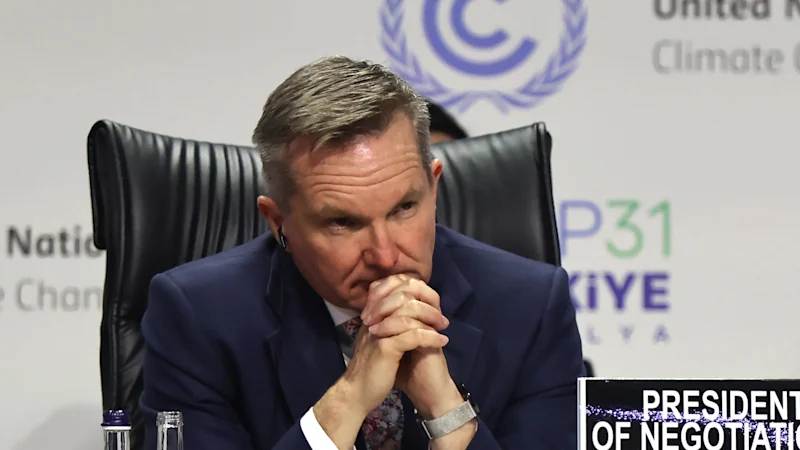
Back home, the failure to address fossil fuels collaterally damaged Climate Change Minister Chris Bowen.
As president of negotiations, alongside Turkey’s Murat Kurum, Bowen tried for consensus with the final agreement, but pushed too hard.
Convinced the agreement would give crucial momentum to lagging climate action and strengthen his goal of addressing the climate threat posed to Pacific neighbours, Bowen insisted on the global agreement and that he, and Australia, lead the negotiations.
At a local level, the opposition is calling for his head and Bowen will be pursued to explain how Australia benefited from the $150 million spent at COP31.
On the world stage, it has blown up in his face, and no matter how widespread sympathy for Bowen’s goals, there is no getting away from the fact he presided over a failure that carries massive consequences for future action on climate change.
Of course, the climate conference had achievements, but they have been overshadowed by the failure of the more than 200 attending nations to agree on common action on the growing cost of fossil fuels.
The failure to reach consensus is a devastating blow to multilateralism on climate. It means the whole COP process must be re-evaluated by countries willing to take action, and that those countries must devise an effective strategy to step around recalcitrant countries while still trying to bring them to the aid of the planet.
Start the day with a summary of the day’s most important and interesting stories, analysis and insights. Sign up for our Morning Edition newsletter.
 The Herald’s View – Since the Herald was first published in 1831, the editorial team has believed it important to express a considered view on the issues of the day for readers, always putting the public interest first.