







The city of Boston plans to open temporary music and art studios in Brighton next summer.
The Mayor’s Office of Arts and Culture has been working with the Boston Housing Authority to design a music and arts building, alongside affordable housing, at a large city-owned parcel at 290 North Beacon St. With rising construction costs and a complex financing picture, the project will take years to complete. In light of this, the city now plans to build out a temporary pilot space to be completed in a matter of months.
“We were hearing a steady drumbeat from artists about the need for space now, and also a real desire from the community to co-create the types of artist and musical spaces that we need,” said Boston Housing Authority administrator Kenzie Bok.
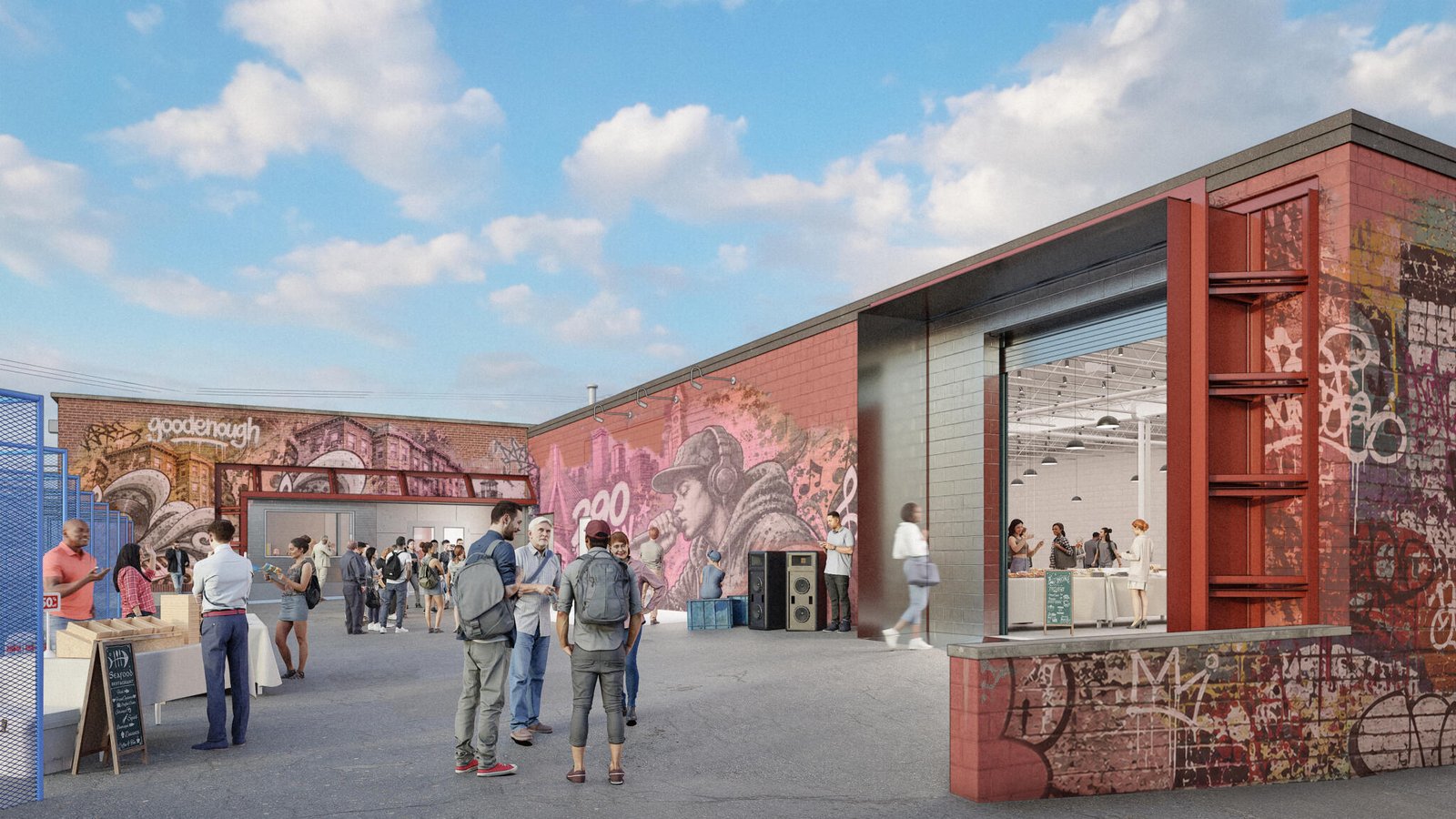
The city plans to convert a warehouse on the property using $1.25 million in ARPA funds originally intended to pay for demolition. Architecture firm ISA is leading the design process. The space will contain 17 studios, a large flexible community space, bathrooms, an office, a kitchenette and an outdoor area that can be activated for events.
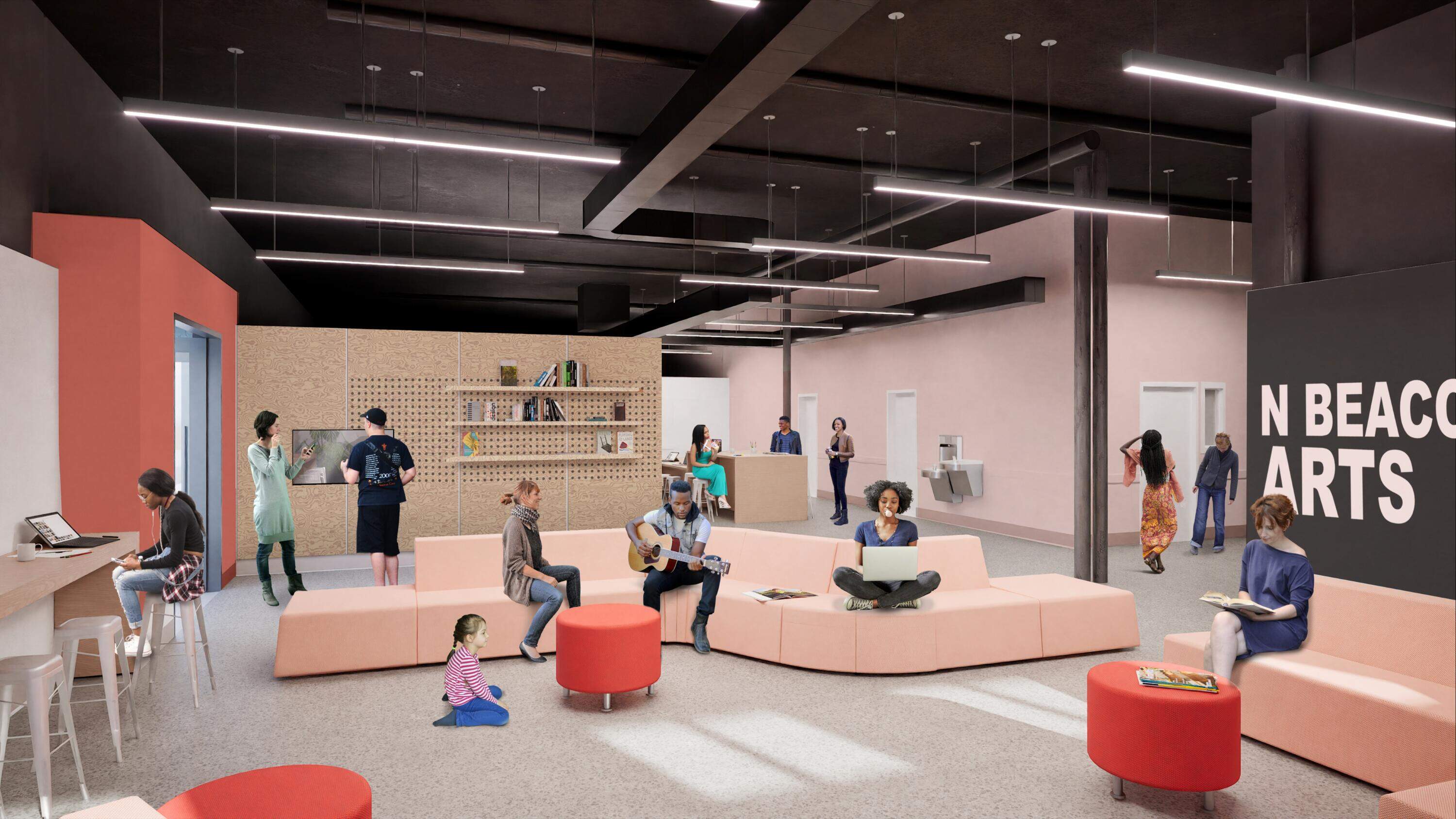
The city first unveiled its plans at a public meeting on Oct. 29. The presentation evoked enthusiasm from several attendees.
“ We’re really excited about this,” said Lizzie Torres, of Allston Village Main Streets and civic group Boston Artist Impact. “ This is a really great use of space that isn’t super being used right now and making it useful, so we really, really appreciate that.”
But others worried that the original intention for the site would get diluted. The city acquired the property in 2023 with a promise to fill the void created by the closure of the Sound Museum, a massive rehearsal complex in Brighton that was used by hundreds of musicians.
“ My worst fear is it just becomes a place for food trucks and murals. And I’m sorry, but that is not what the music scene in Boston needs more of,” Somerville musician and voice teacher Ajda Snyder, who was displaced from the Sound Museum, said in an interview. “We need rehearsal space, affordable rehearsal space.”
With the announcement, the city hopes to show movement in a saga that has already dragged on for years. It began in 2022, when developer IQHQ moved to evict hundreds of musicians from their practice studios in the Sound Museum. An outcry ensued. The city ultimately approved IQHQ’s plans to build a life sciences campus at the former Sound Museum site, with one notable condition: that the developer donate another property, 290 North Beacon St., to the city of Boston. The city accepted the property with the commitment to build 40,000 square feet of music rehearsal space, the precise square footage that was lost in the Sound Museum’s closure.
Since then, the bottom has fallen out of the lab market and no life sciences building has materialized at 155 North Beacon St., where the Sound Museum once stood. And the project at 290 North Beacon has progressed slowly. In 2024, the Mayor’s Office of Arts and Culture revealed plans to collaborate with the Boston Housing Authority to build affordable housing at the site as well. The partnership will help with financing, but it awakened fears among former Sound Museum tenants about the impracticality of allowing musicians to practice loudly, at all hours of the day, near residential apartments. The plan for temporary studios, which will not be fully soundproofed, evoked similar concerns.
“ I think it’s great they want to activate the space because why withhold it if you can activate part of it?” Snyder said. “But on the other hand, if it’s not going to be soundproof, it’s not really doing anything to help the people that it was intended to help. I think it’s tricky.”
From the perspective of the Mayor’s Office of Arts and Culture and the Boston Housing Authority, the pilot studio plan represents a win. They see it as a chance to try out different configurations and booking systems in the space, and to gather feedback from users that will inform the permanent design. And it means the warehouse will not sit dormant during the untold number of years it will take to produce a permanent building.
“ It’s an opportunity for us to test these ideas out so when we do make a major long-term commitment, we actually have a lot more evidence and research to back it up,” said Joseph Henry, the city’s chief of arts and culture.
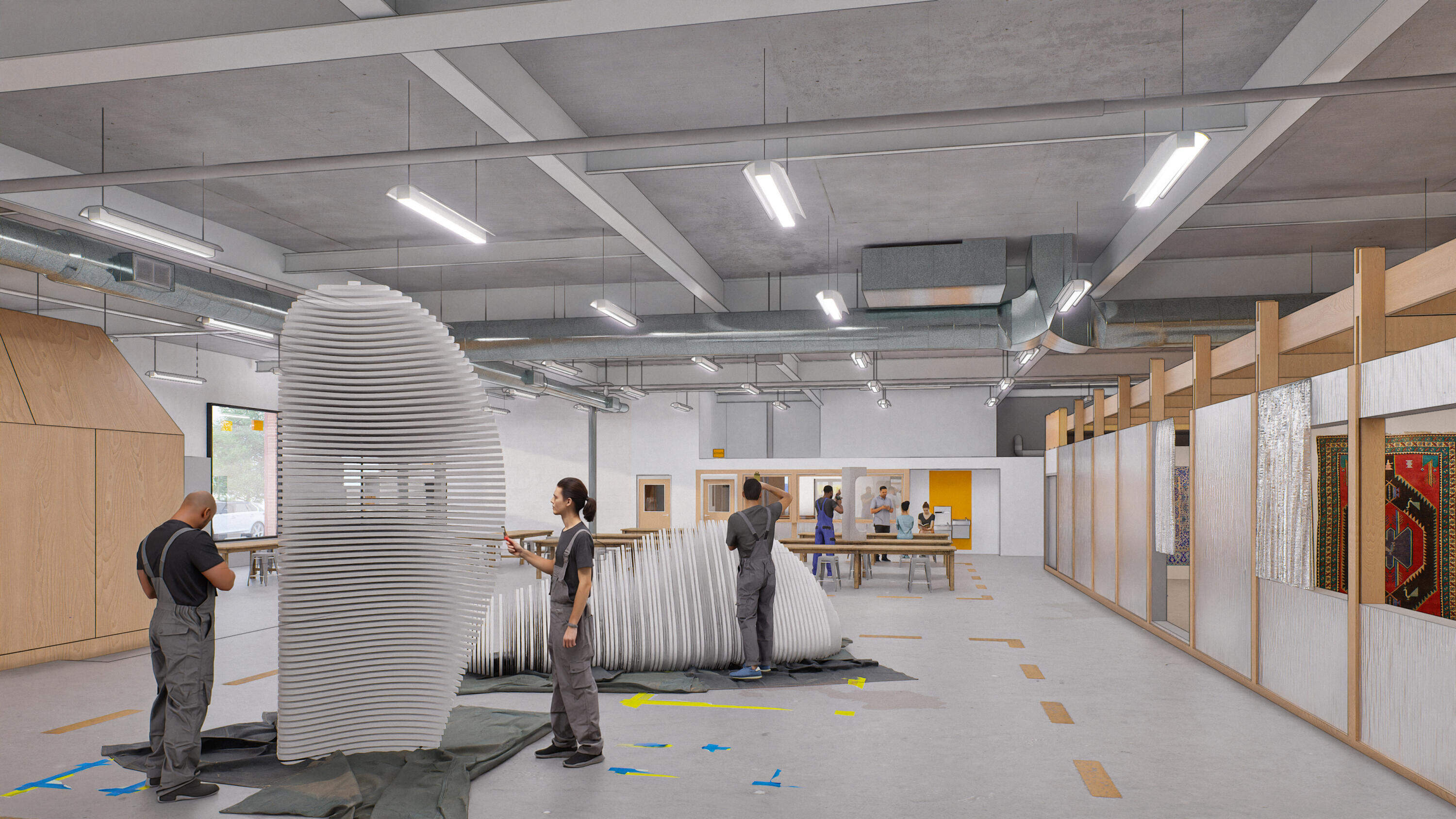
Henry reiterated the city’s commitment to building 40,000 square feet of permanent music rehearsal space. But the city also hopes to build additional arts and culture space on the site, and the pilot plan will allow multiple uses beyond music.
“ I think this is not only a pilot for the music rehearsal space, but really a pilot for the role of arts and culture in the neighborhood,” Henry said. “ The budget isn’t so extensive that we could build out an entire music rehearsal space, so we’re being pragmatic to make sure that we are able to meet many needs.”
“We will obviously always prioritize the needs of musicians,” he added.
Ami Bennitt, a leader of the arts advocacy group Art Stays Here, expressed concern that those needs could get overlooked.
“ The reason why 290 North Beacon exists is because we advocated for it as mitigation for displacing hundreds of musicians from the Sound Museum,” Bennitt said. “ I feel that it’s my responsibility, Art Stays Here’s responsibility, to ensure that what this was originally earmarked for is what it’s going to be. If it’s going to be more than that, great. Awesome. That’s wonderful. But I don’t want to lose sight of the original promise.”
The building is already under construction and is on track to be completed in December. The city will release a request for proposals to select an operator for the space. If all goes according to plan, the studios will open next summer.