









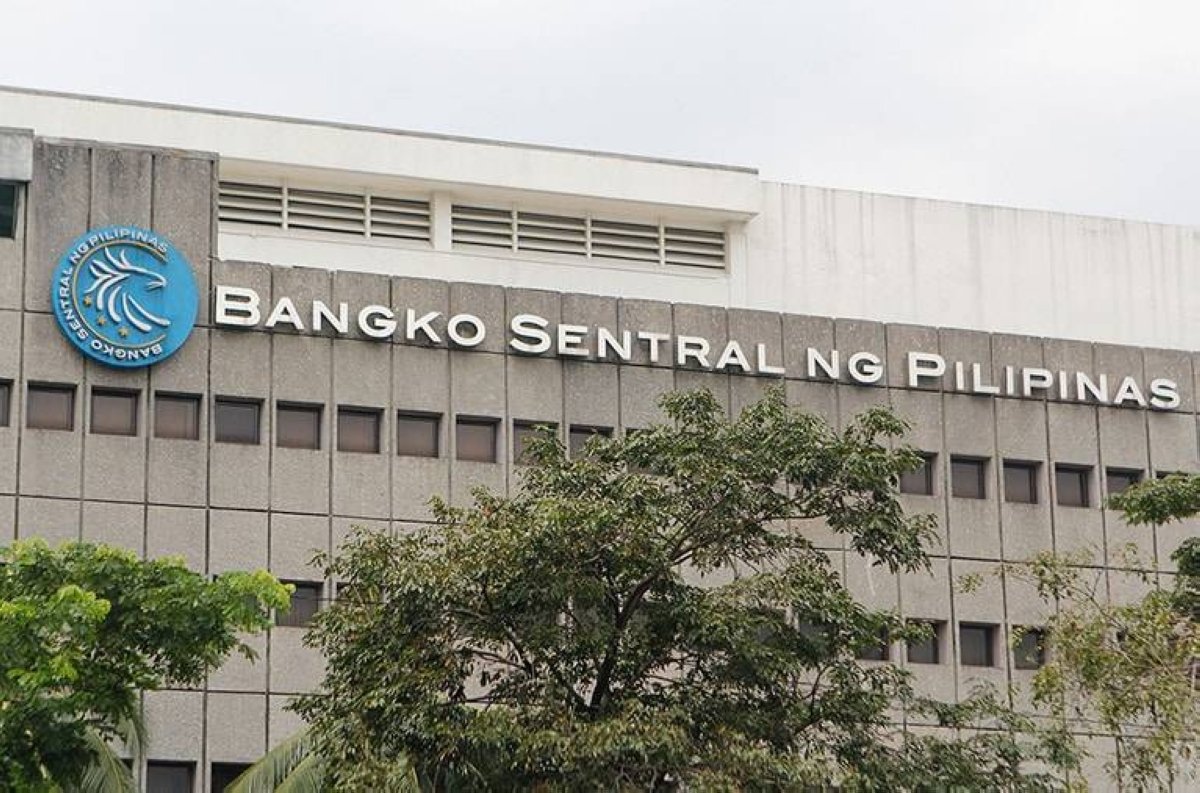
THE Bangko Sentral ng Pilipinas (BSP) will take into account the implications of the country’s latest economic growth figures in determining its next monetary policy moves.
“We are carefully assessing the implications of the latest growth data for the inflation outlook,” the central bank said in a statement late Wednesday.
The central bank, however, stressed future policy decisions would continue to be guided by incoming data, particularly developments in inflation, inflation expectations and economic activity.
“The BSP will ensure that monetary policy settings remain appropriate and consistent with its mandate of promoting price stability conducive to sustainable economic growth,” it said.
Gross domestic product (GDP) growth slowed to 2.1 percent in the third quarter, markedly lower than the 4.0 percent recorded in the same period last year.
“In the face of a difficult combination of elevated inflation and slowing economic growth, the BSP remains determined to fulfill our mandate of pursuing price stability conducive to sustained and balanced growth,” the central bank said.
The BSP also acknowledged the importance of economic activity in its assessment of inflation risks.
It explained that monetary policy cannot directly control the initial inflationary impact of recent global supply shocks.
“In the BSP’s efforts to bring inflation down, it takes important account of the weakness in aggregate demand,” the BSP said.
“It is also mindful of the need to prevent the de-anchoring of inflation expectations,” it added.
Consumer price growth accelerated to 7.8 percent last month, up from 7.2 percent in September 2026.
“Restoring price stability and safeguarding households’ purchasing power are essential to rebuilding confidence and supporting a durable economic recovery,” the BSP said.
“Since monetary policy is unable to control the direct inflationary effect of recent global supply shocks, it focuses on the second-round effects of such shocks,” the BSP added, stressing that “restoring price stability and safeguarding households’ purchasing power are essential to rebuilding confidence and supporting a durable economic recovery.”
Signs of improvement, according to the central bank, would include easing inflation, more stable inflation expectations, stronger business and consumer confidence, and a recovery in investment and employment.
“These would indicate that inflationary pressures are subsiding while economic activity is regaining momentum,” the BSP said.
The BSP policymaking body Monetary Board has raised key policy rates by a total of 125 basis points (bps), bringing rates higher at 5.5 percent.
Nomura said that the central bank could still raise key policy rates by 50 bps next month due to “still-high inflation risks and more signs of second-round effects from the energy price shock.”
However, it said that there was a possibility of a smaller 25-basis-point rate hike in December, as Brent crude prices had fallen to around $90 per barrel.
If sustained, Nomura said the decline could lead to lower retail fuel prices in the coming weeks, helping offset some food inflation.