Panama: EIB Formally Launches Regional Representation to Strengthen Partnerships with Central American Countries and Mexico


The European Investment Bank (EIB) formally launched its regional representation for Central America and Mexico at the 30th Ibero-American Summit in Madrid on 5 November. Based in Panama and operational since October 2026, the new office marks an important step towards strengthening partnerships between the European Union’s bank and Costa Rica, El Salvador, Guatemala, Honduras, Mexico and Panama.

Under a host country agreement with the Republic of Panama, the new office will help strengthen cooperation with partners by fostering closer engagement with public institutions, businesses and financial institutions across the countries it serves. It will help identify strategic investment projects across the countries it serves, support their development and implementation, and improve coordination on the ground to advance shared priorities.

The launch was attended by EIB President Nadia Calviño and Panama’s Minister of Foreign Affairs Javier Martínez-Acha Vásquez, alongside representatives from Central America and Mexico.

The new regional office will support the implementation of the EIB’s investment priorities in Central America, including the initiative to provide around €1 billion in financing for electricity integration, announced at the CELAC–EU Summit in Santa Marta in November 2025. Significant progress has since been made in implementing the initiative, and the office will help accelerate the finalisation of the remaining projects in Honduras and Guatemala.

“The European Investment Bank, as the EU’s financing arm, is already a key partner in the region. We have financed strategic infrastructure such as the Panama Canal, supported investment in water and healthcare, and helped empower small and medium-sized businesses and women. I am particularly pleased with the substantial progress we have achieved in advancing energy integration in Central America. This shows that the EIB delivers on its commitments. Our new regional office in Panama will strengthen ties between our two regions and help deliver tangible benefits for millions of people and businesses across Central America and Mexico. Latin America and the Caribbean can count on the EU as a trusted partner, now and in the future,” said EIB President Nadia Calviño.

“Panama’s role as the base for the EIB’s regional representation builds on its connectivity and established partnership with the Bank. The representation will facilitate closer cooperation with governments, financial institutions and businesses across Central America and Mexico, supporting the preparation and implementation of projects in energy, sustainable mobility, water and sanitation, and innovation,” said Panama’s Minister of Foreign Affairs Javier Martínez-Acha Vásquez.

The new representation accompanies a renewed phase of EIB activity in Central America and Mexico. Since September 2025, the Bank has signed new financing in Costa Rica, Panama and Mexico, while preparing further operations in El Salvador, Honduras and Guatemala.

The strengthened partnership supports the EU’s Global Gateway strategy by fostering sustainable infrastructure and closer economic links between Europe and its partner countries. EIB Global will work with the EU Delegation, European and regional development finance institutions, and public and private sector partners to help translate shared priorities into investment projects with lasting economic, social and environmental benefits.

Background information

EIB Group  

The European Investment Bank (EIB) Group is the financing arm of the European Union, owned by the 27 Member States, and one of the largest multilateral development banks in the world. In 2025, the EIB Group signed €100 billion in new financing and advisory services for over 870 high-impact projects under eight core priorities that support EU policy objectives: climate action and the environment, digitalization and technological innovation, security and defense, territorial cohesion, agriculture and the bioeconomy, social infrastructure, strong global partnerships and the savings and investments union. Beyond long-term loans for large infrastructure, the EIB Group crowds in private investment for high-risk innovative projects and businesses, with a growing role in Europe’s markets for venture debt, venture capital, guarantees and securitizations.

About EIB Global

EIB Global is the EIB Group’s specialised arm dedicated to increasing the impact of international partnerships and development finance. EIB Global is designed to foster strong, focused partnerships within Team Europe, alongside fellow development finance institutions and civil society. EIB Global brings the Group closer to local people, companies and institutions through our offices across the world.

EIB cooperation with Panama

Panama is an established EIB partner and a regional centre for connectivity, commerce and international conferences. It has the largest historical EIB financing volume in Central America, with more than $1.1 billion, including $500 million for the expansion of the Panama Canal. Its connectivity and concentration of businesses make it a base from which to serve partners across Central America and Mexico. The Bank’s cooperation with the country supports sustainable infrastructure and private sector investment, while the regional representation will support closer contact, project preparation and implementation throughout its area of coverage. (https://www.eib.org/de/press/all/2026-404-panama-eib-formally-launches-regional-representation-to-strengthen-partnerships-with-central-american-countries-and-mexico)


Source link

Nearshoring: A new era of connection for Latin America


KEY RISKS

This material is for information purposes only, and may inform you of certain products and services offered by private banking businesses, part of JPMorgan Chase & Co. (“JPM”). Products and services described, as well as associated fees, charges and interest rates, are subject to change in accordance with the applicable account agreements and may differ among geographic locations. Not all products and services are offered at all locations. If you are a person with a disability and need additional support accessing this material, please contact your J.P. Morgan team or email us at accessibility.support@jpmorgan.com for assistance. Please read all Important Information.

GENERAL RISKS & CONSIDERATIONS

Any views, strategies or products discussed in this material may not be appropriate for all individuals and are subject to risks. Investors may get back less than they invested, and past performance is not a reliable indicator of future results. Asset allocation/diversification does not guarantee a profit or protect against loss. Nothing in this material should be relied upon in isolation for the purpose of making an investment decision. You are urged to consider carefully whether the services, products, asset classes (e.g. equities, fixed income, alternative investments, commodities, etc.) or strategies discussed are suitable to your needs. You must also consider the objectives, risks, charges, and expenses associated with an investment service, product or strategy prior to making an investment decision. For this and more complete information, including discussion of your goals/situation, contact your J.P. Morgan team.

NON-RELIANCE

Certain information contained in this material is believed to be reliable; however, JPM does not represent or warrant its accuracy, reliability or completeness, or accept any liability for any loss or damage (whether direct or indirect) arising out of the use of all or any part of this material. No representation or warranty should be made with regard to any computations, graphs, tables, diagrams or commentary in this material, which are provided for illustration/ reference purposes only. The views, opinions, estimates and strategies expressed in this material constitute our judgment based on current market conditions and are subject to change without notice. JPM assumes no duty to update any information in this material in the event that such information changes. Views, opinions, estimates and strategies expressed herein may differ from those expressed by other areas of JPM, views expressed for other purposes or in other contexts, and this material should not be regarded as a research report. Any projected results and risks are based solely on hypothetical examples cited, and actual results and risks will vary depending on specific circumstances. Forward-looking statements should not be considered as guarantees or predictions of future events.

Nothing in this document shall be construed as giving rise to any duty of care owed to, or advisory relationship with, you or any third party. Nothing in this document shall be regarded as an offer, solicitation, recommendation or advice (whether financial, accounting, legal, tax or other) given by J.P. Morgan and/or its officers or employees, irrespective of whether or not such communication was given at your request. J.P. Morgan and its affiliates and employees do not provide tax, legal or accounting advice. You should consult your own tax, legal and accounting advisors before engaging in any financial transactions.

LEGAL ENTITY, BRAND & REGULATORY INFORMATION

In the United States, bank deposit accounts and related services, such as checking, savings and bank lending, are offered by JPMorgan Chase Bank, N.A. Member FDIC.

JPMorgan Chase Bank, N.A. and its affiliates (collectively “JPMCB”) offer investment products, which may include bank managed investment accounts and custody, as part of its trust and fiduciary services. Other investment products and services, such as brokerage and advisory accounts, are offered through J.P. Morgan Securities LLC (“JPMS”), a member of FINRA and SIPC. Insurance products are made available through Chase Insurance Agency, Inc. (CIA), a licensed insurance agency, doing business as Chase Insurance Agency Services, Inc. in Florida. JPMCB, JPMS and CIA are affiliated companies under the common control of JPM. Products not available in all states.

In Germany, this material is issued by J.P. Morgan SE, with its registered office at  Taunustor 1 (TaunusTurm), 60310 Frankfurt am Main, Germany, authorized by the Bundesanstalt für Finanzdienstleistungsaufsicht (BaFin) and jointly supervised by the BaFin, the German Central Bank (Deutsche Bundesbank) and the European Central Bank (ECB).   In Luxembourg, this material is issued by J.P. Morgan SE – Luxembourg Branch, with registered office at European Bank and Business Centre, 6 route de Treves, L-2633, Senningerberg, Luxembourg, authorized by the Bundesanstalt für Finanzdienstleistungsaufsicht (BaFin) and jointly supervised by the BaFin, the German Central Bank (Deutsche Bundesbank) and the European Central Bank (ECB); J.P. Morgan SE – Luxembourg Branch is also supervised by the Commission de Surveillance du    Secteur Financier (CSSF); registered under R.C.S Luxembourg B255938. In the United Kingdom, this material is issued by J.P. Morgan SE – London Branch, registered office     at 25 Bank Street, Canary Wharf, London E14 5JP, authorized by the Bundesanstalt für Finanzdienstleistungsaufsicht (BaFin) and jointly supervised by the BaFin, the German Central Bank (Deutsche Bundesbank) and the European Central Bank (ECB); J.P. Morgan SE – London Branch is also supervised by the Financial Conduct Authority and Prudential Regulation Authority. In Spain, this material is distributed by J.P. Morgan SE, Sucursal en España, with registered office at Paseo de la Castellana, 31, 28046 Madrid, Spain, authorized by the Bundesanstalt für Finanzdienstleistungsaufsicht (BaFin) and jointly supervised by the BaFin, the German Central Bank (Deutsche Bundesbank) and the European Central Bank (ECB); J.P. Morgan SE, Sucursal en España is also supervised by the Spanish Securities Market Commission (CNMV); registered with Bank of Spain as a branch of J.P. Morgan SE under code 1567. In Italy, this material is distributed by J.P. Morgan SE – Milan Branch, with its registered office at Via Cordusio, n.3, Milan 20123,  Italy, authorized by the Bundesanstalt für Finanzdienstleistungsaufsicht (BaFin) and jointly supervised by the BaFin, the German Central Bank (Deutsche Bundesbank) and the European Central Bank (ECB); J.P. Morgan SE – Milan Branch is also supervised by Bank  of Italy and the Commissione Nazionale per le Società e la Borsa (CONSOB); registered with Bank of Italy as a branch of J.P. Morgan SE under code 8076; Milan Chamber of Commerce Registered Number: REA MI 2536325. In the Netherlands, this material is distributed by  J.P. Morgan SE – Amsterdam Branch, with registered office at World Trade Centre,       Tower B, Strawinskylaan 1135, 1077 XX, Amsterdam, The Netherlands, authorized by the Bundesanstalt für Finanzdienstleistungsaufsicht (BaFin) and jointly supervised by the BaFin, the German Central Bank (Deutsche Bundesbank) and the European Central Bank (ECB); J.P. Morgan SE – Amsterdam Branch is also supervised by De Nederlandsche Bank (DNB) and the Autoriteit Financiële Markten (AFM) in the Netherlands. Registered with the Kamer van Koophandel as a branch of J.P. Morgan SE under registration number 72610220. In Denmark, this material is distributed by J.P. Morgan SE – Copenhagen Branch, filial af J.P. Morgan SE, Tyskland, with registered office at Kalvebod Brygge 39-41, 1560 København V, Denmark, authorized by the Bundesanstalt für Finanzdienstleistungsaufsicht (BaFin) and jointly supervised by the BaFin, the German Central Bank (Deutsche Bundesbank) and the European Central Bank (ECB); J.P. Morgan SE – Copenhagen Branch, filial af J.P. Morgan SE, Tyskland is also supervised by Finanstilsynet (Danish FSA) and is registered with Finanstilsynet as a branch of J.P. Morgan SE under code 29010. In Sweden, this material is distributed by J.P. Morgan SE – Stockholm Bankfilial, with registered office at Hamngatan 15, Stockholm, 11147, Sweden, authorized by the Bundesanstalt für Finanzdienstleistungsaufsicht (BaFin) and jointly supervised by the BaFin, the German Central Bank (Deutsche Bundesbank) and the European Central Bank (ECB); J.P. Morgan SE – Stockholm Bankfilial is also supervised by Finansinspektionen (Swedish FSA); registered with Finansinspektionen as a branch of J.P. Morgan SE. In Belgium, this material is distributed by J.P. Morgan SE – Brussels Branch with registered office at 35 Boulevard du Régent, 1000, Brussels, Belgium, authorized by the Bundesanstalt für Finanzdienstleistungsaufsicht (BaFin) and jointly supervised by the BaFin, the German Central Bank (Deutsche Bundesbank) and the European Central Bank (ECB);  J.P. Morgan SE Brussels Branch is also supervised by the National Bank of Belgium (NBB) and the Financial Services and Markets Authority (FSMA) in Belgium; registered with the NBB under registration number 0715.622.844. In Greece, this material is distributed by J.P. Morgan SE – Athens Branch, with its registered office at 3 Haritos Street, Athens, 10675, Greece, authorized by the Bundesanstalt für Finanzdienstleistungsaufsicht (BaFin) and jointly supervised by the BaFin, the German Central Bank (Deutsche Bundesbank) and the European Central Bank (ECB); J.P. Morgan SE – Athens Branch is also supervised by Bank of Greece; registered with Bank of Greece as a branch of J.P. Morgan SE under code 124; Athens Chamber of Commerce Registered Number 158683760001; VAT Number 99676577. In France, this material is distributed by J.P. Morgan SE – Paris Branch, with its registered office at 14, Place Vendôme 75001 Paris, France, authorized by the Bundesanstaltfür Finanzdienstleistungsaufsicht(BaFin) and jointly supervised by the BaFin, the German Central Bank (Deutsche Bundesbank) and the European Central Bank (ECB) under code 842 422 972; J.P. Morgan SE – Paris Branch is also supervised by the French banking authorities the  Autorité de Contrôle Prudentiel et de Résolution (ACPR) and the Autorité des Marchés Financiers (AMF). In Switzerland, this material is distributed by J.P. Morgan (Suisse) SA, with registered address at rue du Rhône, 35, 1204, Geneva, Switzerland, which is authorised and supervised by the Swiss Financial Market Supervisory Authority (FINMA) as a bank and a securities dealer in Switzerland.

This communication is an advertisement for the purposes of the Markets in Financial Instruments Directive (MIFID II) and the Swiss Financial Services Act (FINSA). Investors should not subscribe for or purchase any financial instruments referred to in this advertisement except on the basis of information contained in any applicable legal documentation, which is or shall be made available in the relevant jurisdictions (as required).

In Hong Kong, this material is distributed by JPMCB, Hong Kong branch. JPMCB, Hong Kong branch is regulated by the Hong Kong Monetary Authority and the Securities and Futures Commission of Hong Kong. In Hong Kong, we will cease to use your personal data for our marketing purposes without charge if you so request. In Singapore, this material is distributed by JPMCB, Singapore branch. JPMCB, Singapore branch is regulated by the Monetary Authority of Singapore. Dealing and advisory services and discretionary investment management services are provided to you by JPMCB, Hong Kong/Singapore branch (as notified to you). Banking and custody services are provided to you by JPMCB Singapore Branch. The contents of this document have not been reviewed by any regulatory authority in Hong Kong, Singapore or any other jurisdictions. You are advised to exercise caution in relation to this document. If you are in any doubt about any of the contents of this document, you should obtain independent professional advice. For materials which constitute product advertisement under the Securities and Futures Act and the Financial Advisers Act, this advertisement has not been reviewed by the Monetary Authority of Singapore. JPMorgan Chase Bank, N.A., a national banking association chartered under the laws of the United States, and as a body corporate, its shareholder’s liability is limited.

With respect to countries in Latin America, the distribution of this material may be restricted in certain jurisdictions. We may offer and/or sell to you securities or other financial instruments which may not be registered under, and are not the subject of a public offering under, the securities or other financial regulatory laws of your home country. Such securities or instruments are offered and/or sold to you on a private basis only. Any communication by us to you regarding such securities or instruments, including without limitation the delivery of a prospectus, term sheet or other offering document, is not intended by us as an offer to sell or a solicitation of an offer to buy any securities or instruments in any jurisdiction in which such an offer or a solicitation is unlawful. Furthermore, such securities or instruments may be subject to certain regulatory and/or contractual restrictions on subsequent transfer by you, and you are solely responsible for ascertaining and complying with such restrictions. To the extent this content makes reference to a fund, the Fund may not be publicly offered in any Latin American country, without previous registration of such fund´s securities in compliance with the laws of the corresponding jurisdiction.

JPMorgan Chase Bank, N.A. (JPMCBNA) (ABN 43 074 112 011/AFS Licence No: 238367) is regulated by the Australian Securities and Investment Commission and the Australian Prudential Regulation Authority. Material provided by JPMCBNA in Australia is to “wholesale clients” only. For the purposes of this paragraph the term “wholesale client” has the meaning given in section 761G of the Corporations Act 2001 (Cth). Please inform us if you are not a Wholesale Client now or if you cease to be a Wholesale Client at any time in the future.

JPMS is a registered foreign company (overseas) (ARBN 109293610) incorporated in Delaware, U.S.A. Under Australian financial services licensing requirements, carrying on a financial services business in Australia requires a financial service provider, such as J.P. Morgan Securities LLC (JPMS), to hold an Australian Financial Services Licence (AFSL), unless an exemption applies. JPMS is exempt from the requirement to hold an AFSL under the Corporations Act 2001 (Cth) (Act) in respect of financial services it provides to you, and is regulated by the SEC, FINRA and CFTC under US laws, which differ from Australian laws. Material provided by JPMS in Australia is to “wholesale clients” only. The information provided in this material is not intended to be, and must not be, distributed or passed on, directly or indirectly, to any other class of persons in Australia. For the purposes of this paragraph the term “wholesale client” has the meaning given in section 761G of the Act. Please inform us immediately if you are not a Wholesale Client now or if you cease to be a Wholesale Client at any time in the future.

This material has not been prepared specifically for Australian investors. It:

  • may contain references to dollar amounts which are not Australian dollars;
  • may contain financial information which is not prepared in accordance with Australian law or practices;
  • may not address risks associated with investment in foreign currency denominated investments; and
  • does not address Australian tax issues.

References to “J.P. Morgan” are to JPM, its subsidiaries and affiliates worldwide. “J.P. Morgan Private Bank” is the brand name for the private banking business conducted by JPM. This material is intended for your personal use and should not be circulated to or used by any other person, or duplicated for non-personal use, without our permission. If you have any questions or no longer wish to receive these communications, please contact your J.P. Morgan team.

© 2025 JPMorgan Chase & Co. All rights reserved.



Source link

US sanctions inflicting ‘extraordinary economic pain’ on Iran, no need for major combat ops: Rubio


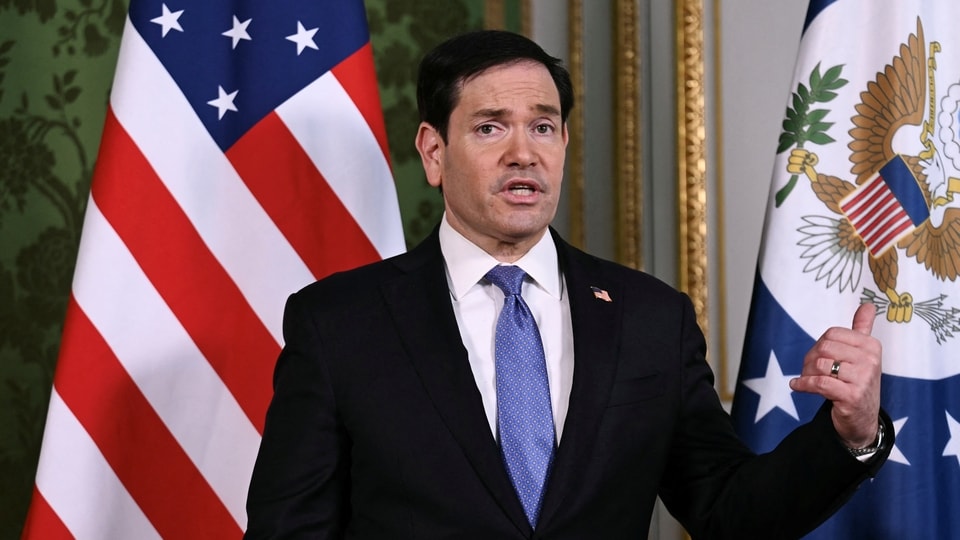
United States Secretary of State Marco Rubio on Tuesday said Iran was facing “extraordinary economic pain” from the sanctions imposed by America, while adding that he sees no need to resume major combat operations against Tehran at present.

“The economic campaign (against Iran) is so devastating that right now there is no need for major combat operations,” Rubio said. (via REUTERS)

“The economic campaign (against Iran) is so devastating that right now there is no need for major combat operations,” Rubio said after a meeting of the G7 foreign ministers in Paris, adding that this was what he told his allies too, AFP reported. He said US President Donald Trump had “concluded” there was no need to resume military action, adding that America’s objective was being achieved “by economic means.”

He further said, “The economic pain that is being inflicted on Iran right now, on that regime, is extraordinary.” The US Secretary of State said this would keep “growing every day”, warning that it would “get worse” over time. Rubio blamed the Islamic Republic for the sanctions, claiming the “economic pain” had been imposed by the Iranian regime “on its own people.”

Also Read | France summons Iran envoy over cyberattack on supermarket refrigerators, warns of retaliation

“It’s all brought about by the fact that this radical regime of lunatics is imposing this on their own people. They’re destroying their own country,” Rubio said. However, Rubio issued a warning for Iran, saying if the country crosses any “red lines”, the “US military stands ready”.

The conflict began with US-Israeli strikes on Iran in February earlier this year. Tehran retaliated with attacks on US interests and bases in Gulf countries, and effectively blocked navigation in the Strait of Hormuz. While a ceasefire framework was agreed upon in June, it quickly unravelled over sticking points, including Iran’s nuclear programme and navigation in Strait of Hormuz.

Iran urges US to address demands; Trump sees ‘positive momentum’ after meeting with Qatar PM

Iran on Tuesday urged the United States to meet its demands for reopening of Strait of Hormuz, even as US President Trump spoke of “positive momentum” towards ending the eight-month conflict, AFP reported. Trump’s remarks came after he met with Qatari Prime Minister Sheikh Mohammed bin Abdulrahman bin Jassim Al Thani.

Qatar and Pakistan are leading diplomatic efforts to end the conflict.

Tehran said the conflict will not be resolved by stepping up military action. “The only solution is to adopt a language of respect, engage in diplomacy, and address Iran’s demands and conditions — which were outlined in the two-day proposal and remain on the table,” Iran’s foreign minister Abbas Araghchi told news agency IRNA. Iran’s conditions include ending the war on all fronts, unfreezing Iranian assets, lifting oil sanctions and ending the US naval blockade on Iranian ports.

Also Read | Oil prices: Brent crude, WTI fall as Trump rules out fresh Iran strikes amid Strait of Hormuz concerns

Trump, after his meeting with the Qatari leader, had said there was momentum toward ending the war with Iran, and added that he would hold off on new military strikes against Iran for the time being.

Following the meeting, Qatari PM Al-Thani said he was “grateful for the positive discussions on reaching a deal and bringing peace to the region.” Al-Thani made an unscheduled stop at the G7 foreign ministers meeting in Paris after the talks with Trump.

“On this occasion, the ministers will discuss the situation in the Near and Middle East—in particular the Iranian crisis and its security and economic repercussions, both for the region and for the international community as a whole,” France’s foreign ministry said in a statement.

Achievements Could Be Making Gaming Worse for Everyone


This is an opinion piece from writer Travis Northup. IGN’s opinion columns represent the personal viewpoints of the writer, drawing on their own experiences and research to explore the exciting world of video games.

During a recent visit to Phantom Blade Zero developer S-GAME ahead of the action RPG’s release, the studio showed off a pretty neat difficulty option that unlocks once you’ve beaten the game, called 66 Days Mode. Here, you’re given just 66 chances to complete the entire campaign, turning the protagonist’s heart condition into a smart in-game mechanic for truly dedicated players to take on as the ultimate challenge. Excitedly, another member of the press said, “Ooh, that’ll be a fun achievement to chase,” to which a developer quickly chimed in to say, “No, no. There’s no achievement. All achievements can be acquired on a single playthrough on any difficulty.”

This is a strategy I’ve heard quite a few times in 2026. Over the course of my numerous game studio visits this year, I’ve spoken with more and more developers who are intentionally curating their achievements list to be as approachable and inoffensive as possible. Why? Because they’ve learned that there’s a growing population of players who factor them into their purchasing decision – sometimes even opting to skip out on games they would have otherwise enjoyed if collecting all of the digital trophies isn’t a guarantee, or requires them to go out of their way.

The result of this threatens a landscape that’s worse for everyone, whether it’s players who have become increasingly invested in the treadmill of chores to complete or developers who have a financial incentive to design components of their game around the desires of the achievement-hunting community (undermining the entire point of achievements to begin with).

Achievements have, of course, been around since the Xbox 360 debuted in 2005. Within three years, both PlayStation and Steam had their own equivalents. Yet despite being well aware of their two-decade existence and the obsession that can surround them, I’d never personally talked to anyone from the achievement-hunting caucus until recently. I made a new acquaintance while playing tabletop RPGs, and while making small talk during character creation, I noticed this person had a Steam Deck with them. I asked what games they were excited about playing, and they said, “I’m thinking of getting the new Castlevania game… just waiting to see what the achievements list looks like.” I used the opportunity to probe into their worldview and how they enjoy games. They explained that for them, checking off the list of to-dos in a game was cathartic, and if too much was required of them to complete the list, it stressed them out and made them not want to play at all.

For as long as RPGs and quest logs have existed, there’s certainly been an element of the checklist and completionism in the nerd space, as many of us have a compulsion to do and see everything a game offers. That’s now a part of game design more than ever thanks to the growth of live-service: Fortnite wants you to log in daily to tick off a list of jobs that may not even be in the game modes you want to play that day, but you do so just to receive that hit of XP. That influence has bled over into offline single-player games as well, like Ubisoft adding an in-game list of daily and weekly chores to tick off in recent Assassin’s Creed games, asking you to unnecessarily grind repetitive tasks rather than focusing on the more engaging content those games offer.

I’ve always considered those dailies as optional extras at best and chaff to be ignored at worst. So I’d be lying if I said it isn’t at least a little bit depressing to hear that, for some, the medium has been reduced to a Trello-like task board that they prepare for in advance and play while heavily referencing a guide to ensure they don’t miss out on any of the trophies along the way. For me, the whole point of gaming as a medium is discovery, experiencing your own personal version of an adventure or story, and, well, playing. It feels like a growing number of players have forgotten the playing part – like those who follow the instructions on a LEGO set step-by-step rather than using those building blocks to create something unique.

Not including an achievement for a game’s hardest task completely inverts the entire point of achievements.“

While I don’t believe this approach of play is anywhere close to becoming mainstream, it’s clearly dominant enough that it’s affecting the design strategy behind achievements and even games at large. Not including an achievement for a game’s hardest task for fear of alienating a particular group, or calibrating an entire achievement list to be easily attained on a single playthrough completely inverts the entire point of achievements, where players were incentivized to hunt for secrets and overcome the most challenging content. Not only that, if this strategy becomes widespread over time, it will have taken something that’s supposed to be fun and turned it into something that exists purely as a marketing tool for the developer. “How painless will it be to get all the achievements?” becomes just another bullet on some PR manager’s press release to persuade those with an acquired addiction to these virtual badges to spend time and money on their game. I certainly have my own opinions of those who place so much stock in achievements that they allow them to determine which games they play, but even those who casually enjoy aiming for the highest accolades and hunting for the most elusive secrets have lost something when achievements for pursuing those challenges no longer exist.

But there’s a much more consequential issue at play here: how the habits of achievement hunters are actively affecting game development. It seems that many developers actually designing the games aren’t as thrilled by it. I’ve begun asking designers and directors about their relationship with achievements any chance I get, and the most common sentiments from my limited sample range from mild annoyance to outright antagonism toward them.

Sam Barlow, a designer who worked on the Silent Hill series before creating indie darlings like Her Story and Immortality, recently took to social media to express his opinion on the matter, writing a thread of posts that describes the friction quite well:

And herein lies the problem: when players start taking achievements seriously, especially if it’s factoring into which games they choose to buy, developers have to start taking them seriously too. And if they want to use achievements to encourage players to chase interesting stuff they’ve hidden in their game or take down its most challenging content, as most developers I’ve talked to seem to want, then they find themselves at odds with the “easy checklist” a segment of players are looking for. Now what was a minor annoyance that non-achievement hunters could mostly ignore has real consequences for all of us – because the fear of losing out on the market of achievement hunters could actively influence actual game design.

In Phantom Blade Zero’s case, the impact on design is pretty clear, as S-GAME has stated that the 66 Days Mode has no unique weapons, enemies, or unlockables associated with it – not even a fun cosmetic item for those who beat it to show off. It’s definitely possible that there are completely unrelated reasons for this decision, but my conversations with the team certainly made it seem like not pissing off the achievement hunters was at least part of the reason here.

When players start taking achievements seriously, especially if it’s factoring into which games they choose to buy, developers have to start taking them seriously too.“

There’s an interesting argument to be made where one could view this shift in achievement philosophy as a move toward accessibility and not placing these accolades out of reach for those who don’t have the time, patience, or skill to do the demanding stuff that’s sometimes required. It’s certainly an angle I’ve heard some developers focus on when they describe their approach, including some of the developers at S-GAME in regard to Phantom Blade Zero. And there’s likely a genuine effort by some to simply remove barriers for those who care about achievements – a small price to pay to appease those who do, especially when most developers don’t seem to. But that shift also removes any sense of real achievement for those who do want challenging or interesting objectives beyond those presented within a game.

And in any case, if accessibility is a factor, it’s certainly secondary to the thing game makers actually care about: selling their game to as many people as possible. Whether you think it’s a good thing or not, you have no incentive to play Phantom Blade Zero’s 66 Days Mode aside from your own satisfaction, and that’s at least partially influenced by the commoditization of achievements as a selling point rather than a fun list of optional pursuits. And if achievements no longer exist as digital bragging rights for exactly the type of pursuit that 66 Days Mode represents, then what purpose do they serve?

Maybe this new era of challenge-free achievements is just the invisible hand of the market doing its thing. Maybe developers, who could use some help avoiding studio closure and layoffs these days, will be able to benefit from those who care about achievements by selling a few extra copies. But whether it’s the clinical way a growing number of players are using achievement lists as glorified Jira tasks, the vanishing number of achievements that are actually worthy of bragging about, or the impact of achievement-hunting culture on the actual development of games, it seems to be making things worse for all of us. And I, for one, think that’s a shame for something that started out so intentionally silly and fun.

Travis Northup Avatar

Travis Northup is a writer for IGN. You can follow him on Twitter @TieGuyTravis and read his games coverage here.


Illinois casino revenue increases 10.4% to $182.9 million in October – CDC Gaming


Illinois’ casinos recorded $182.9 million in revenue during October, up 10.4% year over year.

The Illinois Gaming Board figures showed that slots brought in $140.7 million, up 11.3%, while table games generating $42.2 million, up 7.2%.

Among the state’s 17 casinos, Rivers Casino brought in the highest revenue, $43.6 million, up 1.1%.

Illinois’ other leading revenue generators included Wind Creek ($20.2 million), Hollywood Casino Aurora ($14.7 million), Hard Rock Casino Rockford ($13 million), Bally’s Chicago ($12.1 million), Grand Victoria ($11.9 million), Hollywood Casino Joliet ($11.7 million), Full House Resorts ($11 million), and Harrah’s Joliet ($9.8 million).

Revenue increased year-over-year at 14 of the state’s 17 casinos, with Hollywood Casino Aurora recording the strongest growth, with revenue rising 75.2%. This was followed by Fairmount Park (up 57.8%), Golden Nugget Danville (up 23.2%), Wind Creek (up 16.8%), Bally’s Chicago (up 16.0%), and Harrah’s Joliet (up 12.2%).

Par-A-Dice Hotel Casino recorded the largest year-over-year decline, with revenue dropping 6.5% to $5 million. Walkers Bluff and Argosy Casino Alton also reported decreases of 1.6% and 0.7%, respectively.

The US Government Just Announced a New Counter-Drone Effort. Will It Amount to Anything?


The new plan commits several parts of the government to working with the Federal Aviation Administration on anti-drone measures, but is relatively light on detail.

The Trump administration announced on Monday an expanded federal effort to defend American airspace against unmanned aircraft threats. As part of that effort, five cabinet-level agencies signed a new memorandum of understanding to cooperate in anti-drone efforts: the Department of Transportation (DOT), Department of Defense (DOD), Department of Homeland Security (DHS), Department of Energy (DOE), and Department of Justice (DOJ).

The agreement establishes a coordinated process for evaluating and deploying counter-unmanned aircraft systems (C-UAS), aiming to strengthen homeland security while protecting civilian aviation.

The US Government Is Trying to Figure Out What to Do About Drones

Small unmanned aircraft, which have become increasingly accessible, inexpensive, and capable, have long been a nuisance for the Federal Aviation Administration (FAA). More recently, however, they are also becoming a homeland security concern. Drones can be used for surveillance, smuggling, reconnaissance, or potentially even violent attacks. As the war in Ukraine has demonstrated, it is trivial to strap a grenade to a drone, fly it towards a person or target one wishes to harm, and detonate it. These tactics were prominently used during Ukraine’s “Operation Spiderweb” in June 2025, when small low-cost Ukrainian drones destroyed Russian aircraft costing hundreds of millions of dollars; the US military now faces similar vulnerabilities on its own military bases.

The Trump administration has identified several areas of concern:

  • The southern border, where drone activity is associated with criminal organizations and cartels;
  • Military installations, where unauthorized aircraft can potentially threaten sensitive facilities; 
  • Energy infrastructure, which is vulnerable to unmanned threats; and
  • Public events, where drones can be used for wholesale terrorist attacks against large gatherings. The FBI recently arrested five individuals allegedly plotting to use explosive-equipped drones near a White House event, which further illustrates the growing domestic security implications of drone technology.

The new memorandum establishes a formal process for federal agencies to coordinate counter-drone research, testing, evaluation, and deployment. Agencies will work with the Federal Aviation Administration (FAA) and Federal Communications Commission (FCC). Cooperation will cover technologies capable of detecting unauthorized drones, tracking their movements, disabling or stopping them, and potentially taking control of threatening aircraft. Agencies will share technical requirements, testing data, and operational assessments. The FAA will review proposed systems for aviation safety risks. The DOT will help determine how counter-drone capabilities fit into the broader transportation system. The goal here ultimately is to streamline deployment without creating conflicts between federal agencies or compromising civilian flight operations.

Anti-Drone Lasers Could Be One Solution to America’s Border Woes

The agreement also builds on earlier federal cooperation involving counter-drone operations along the US-Mexico border. The FAA and DoD previously coordinated a “temporary flight restriction,” or TFR, along the southern border. They also completed a safety assessment involving a high-energy laser counter-drone system. 

Directed-energy weapons offer a potential means of disabling drones without relying on conventional interceptor missiles. On the flip side, the deployment of directed-energy weapons near civilian aviation raises safety concerns. Laser systems require careful coordination to prevent unintended exposure of aircraft or other hazards. The administration says these technologies can be deployed safely when appropriate airspace restrictions and operational safeguards are established.

Vital to the new agreement is the objective that counter-drone operations do not create additional aviation hazards. Counter-drone technology could involve lasers, electronic interference, or other systems with the potential to cause problems for nearby aircraft and their navigation equipment. The FAA will be tasked with conducting safety risk assessments of proposed deployments. Reviewers will pay close attention to the potential for interference with civilian aircraft and airspace coordination. In essence, the arrangement will seek to balance national security requirements with the safety of the civilian aviation sector in a reflection of the growing importance of counter-drone capabilities in domestic security.

About the Author: Harrison Kass

Harrison Kass is a writer and attorney focused on national security, technology, and political culture. His work has appeared in Tablet, City Journal, The Hill, The Spectator, and The Cipher Brief. He holds a JD from the University of Oregon and a master’s in Global & Joint Program Studies from NYU. More at harrisonkass.com.

Topic: Air Warfare, The Cabinet
Tags: Aerial Drones, Department of Defense (DOD), Department of Energy (DOE), Department of Homeland Security (DHS), Department of Justice (DOJ), Department of Transportation (DOT), Directed Energy Weapons (DEWs), Drones, Enduring-High Energy Laser (E-HEL), Federal Aviation Administration (FAA), Lasers, United States (USA), US-Mexico Border


Source link

Michigan sports parent allegedly defecates in rival high school’s corridor: ‘definitely a first’ | US crime


An apparently sports-mad parent from a Michigan high school has stunned authorities and triggered a police investigation after allegedly entering a rival school and defecating in a corridor.

The bizarre case unfolded at the Grosse Pointe South school with the parent a fan of fierce local rival Bedford high school. The two schools were engaged in a district championship football game on Friday, the Detroit TV news outlet WXYZ reported.

“This is definitely a first,” Grosse Pointe Farms detective Anto Trupiano told the broadcaster.

WXYZ reported that the suspect had been tracked down from surveillance video and claimed to have had a medical emergency. But police seem skeptical.

“The suspect entered the school through a doorway that was open for a band concert,” Trupiano told the TV station. “He then proceeded to walk around the school, pass several bathrooms, turned the corner stepped into a doorway and defecated in the middle of the school.”

The Grosse Pointe public school district said in a statement: “This behavior is wholly unacceptable and is inconsistent with the standards of conduct and respect that the district expects of anyone entering its school facilities. While interscholastic athletics provide students with valuable lessons in teamwork, sportsmanship, perseverance, and respect, those lessons must also be modeled by the adults who attend such athletic events.”

America’s Oldest Active Turnpike Will Pull Down All Its Toll Booths In 2027


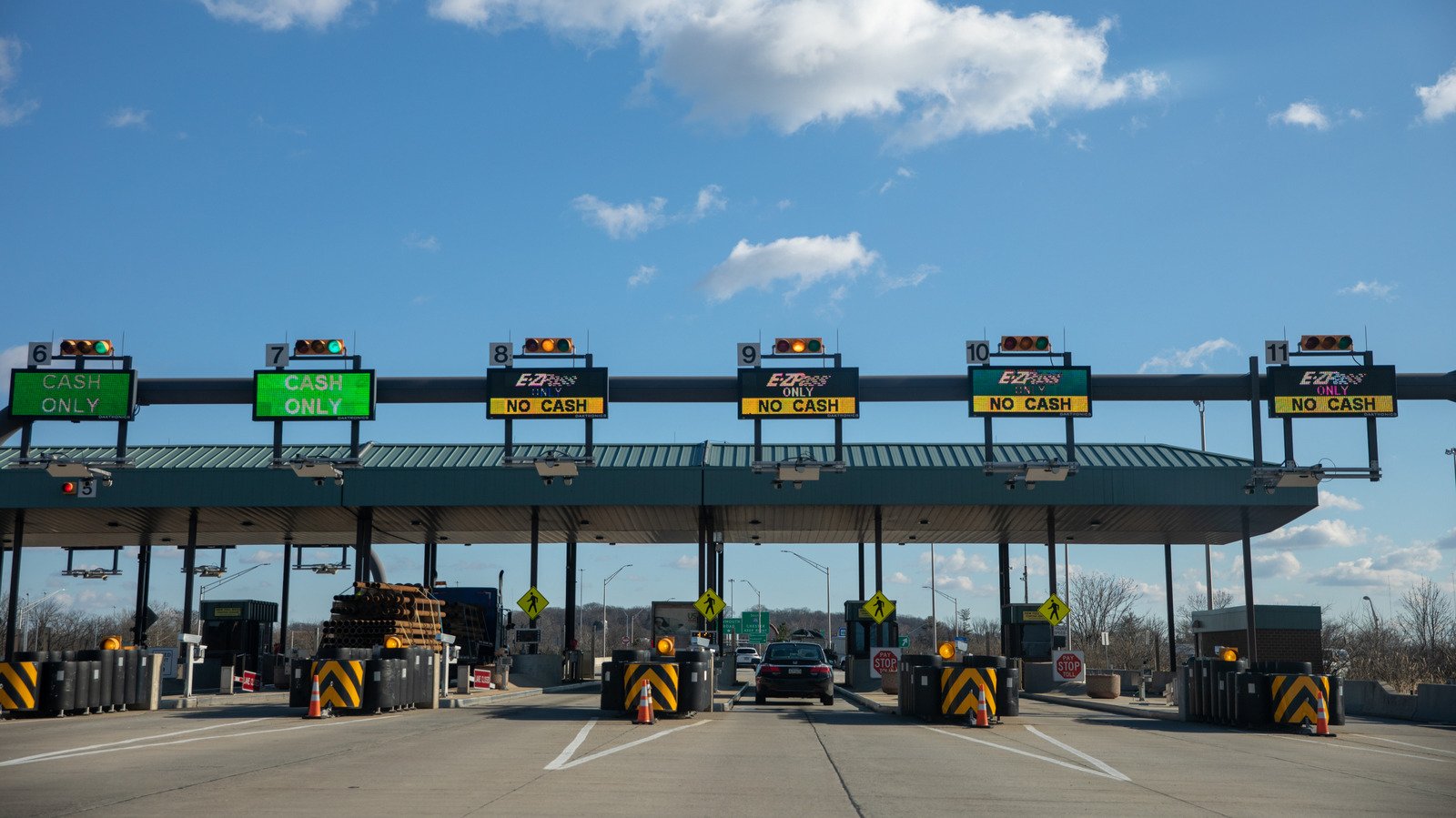
Tossing the coins into a metal bin at a toll booth is as dated as looping the dial on a rotary phone. The Pennsylvania Turnpike announced last week that it will switch to open-road tolling at the start of next year. The transition won’t be immediate, as contractors have been tasked with removing physical toll booths over the next two years. Officials tout full implementation of open-road tolling as more convenient for drivers and far safer.

Pennsylvania Turnpike opened back in 1940, stretching 160 miles from Harrisburg across the Appalachian Mountains to Pittsburgh. Extensions during the 1950s took the toll road to the state borders with New Jersey and Ohio on either side of the Keystone State, for a total of 360 miles. The turnpike’s design served a blueprint for the Interstate Highway System. Besides the payment receptacles, some of the original toll booths are still in place, according to PennLive.

Implementing open-road tolling on the Pennsylvania Turnpike has been a 16-year process. According to the Pittsburgh Post-Gazette, officials commissioned a feasibility study in 2010, which deemed the payment system impossible because the turnpike lacked a fiber-optic infrastructure. Because of the COVID-19 pandemic, the toll booths went contact-less in 2020 and relied solely on electronic payments. By 2025, the turnpike began transitioning to open-road tolling.

A frictionless system that will eventually save more money that it costs

For those familiar with open-road tolling, overhead gantries photograph the front and rear of your vehicle as you drive past. Antennas are also mounted on the gantries to read EZPass transponders. Sensors embedded in the pavement can determine how many axles your vehicle has, which helps distinguish commercial vehicles. There are no toll plazas, so drivers don’t have to slow down and wait for a gate arm. On the Pennsylvania Turnpike, tolls are calculated based on how far you travel along the route, so the gantries monitor when you enter and exit.

There is obviously a massive upfront cost to removing the toll booths and installing the gantries. The improvement work in Western Pennsylvania is estimated to cost $134 million. However, the savings will recoup the costs over time. The transition is expected to save the Pennsylvania Turnpike Authority roughly $25 million a year. For those concerned about the turnpike’s history, one of the original 1940 toll booths has already been removed and relocated to the State Museum of Pennsylvania as part of an exhibit on the roadway.

Open-road tolling will be safer than the old toll plazas

Open-road tolling is also safer than traditional toll plazas. It might seem natural to slow down as you approach the toll booth, but your safety depends on all the drivers behind you doing the same. After investigating a fatal 2024 crash on Interstate 80, the National Transportation Safety Board recommended in September that the Ohio Turnpike “permanently close low-speed tolling lanes and implement fully electronic tolling at its toll plazas.” The driver of an SUV abruptly braked and swerved right, attempting to leave the high-speed electronic toll lanes for the booth-controlled low-speed lanes. The SUV cut in front of a tractor-trailer, which struck the smaller vehicle from behind. The crash killed two passengers inside the SUV, as well as seriously injuring a third passenger and the drivers of both vehicles.

Toll booths are gradually going extinct. While I do feel some nostalgia for the ritualistic payment process, open-road tolling is becoming more widespread for good reason. The bridges and tunnels around New York City demolished their toll booths in 2022. Florida’s Turnpike and the Illinois Tollway ditched their booths in 2021 and 2024, respectively. Many other toll roads across the country are in the midst of their own open-road tolling transition.


Source link