







A century of records shows European pollinator decline is uneven. Nearly all wild bee species persist, but most have lost range since 1921.
At first glance, the survival of Europe’s wild bees looks like a success story. Records show that almost every bee species seen in the last century is still alive somewhere today.
However, when scientists map out exactly where these bees are actually living, it becomes clear that their territories are rapidly disappearing.
Most wild bee species occupy less of Europe than they did a century ago. Among the species with enough records to track, the average bee has lost about a third of its range since 1921.
The authors call it a reshuffling rather than an extinction wave: sensitive species are thinning out while a resilient few spread.
Assessing Europe’s pollinators
Carlos Martínez-Núñez of the Doñana Biological Station in Sevilla, part of Spain’s national research council, CSIC, led the analysis.
His co-authors include Ignasi Bartomeus at Doñana, who designed the study with him, and researchers at the University of Mons in Belgium and the University of Novi Sad in Serbia.
The records they used were gathered opportunistically over a century, not in a planned survey. They come from museum drawers, expert collections, published papers and online databases.
So the team had to correct for a century of uneven collecting, and it could estimate trends for only about 40 percent of species.
Four million records, one century
The dataset holds more than four million records of wild bees and hoverflies collected across Europe between 1921 and 2020, each one checked by taxonomists.
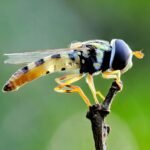
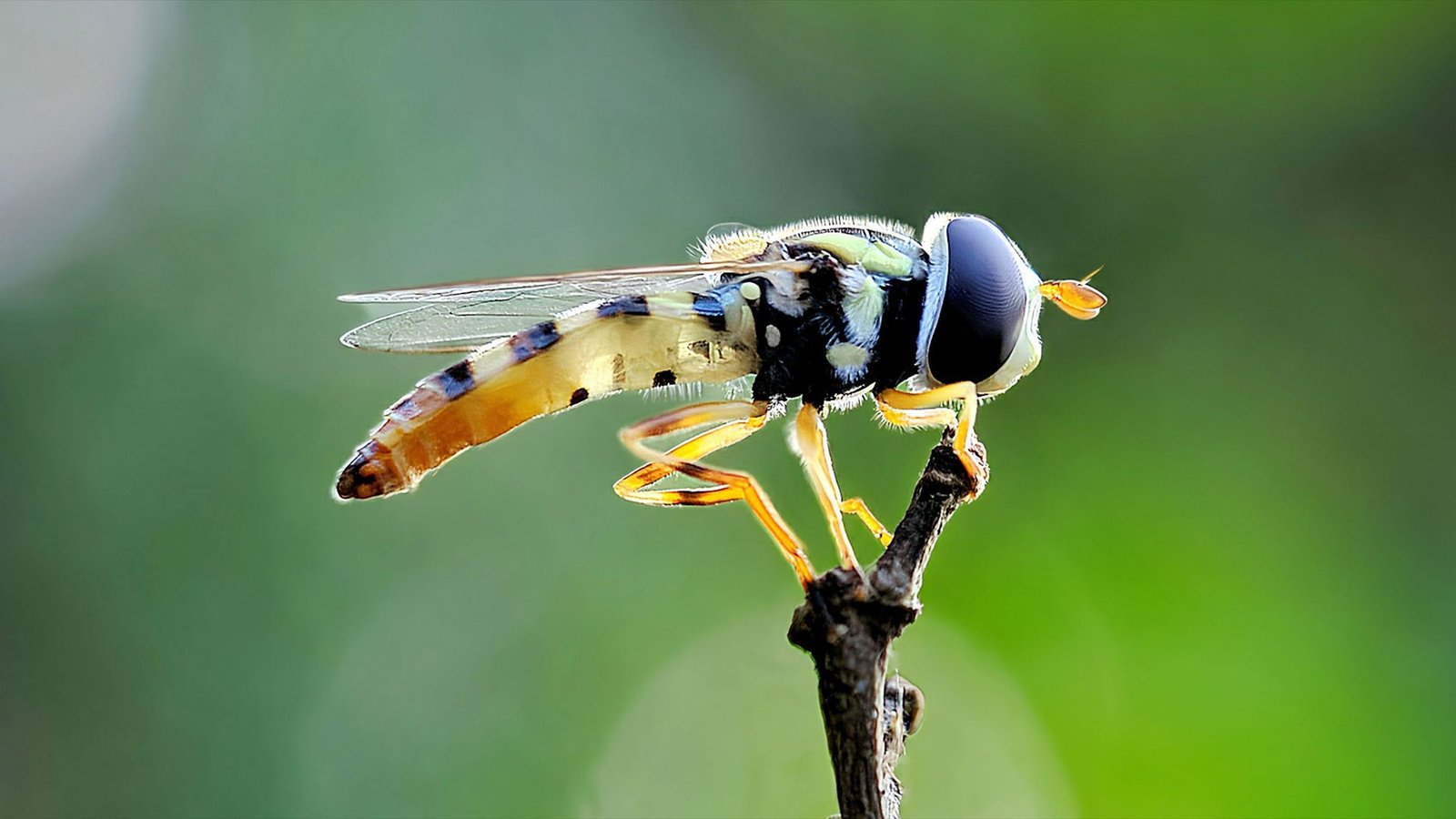
Hoverflies are flower-visiting flies and Europe’s other big group of insect pollinators.
Between them, the records cover 1,898 wild bee species and 784 hoverfly species. That’s 88 percent of the 3,051 known on the continent.
To turn scattered records into trends, the team divided Europe into hexagonal cells with sides about 31 miles (50 kilometers) long.
For each species and each year, the models estimated which cells it occupied. They also estimated how likely a species was to be recorded at all, so a decade with few collectors wouldn’t read as a decade with few bees.
Extinctions look rare
About 91 percent of the species in the dataset have at least one record from 2001 onward. The rest, at most 9 percent, could be candidates for extinction across the continent.
However, most of them were extremely rare a century ago too, and the IUCN’s European Red Lists name only 14 bee species and one hoverfly as possibly extinct.
Counting species, region by region, gave a mostly stable picture as well. The Atlantic region, which takes in the United Kingdom, Belgium, the Netherlands and western France, lost wild bee and hoverfly species steadily across the century.
In the Continental region of central and eastern Europe, the historical decline in bees slowed while hoverflies fell in recent decades.
Most of what scientists know about pollinator decline comes from the Atlantic region, where farmland was transformed over the past century. The authors wrote that declines that steep may not hold across the rest of Europe.
Most bee species lost range
The species-by-species view is where the reassurance ends. In every region except the Alpine one, more bee species were shrinking their range than expanding it.
In an interview with Earth.com, Martínez-Núñez said that gap is what surprised him most, and that a count of species alone can hide big changes.
“Species may still be present, but their declining occupancy can provide an early warning of broader environmental change, long before they become extinct,” he said.
Averaged across Europe, bee occupancy fell by 0.42 percent a year, a 34 percent drop over the century.
Hoverflies have a different story
For hoverflies, the pattern looked different: species expanding and contracting were roughly balanced, and the continental average rose.
“Hoverflies show a contrasting positive trend at the European scale, highlighting the importance of looking beyond broad generalizations about pollinator decline,” Martínez-Núñez told Earth.com.
But that rise came mostly from a small number of species with very large gains, and from the early decades, when records are thin. When the team began the analysis in 1971 instead, the hoverfly increase flattened to no change.
For bees, the later start changed where the losses showed up. The Atlantic decline disappeared, which fits damage done early by agricultural intensification. Declines in the cold Boreal north and the warm Mediterranean south grew steeper.
The Alpine region was the exception: declining bee species didn’t outnumber expanding ones there, and among hoverflies the expanding species dominated.
The authors read that as warm-adapted species moving uphill as the climate warms.
Cold-adapted bees fared worst
Body size, diet, social habits and climate preference together explained less than 1 percent of the variation in how a species did.
However, one weak pattern held. Bee species tied to warmer climates tended to expand their range, and cold-adapted groups, bumblebees among them, tended to contract, with wide differences inside each group. Hoverfly declines clustered in cold-adapted genera as well.
Some genera of parasitic bees, which lay their eggs in other bees’ nests, declined consistently, and so did some bees that collect pollen from a narrow group of plants. Others of the same kind did fine.
The team found a weak link between a parasitic species’ trend and its host’s.
Endangered bees show steep declines
The regions that worry Martínez-Núñez most are the Atlantic and Continental ones, where bee and hoverfly diversity has declined.
“I’m also concerned about specialist and parasitic bees, which may be particularly vulnerable to environmental change.”
Bee species the IUCN Red List classes as Critically Endangered showed the steepest declines of all.
Species the list marks as Data Deficient, meaning too poorly known to assess, also had consistently low trends. The authors took that as a sign that little-studied species may be declining without anyone noticing.
Unanswered questions
Occupancy tracks where a species is found, not how many individuals live there. A bee could be vanishing from most of a cell and still count as present. The models worked for 1,225 of the roughly 1,940 species with enough records to try.
Records are sparse in the first half of the century studied. Some regions have thin coverage, and the recent downturn in Alpine hoverflies shifted when the team changed the model, so they called it too early to confirm.
Whether the reshuffling is already costing Europe pollination is the open question. The authors wrote that the consequences of this kind of species turnover are rarely tested.
Planning for the future
Asked what can be done now, Martínez-Núñez said farmers can keep hedgerows, field margins and flower-rich habitats. City planners can link up green spaces planted with native species.
“Gardeners can plant native flowers that bloom throughout the year and avoid pesticides,” said Martínez-Núñez.
The authors expect their trend data to feed the next Red List assessments, including for pollinators now listed as of Least Concern that are in decline.
Long-term monitoring of Europe’s wild pollinators is still missing, so a century of museum drawers is the only long view there is.
The full study was published in the journal Proceedings of the National Academy of Sciences.
—–
Like what you read? Subscribe to our newsletter for engaging articles, exclusive content, and the latest updates.
Check us out on EarthSnap, a free app brought to you by Eric Ralls and Earth.com.
—–