









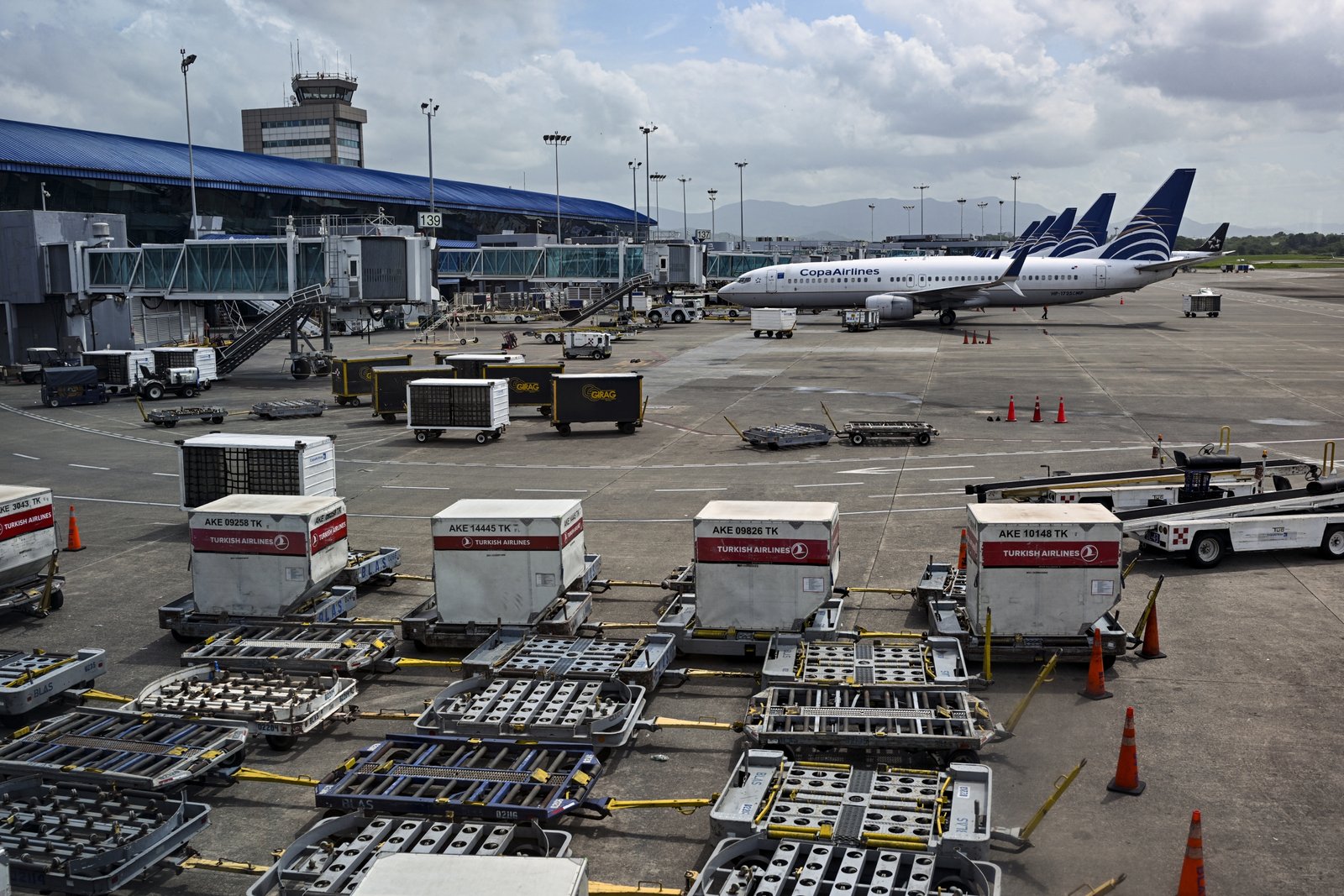

Photo by MARTIN BERNETTI / AFP via Getty Images
The Briefing:
- 54% of all flights in Latin America and the Caribbean now operate at airports classified by IATA as congested or severely congested — and demand is widening the gap faster than any infrastructure solution can close it.
- Lima’s Jorge Chávez International Airport has lost at least eight international routes since the introduction of a $11.88 per-passenger transfer fee that IATA called “madness,” with LATAM Airlines cutting two more routes effective April 2027.
- Brazil faces a proposed VAT reform that IATA calculates would add $195 to the average international ticket and suppress demand by roughly 30%, threatening the region’s largest aviation market at its most vulnerable moment.
More than half of all flights across Latin America now take off or land at airports that IATA officially classifies as congested — and the structural gap between demand and capacity accelerated through 2026 with no meaningful fix on the horizon.
The figure, 54%, was disclosed by IATA Regional Vice President for the Americas Peter Cerdá at multiple industry forums this year — including Wings of Change Americas 2026 in Santiago and the ALTA Annual General Meeting in Lima — laying bare a supply crisis that is already canceling routes, redirecting hubs and pricing passengers out of their seats, even as regional demand keeps climbing.
A Region Outflying Its Own Infrastructure
Latin America entered 2026 with some of the strongest aviation demand figures on the planet. International revenue passenger kilometers grew through the first quarter while capacity expanded at a slower rate — a gap that tells the entire story. The region is filling planes faster than it can build gates.
Cerdá has named the same airports in every diagnosis this year: Bogotá’s El Dorado, São Paulo’s Guarulhos and Congonhas, Lima’s Jorge Chávez and Mexico City’s AICM. All are, in his words, “operating at their limits.” The congestion is no longer a peak-season anomaly — it has become the baseline operating condition for the majority of regional air traffic.
IATA classifies these terminals under Level 3 coordination, a designation triggered when sustained demand structurally exceeds available capacity and airlines can only secure slots through centralized allocation — a system that throttles growth by design.
Lima: The Most Costly Cautionary Tale
No airport has crystallized the crisis more sharply than Lima’s Jorge Chávez International. The introduction of a mandatory international transfer fee — the TUUA — set at $11.88 per connecting passenger prompted IATA to call the measure “another setback” that diverted passengers to rival hubs and jeopardized more than 1,000 annual flights.
The fallout has been measurable and swift. Peru-based carriers announced at least eight international route cancellations directly attributable to the fee, according to ALTA. Meanwhile, the airports absorbing Lima’s diverted connecting traffic posted significant gains in the first months of 2026: Panama’s Tocumen surged approximately 19.4%, El Salvador International climbed roughly 17.3%, and Bogotá’s El Dorado rose around 16.2% in connecting passenger volumes, per ALTA data for January through April 2026.
LATAM Airlines announced in September it will cut Lima–Montego Bay and Lima–Antofagasta service starting April 2027, citing fuel costs and the TUUA directly. The airline had already suspended routes to Orlando, Curaçao, Florianópolis and Tucumán earlier in the year for the same reason.
The Cost Compression Squeezing Airlines Across the Region
Infrastructure is only one layer of the problem. Airlines operating across Latin America are simultaneously absorbing jet fuel projected above $120 per barrel for 2026, elevated airport charges and a tax environment that IATA describes as structurally punitive.
Brazil — the region’s largest aviation market — faces a proposed VAT restructuring that IATA calculates would inflate the average international airfare by roughly $195, pushing a $740 base ticket toward $935, while suppressing demand by approximately 30%. For a country where aviation connects continental distances, that is not a rounding error. IATA Director General Willie Walsh has called the measure a potential crisis for the sector.
Colombia, by contrast, is one of the region’s notable bright spots, with passenger volumes growing steadily and Bogotá’s El Dorado functioning as a primary beneficiary of traffic displaced from other congested hubs.
Secondary Airports: The Next Fault Line
Cerdá has flagged a warning that goes beyond the headline hubs. Congestion is now spreading to secondary airports in Chile, Colombia and Peru, markets that lack the network density to absorb overflow from saturated gateways.
“New terminals have been built, but they get saturated quickly because capacity is taken up immediately,” Cerdá noted, pointing to Santiago and Lima as recent examples. The pattern reveals a systemic planning failure: infrastructure arrives just in time to be overwhelmed.
IATA’s recommended path forward combines slot management reform, public-private investment coordination and secondary airport development — particularly across Chile, Colombia and Peru. Costa Rica’s Juan Santamaría and Daniel Oduber Quirós airports are already moving to Level 2 coordination in 2026, a threshold IATA calls an important regional precedent.
No Quick Fix in Sight
The numbers project the pressure forward. Latin America is on track to nearly double its passenger volumes before mid-century, yet the infrastructure buildout required to support that trajectory has not begun at the necessary scale. Regional demand held above year-over-year growth through the first half of 2026 — a floor, not a ceiling.
For travelers booking U.S.–South America itineraries, the congestion is already reshaping routing options, fares and connection reliability. For airlines, it is the defining constraint on network expansion in what remains one of the world’s fastest-growing aviation markets.
© {{Year}} Latin Times. All rights reserved. Do not reproduce without permission.