







Energy transition expert Chris Nelder looks at which countries are leading the way in the geopolitical race for clean energy supremacy, analysing coverage from PV Tech, Energy-Storage.news and EV Infrastructure News in 2026.
Astute observers of the energy transition now think of countries as belonging to one of two groups: the ‘petrostates’ and the ‘electrostates.’ Historically, ‘petrostates’ were considered those whose economies and governments were heavily dependent on revenues from the production and export of oil and/or natural gas. Now, the term is often interpreted more broadly to mean countries primarily committed to a fossil-fuelled energy regime. Petrostates often also rely on nuclear power to generate electricity, with some governments continuing to pursue and subsidise it even though it is now the most expensive way to produce electricity.
By contrast, ‘electrostates’ are those primarily pursuing an energy strategy built around electricity, where it’s implied that the electricity is primarily clean and produced from renewable sources.
China has emerged as the clear leader in electrostates globally due to its dominant position in the manufacture, export and domestic use of solar, wind, batteries and electric vehicles, among other things. OPEC+ countries are the ones most often thought of as petrostates, although the US has started to look like one as well under President Trump’s leadership.
Largely thanks to the manifold effects of the war on Iran, this year has seen significant shifts across this spectrum, with many developing countries, long expected to pursue fossil-fuelled pathways out of energy poverty, rapidly adopting electric solutions and renewables instead.
Their motivations are straightforward: it’s far better and cheaper to be able to provide one’s own energy from domestic clean sources whose supply is assured than to remain dependent on supplies of imported fossil fuels whose supply can be disrupted. That’s been especially true this year, as the partial closure of the Strait of Hormuz sharply curbed exports of oil and natural gas from the Persian Gulf and caused prices to soar. The risk of losing access to crucial energy supplies alone would be reason enough to transition to reliable domestic sources, but the cost of imported fuels has radically accelerated those transitions across the world this year.
What’s also becoming clear is that strategically transitioning to domestic renewables and electrification also confers significant geopolitical advantage.
China
China is clearly gaining power—both market power and geopolitical clout—for its leadership in the energy transition. As an exporter, it’s capitalising handsomely on the solar, wind and battery storage equipment it manufactures.
While its might as the world’s top solar provider is well known, the extent to which it is using that might to form geopolitical alliances is perhaps underappreciated. Solar module imports from China to Africa grew by 53% year-on-year in the 12 months to June 2026, according to energy think tank Ember. And 19 countries, including the DRC, Zimbabwe and Egypt, are on track to see solar installations grow by more than 100% this year.
Battery energy storage systems (BESS) have also become a booming market for Chinese exports. China booked nearly 300GWh of orders for its storage solutions in H1 2026, an 83% increase year-over-year, according to CNESA DataLink.
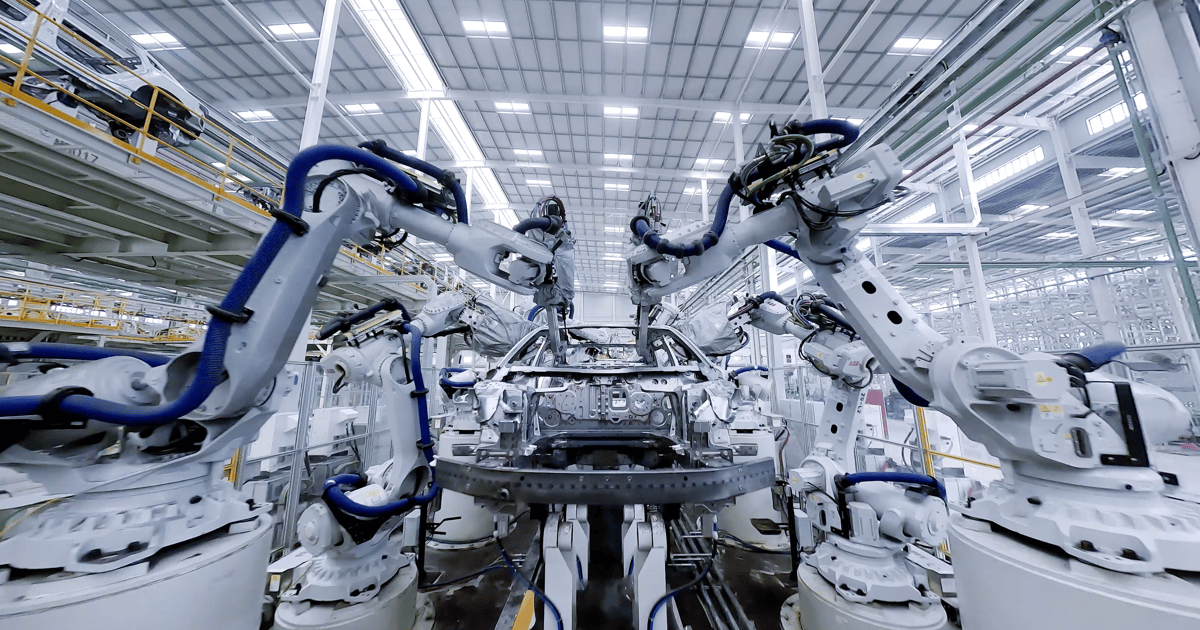
China is also increasingly gaining geopolitical and economic leverage through its production and use of electric vehicles (EVs). According to the IEA’s ‘Global EV Outlook 2026’, Chinese automakers supplied 60% of global electric car sales in 2025, but in the first quarter of 2026, China’s electric car exports more than doubled over the same period in 2025. China also has the world’s largest fleet of EVs, with battery electric vehicles (BEVs) and plug-in hybrid EVs (PHEVs) combined outselling internal combustion engine (ICE) vehicles for more than two years now.
Similar dynamics are now evident in electric trucks as well. More than nine out of every ten electric medium- and heavy-duty trucks sold globally in 2025 were sold in China. Electric models now account for more than a quarter of the heavy-truck market there, and sales of electric trucks have doubled for the past two years in a row. Based on current policies, the IEA reckons, electric trucks are set to take at least a 20% share of global truck sales in 2035, led by China, where they are expected to take a 60% share. According to Reuters, Chinese electric truck exports have more than doubled since the war started, with shipments to South Asia up more than fivefold and to Southeast Asia nearly tripling.
A massive and sustained programme of electric train construction that added over 3,100 km of new railway in 2025 alone, the electrification of cars and trucks and the capacity to fall back on its own strategic petroleum reserve have enabled China to cut its oil imports by 41% year-over-year in June, and to cut its overall oil consumption in Q2 by 9%, according to think tank Carbon Brief. Arguably, China single-handedly stabilised the global oil market and avoided widely expected and severe outcomes of the war. Instead, the rest of the world merely experienced elevated prices for oil and gas.
The net result is that China—the world’s largest oil importer—has displaced around 1,000 barrels of oil per day (mb/d) of oil demand with electric cars in 2025. That should grow to 2.7 mb/d annually by 2030, according to the IEA. Its electric truck fleet will displace another 141 million barrels of oil (roughly 0.4 mb/d) this year, more than 3% of China’s total and equal to all its imports from Kuwait, according to the Centre for Research on Energy and Clean Air (CREA). Electric vehicles alone accounted for about one-third of the decline in its oil demand. And there is a positive climate impact: China’s emissions fell for the first time this year because it used less oil, and not because it used less coal.
China is clearly using its energy might and its ability to reduce its oil demand in the face of a global oil crisis as both a defensive and offensive weapon. It avoided economic damage from sharply higher prices for oil and gas even as it extended its reach as an exporter of oil-displacing technologies globally—as an exporter of goods manufactured in China and as a major partner in overseas manufacturing, operations, technical assistance and project delivery. That’s geopolitical power, and with every passing year, China’s grows.
South Korea
South Korea also intends to use electrotech for geopolitical advantage.
The government announced a KRW1,000 trillion (US$747 billion) energy transition and decarbonisation strategy called the K-GX, or Korea-Green Transformation plan. Through 2035, it aims to:
-
build at least 100GW of renewable energy capacity
-
support industries including green steel, batteries, solar power, wind energy, hydrogen and small modular reactors
-
push electric and hydrogen-powered vehicles to at least a 70% share of new vehicle sales
-
accelerate decarbonisation in its five highest-emitting industries—steel, petrochemicals, refining, cement, and semiconductors and displays
-
lead the global green steel market by becoming the first country to mass-produce hydrogen-reduced steel
-
commercialise tandem solar cells by 2028
-
build domestic supply chains for key clean-energy technologies.
That’s a full-board industrial policy, specifically designed to make South Korea an electrotech powerhouse while substantially eliminating its dependence on imported fossil fuels.
India
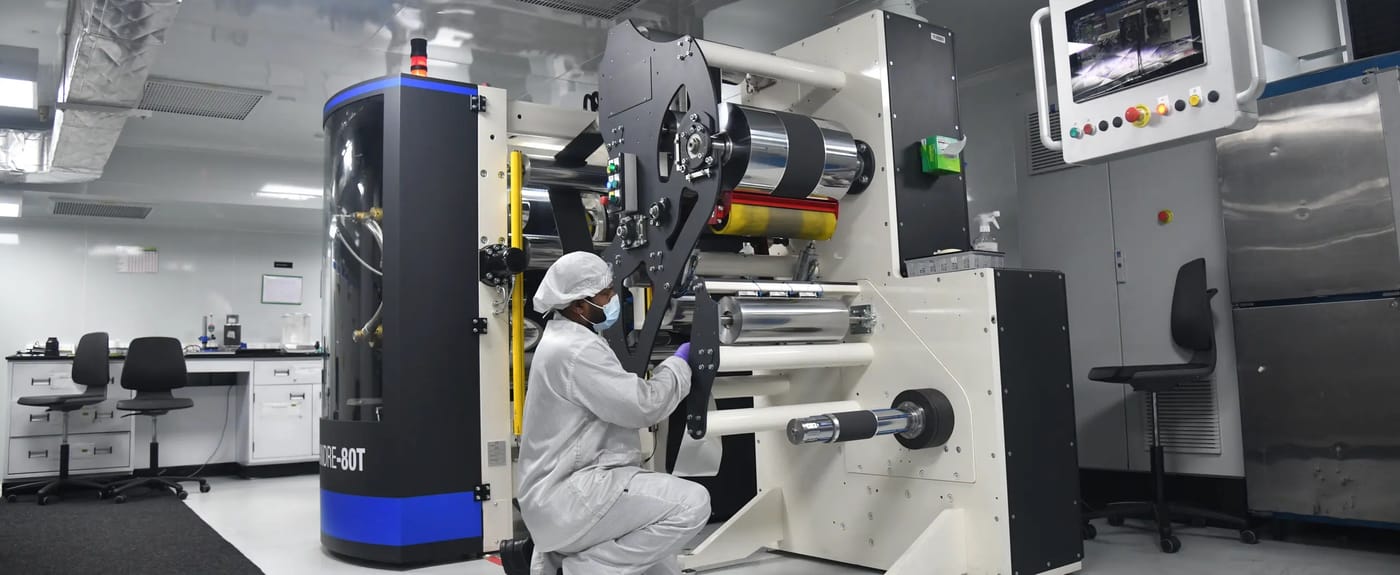
Battery production at Ola Electric, an Indian EV manufacturer which recently entered the BESS market. Image: Ola Electric.
India has put domestic solar manufacturing at the centre of its industrial strategy.
The South Asian nation has been deploying solar at a record pace, with 34GWdc of solar capacity deployed in the first half of 2026, 38% above H1 2025 levels. More than 50GWdc is forecast to be deployed in 2026.
But it’s not just deploying Chinese-made solar cells anymore. Starting 1 June 2026, a broad set of projects involving government programmes, projects, assistance and transactions must meet domestic content and approved-supplier requirements set out in the Approved List of Models and Manufacturers-II (ALMM-II). Those projects can no longer use modules made in India with imported Chinese solar cells; under ALMM-II, the cells themselves must also be made in India.
As of mid-2026, India had about 36GW of annual solar-cell manufacturing capacity, but capacity is expanding rapidly. According to company-level estimates compiled by Nuvama Research, solar cell capacity additions will be 130-150GW by 2028-29. That expansion is intended to help close the gap between India’s domestic manufacturing capability and the capacity required under ALMM-II.
India isn’t just using its economic muscle to build up a domestic solar manufacturing industry; it’s also investing abroad. Indian energy company Nava Limited has commissioned a 100MW solar PV project in Zambia through its step-down subsidiary Maamba Solar Energy Limited (MSEL). CEO Ashwin Devineni said the project “reinforces our vision of building a diversified, future-ready energy portfolio across geographies”.
Indian module manufacturer and EPC Navitas Solar has secured a US$20 million contract for a 54MW utility-scale solar project in Zambia’s Serenje Province. The independent power producer (IPP) arm of India’s INOXGFL Group, through a joint venture with RJ Corp, is also expanding into African renewable energy markets with its acquisition of SkyPower Services MENA, and is targeting 570MW in its initial phase and 2.5GW of operational renewable capacity in Africa by FY29, across markets including the Democratic Republic of the Congo (DRC), Zambia and Zimbabwe.
India is even manufacturing solar modules in partnership with the US perovskite technology company Caelux, with 19GW of contracted volume in development.
High anti-dumping (AD) and countervailing duty (CVD) rates imposed by the US on crystalline silicon PV cells imported from India, Indonesia and Laos, with combined rates as high as 249% for Indian manufacturers, will largely close off the US market to those manufacturers. However, India’s Ministry of New and Renewable Energy (MNRE) is working with the Export-Import Bank of India (Exim Bank) to help solar manufacturers diversify away from the United States and develop markets in Europe, Africa and Latin America.
That increased supply competition outside the US is likely to put downward pressure on global solar prices while fostering a more robust global supply chain and making the PV industry more competitive than it would have been had it remained dependent on the US market.
India is also leaning hard into EVs. Domestic manufacturing capabilities, declining battery costs and government subsidies are expanding India’s EV fleet beyond the two- and three-wheelers that have been the primary markets so far to all vehicle categories, from scooters to buses.
Estimates for India’s EV market vary quite widely. For example, IMARC estimates that the EV market will grow at a CAGR of 48%, ballooning from US$1.5 billion in 2025 to US$50.5 billion by 2034. Meanwhile, the Indian government’s India Brand Equity Foundation (IBEF) put the 2025 market value closer to US$3.7 billion, forecasting a rise to just over US$191 billion by 2034.
For the Indian EV charging infrastructure market, most analysts forecast a compound annual growth rate (CAGR) of 25-30% between now and 2034.
Under the Prime Minister’s Electric Drive Revolution in Innovative Vehicle Enhancement, known as the PM E-DRIVE scheme, subsidies are on offer for all vehicle classes. The current budget is designed to subsidise 72,000+ charging stations and 22,000+ four-wheelers before the scheme concludes in 2028.
On the whole, India is clearly aiming to use an industrial policy built on energy transition solutions to sharply cut its dependence on imported fossil fuels, expand its market power as an EV and solar PV manufacturer and project its geopolitical influence as it rapidly transforms into a globally significant electrotech economy.
Southeast Asia
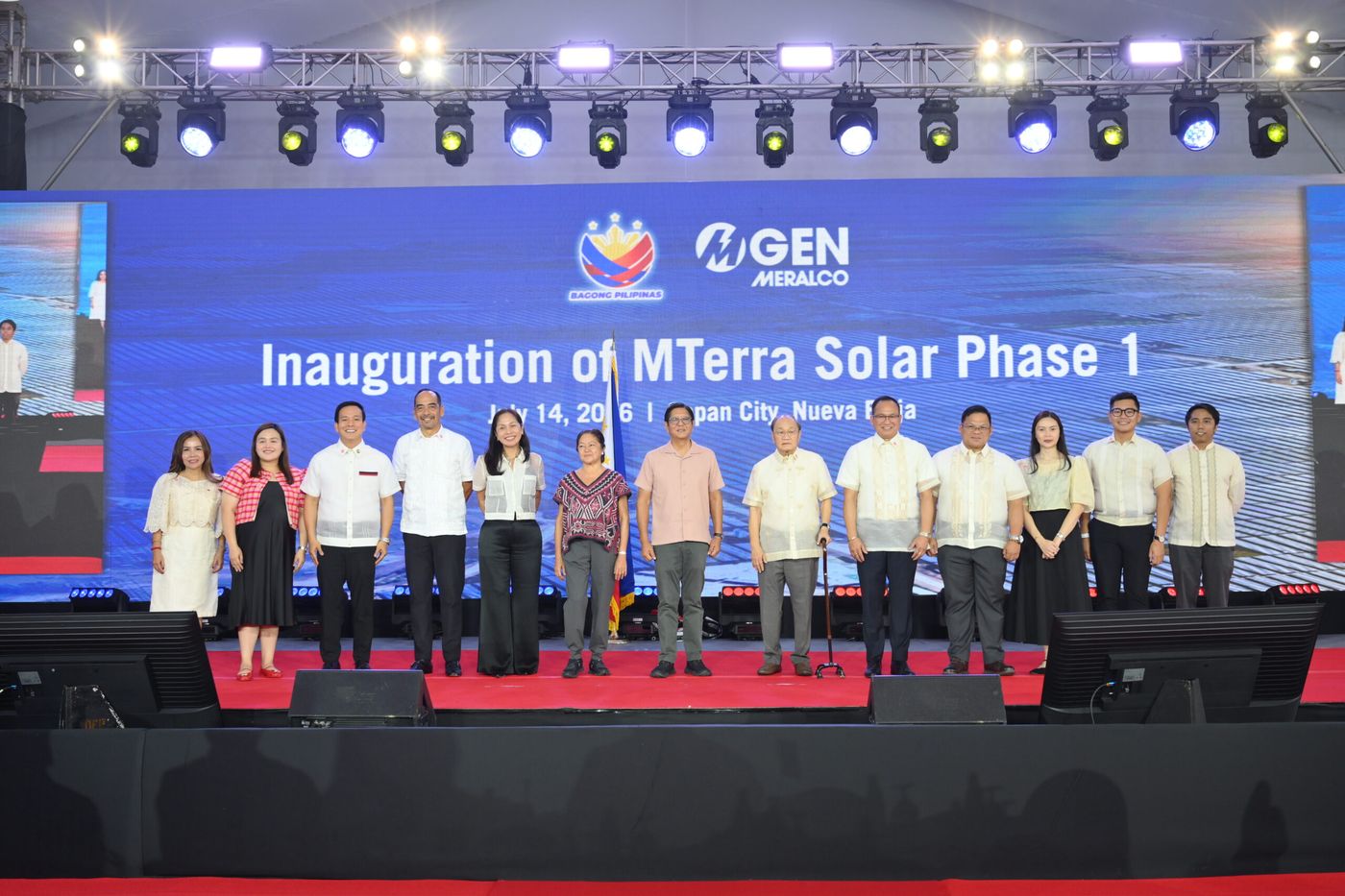
President Ferdinand Marcos Jr (centre) at the inauguration of the Philippines’ MTerra Solar project’s first phase. Solar is helping offset high electricity prices in the country. Image: Terra Solar Philippines.
Across Southeast Asia, numerous projects have emerged this year as countries seek to replace imported LNG with domestic renewables.
For the past two years, the Philippines has turned to rooftop solar to offset high electricity prices, while halting at least three LNG-related projects.
The Philippines will also be the site of the world’s largest combined solar-plus-storage facility when it reaches full scale. With a current capacity of 1.373GWac of solar PV and 825MW/3.3GWh of BESS, the MTerra Solar plant has already begun generation. When complete, it’s expected to have 3.5GWp of solar PV capacity and 4.5GWh of BESS capacity.
In Malaysia, 400MW/1,600MWh of BESS projects are on offer to support Malaysia’s National Energy Transition Roadmap (NETRA), which targets 70% installed renewable energy capacity and net-zero emissions by 2050.
Malaysia’s first-ever grid-scale BESS was only deployed in late 2025 in Sabah, one of two Malaysian states on the island of Borneo. The island has a much smaller grid and fewer dispatchable natural gas resources than Peninsular Malaysia, making the need for storage to stabilise the electricity network and ensure continuity of supply more acute.
Malaysian state-owned electricity company Tenaga Nasional Berhad (TNB) inaugurated its first BESS project in May, the 100MW/400MWh Santong BESS. Equipped with grid-forming (GFM) inverters, the project aims to strengthen and increase the stability of electricity supply on the East Coast of Peninsular Malaysia. In July, the Malaysian government launched a solicitation for 2.5GW of solar PV co-located with 1.25GW of battery storage.
This tiny sample of projects is indicative of an enormous pipeline of solar and battery projects across Asia. And it explains why, as David Fickling observed for Bloomberg, “Emerging Asia is the future of the LNG market—one that never seems to show up in present-day reality.” For more than a decade, LNG producers have eyed the region as their best growth prospects, seeing expanding demand in Thailand, Bangladesh, the Philippines and Vietnam. But that demand really hasn’t materialised. Excluding China, gas power demand in Asia has barely increased in 15 years. Instead, those countries are turning to renewables.
Asia now generates more power from solar than it does from gas, according to analysis by Carbon Brief. Solar power in nations such as China, India and Pakistan has increased nearly fourfold since 2020.
Thailand’s latest power market plan, published in September, calls for increasing the share of renewable energy on its grid from 20% now to 50% within the next decade, then rising as high as 89% around 2050. Energy minister Akanat Promphan’s rationale for the plan was blunt: to reduce reliance on “expensive and volatile spot LNG imports”.
In Bangladesh, where dependence on LNG has been an enormous economic burden this year, the current plan is to increase solar power generation and domestic gas exploration. In September, Prime Minister Tarique Rahman told parliament, “We will no longer be consumers of imported energy. We will be solar power producers.”
The Philippines is increasingly looking at gas-fired power plants merely as firming resources to backstop renewables rather than as primary generators. Vietnam is likewise backing away from long-term power purchasing contracts with developers of LNG-fired plants. Wood Mackenzie estimates that only 14.9GW of Southeast Asia’s planned 53GW of gas-fired power projects will come online by 2030, with 25.7GW of projects in Vietnam alone unlikely to start by then.
According to Ember data, gas-fired power output has declined in Bangladesh, Pakistan and India in the last five years as coal and renewables expanded. Across the region, the outlook for gas is fading amid gas price uncertainty and is being replaced by visions of renewably powered countries, according to Rystad Energy. The firm has cut its long-term Asia LNG demand forecasts for 2040 and beyond, as countries including Vietnam and the Philippines have not secured sufficient LNG supply deals and infrastructure.
Europe
Trade association SolarPower Europe found the continent has saved more than €30 billion (US$34.74 billion) in gas imports in the six months after the war in Iran began by turning to solar. And solar proved more reliable over a scorching summer than hydropower as reservoir levels fell, or nuclear power as the temperature of water needed for cooling rose above acceptable limits.
“Solar has been delivering huge financial benefits for Europe since the latest fossil fuel crisis in the Middle East began,” said SolarPower Europe CEO Walburga Hemetsberger. “The Iran war deepened the turmoil in energy markets generated by Russia’s invasion of Ukraine. A dependency on the flow of oil and gas is clearly a risky energy strategy.”
Ember’s figures show that, in June, solar PV accounted for 25% of the EU’s electricity generation, which exceeded that of both nuclear (21%) and hydropower (12%). This was the second time on record that solar output exceeded that of nuclear power, but that’s likely to remain the case in the future as global warming continues to imperil water supplies and solar capacity continues to grow.
EVs are also saving Europeans a lot of money. Last year, battery electric cars across the EU were 33% cheaper to operate than gasoline-powered alternatives, according to the International Council on Clean Transportation (ICCT). But this year, the oil crisis brought on by the Iran war raised the energy costs of ICE cars by 12% to 36%, while the cost of operating an EV remained largely flat, so the gap between ICE and EV operating costs continued to widen. There is also a widening gap in new car sticker prices, with the price of an EV in Germany falling by 18% from 2020 to 2025, while the cost of an ICE increased by 2%. Even long-haul electric trucks in Germany are already 11% cheaper to own than their diesel counterparts.
That would help to explain why hybrid-electric cars now dominate the European market, at 37%, while the market share of ICE cars fell to 29% (down from 38% the year before) and BEV sales exceeded 20% in the first eight months of 2026.
Both purchase price and operating cost gaps are virtually certain to continue to expand, as oil prices remain elevated and continue to rise. Meanwhile, battery costs continue to fall.
Europe is clearly on course to continue its clean electrification strategy, with the German cabinet approving a national roadmap to phase out coal, oil and gas by 2045. That makes Germany the third country, after France and the Netherlands, to adopt such a roadmap under an international initiative to move away from fossil fuels.
Nuclear power is also beginning to be abandoned in favour of renewables, with Hungary pivoting to wind after the summer’s drought forced its main nuclear plant to the brink of a shutdown.
Across the world, countries migrating toward the electrostate model are cutting their costs, increasing the reliability of their grids and discovering the benefits of mutual investment and cooperation in an evolving global market for clean energy and electrified solutions.
United States
Meanwhile, in the US, Trump’s order to ban inverters, transformers and batteries from 24 countries, including China, is driving up prices for solar and various grid components. The ban on inverters is making some renewable projects uneconomic and reducing their productivity.
Trump’s tariffs on solar PV modules have increased their cost by more than 40%, putting them well above their cost in Europe. In December, Section 232 tariffs will increase costs by another 15%, while hard limits on imports will restrict them to levels below their historic averages.
Not only will these moves slow the pace of renewable energy deployments in the US, they are also hurting its manufacturers. US-headquartered energy storage technology, services and software provider Fluence was forced to write down its expected 2026 revenue by US$600 million after delays in executing its investments in US manufacturing and supply chains.
And that’s without even beginning to account for the loss of major wind and solar farms that were cancelled by the Trump administration, the near-total abandonment of the EV market by major US auto manufacturers and the enormous costs forced onto the public by the administration’s orders to keep money-losing coal- and gas-fired power plants operational instead of allowing them to retire as planned.
As an exporter of electrotech globally, the US has transitioned from being one of its original inventors to being a largely insignificant player, abandoning the field to developing countries eager to seize its economic and security benefits.
If the president intended to diminish America’s geopolitical influence in the world and make it uncompetitive with the rising electrostates, what he has done would be a good way to go about it.
A complex reality with a simple conclusion
One thing that is clear from history is that the gains made by the electrostates and the losses made by petrostates will be permanent. Once a nation switches from ICE vehicles to EVs, or from fossil-fuelled grid power to solar, or from oil- or gas-burning boilers to electric heat pumps, those transitions are extremely unlikely to be reversed.
New analysis by Ember estimates electric cars in oil-importing countries displaced 200 million barrels of crude, worth around US$20 billion, in the six months after the Hormuz crisis began. EV fleets are now delivering more than reduced carbon emissions; they’re providing energy security and significant cost savings. Ember reckons that China saved about US$14 billion; EU member states US$3.1 billion; the UK about US$790 million; and ASEAN about US$560 million.
BEV sales grew to an 18% share of all new-car sales, while PHEV sales fell 12% and ICE car sales fell 6%. Outside the US and China, BEV sales grew about 45%, and 49 of 56 tracked countries set record BEV shares. The US went the other way, with the share of BEVs falling to 6%, putting it below 15 other countries, including Brazil, India and Malaysia.
A broad global theme has emerged this year, especially since the onset of the Iran war: President Trump’s efforts to support the oil and gas industry and stymie renewable energy and EVs in the US have ultimately backfired, and accelerated the energy transition by turning global markets away from unreliable and expensive supplies of oil and gas and toward more affordable and reliable domestic renewables and electrified applications. Ultimately, it amounts to a transfer of geopolitical advantage away from the US and other petrostates, and toward electrostates.
Chris Nelder is the publisher of the Transition Times energy transition newsletter and podcast. He has been writing about and working in the energy transition for more than 20 years. He is the author of two books on energy and investing, as well as more than 200 articles on energy in publications such as Nature, Scientific American, Slate, The Atlantic, Quartz, and the Financial Times.