








Prologue: Airports have long measured commercial success in terms of sales per square metre and spend per passenger.
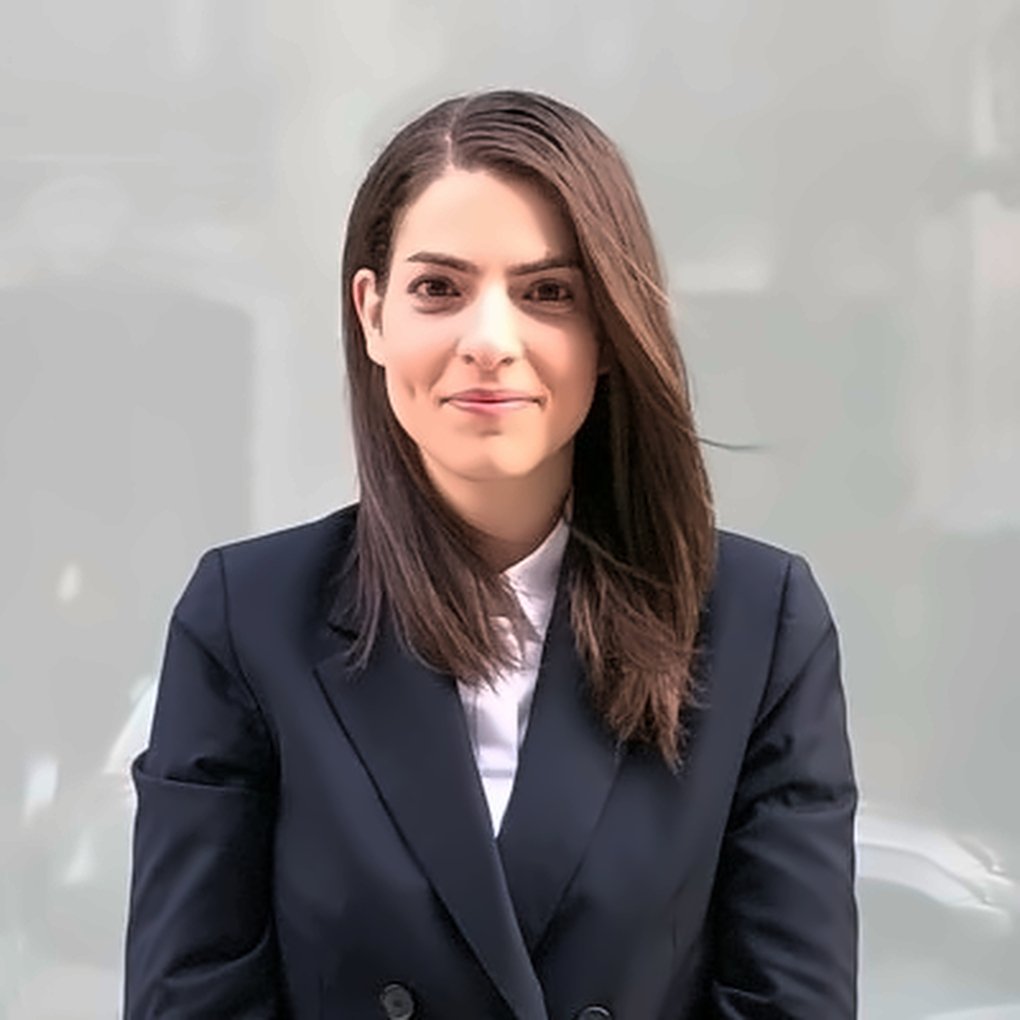
New York-based architect and urban designer Eleni Stefania Kalapoda argues the real currency of a terminal is time.
She contends the next generation of airports will be designed around how travellers genuinely move, pause and choose.
Kalapoda’s career to date embraces a spell at renowned UK architecture, urbanism, engineering and design firm Foster + Partners working on the hugely ambitious King Salman International Airport in Saudi Arabia (due to open in 2030).
She began her professional experience through collaborations with the Renzo Piano Building Workshop team on the Stavros Niarchos Foundation Cultural Center in Athens, Greece.
Kalapoda also worked with Perkins Eastman NY (Resorts World NY and Landmark Adaptive Reuse Schemes) on projects at the building and city scale.
In 2026 she served on the FRAME Awards Grand Jury and judged the WAN Awards and TheStadiumBusiness Design & Development Awards.
She sits on the Autodesk Advisory Council and is a 2026 Beverly Willis Architecture Foundation Emerging Leaders Fellow.
In this compelling and insightful conversation with The Moodie Davitt Founder & Chairman Martin Moodie, Kalapoda talks candidly and insightfully about how architectural decisions can impact commercial performance; the critical role of passenger flow; the simultaneous importance of AI and the need to balance it with a deeply human touch.
{Note: The Moodie Dialogues is dedicated to conversations of stature, challenge and insight with industry figures.}
Martin Moodie: Elini, you worked on one of the most ambitious airport programmes of our time with King Salman International Airport in Riyadh. What did it teach you about the relationship between terminal architecture and commercial performance?
Eleni Stefania Kalapoda: That they are not two subjects but one.
Working through processor layouts, landside options and phasing studies on a programme of that scale, I learned to read every plan as a timeline: where will a traveller be at minute five, at minute 25, at minute 50, and how will they feel at each moment?

Every decision about security, piers or a kerbside is, in the end, a decision about where people will spend their time, and therefore where value will be created.
The most commercially successful terminals are not those with the most retail area; they are those whose architecture places the right offer in front of the right traveller at the right moment, without ever making the journey feel like a sales funnel.

Many airports still plan retail and F&B late in the design process, a long-time bugbear for our industry. For the airport developers who will read this, why is it so crucial to have commercial input earlier?
Because by then the most valuable decisions have already been made. The position of central security, the length of the walk to the furthest gate, the presence of daylight and views, the width of the circulation spine: these quietly determine dwell time long before a single tenant is chosen.
When commercial planning arrives late, it inherits leftover space, and leftover space rarely performs. When commercial thinking is present from the first massing studies, the architecture itself becomes the most powerful merchandising tool an airport has.
What does passenger movement actually tell designers, and where do terminals most often misread it?
It tells us that time in a terminal is uneven. There are the anxious minutes before security; the precious ‘golden minutes’ immediately after it, when travellers finally exhale and orient themselves; and then the quieter, more deliberate time at the gate.
Terminals often misread this by distributing their offer evenly, or by placing their richest offer where travellers are least able to enjoy it.
A passenger who has just cleared security is a different person, emotionally and commercially, from the same passenger 40 minutes later at the gate. The art is to design for both.
Eleini, you have written about the ‘thinking terminal’. What do you mean by that term, and where and how does AI, implicit in the phrase, come into play?
The world’s leading hubs already use data remarkably well to move people: biometric processing, real-time queue management, predictive staffing.
The thinking terminal is the next step, in which that intelligence shapes the building itself.
If an airport can predict where passengers will be an hour from now, it can open and animate spaces in step with demand, light and condition zones as they fill, steer wayfinding towards quieter areas, and help retailers staff and stock for the flights that are actually boarding.
AI is at its best where results can be checked quickly: forecasting flows, testing layouts against hundreds of scenarios, running digital twins before a single wall is built.
However, should never be mistaken for judgement. A terminal’s sense of welcome and its cultural identity still belong to people. The model proposes; the design team decides.
An age-old question: should commercial space be concentrated in a central plaza or distributed towards the gates?
Both, in the right proportion.
A generous plaza after security creates the sense of arrival and the critical mass that destination brands need.
But as connecting traffic grows and walking distances lengthen, a well-judged secondary offer near the gates protects revenue that would otherwise be lost to travellers who will not walk back.
The decisive factor is legibility: travellers spend when they can see their gate from the commercial zone and trust that they have time. Uncertainty is the enemy of dwell.
So I’ll put you on the spot. Which airports have shown the industry what a terminal can become?
Jewel Changi Airport transformed how the world thinks about an airport, from a place you pass through to a destination in its own right, one that local residents visit even when they are not flying.


I agree, although Jewel is not an airport terminal as such, it is adjoined to Changi Airport and every much part of the airport experience. How about actual working aviation terminals?
Hamad International in Doha has shown how a lush indoor garden and a confident central concourse can make a transfer hub feel like a place of arrival rather than an interlude.
Both Hamad and Jewel prove the same point: when an airport invests in the quality of its spaces, travellers respond by staying, exploring and spending.

Their example also reminds us that the landside is undervalued. The forecourt, the arrivals hall and the landside concourse serve not only passengers but the people who accompany and meet them.
Shade, comfort and a genuinely good café on the landside turn the first and last minutes of a journey into part of the welcome.
Moodie Davitt STUDIO featured Hamad International Airport and Qatar Duty Free in an acclaimed three-part film series released in September 2024 and later shown onboard Qatar Airways. Click on the YouTube icon to view episode one, which was complemented by short films dedicated to the airport’s dining and shopping offers. Airport Wonders of the World will continue this year with new films dedicated to the world’s most exciting and consumer-centric airports. Please contact Martin Moodie at Martin@MoodieDavittReport.com to find out more.
Your background spans airports, stadiums and integrated resorts. What can terminals borrow from those venues?
A great deal. Stadiums and resorts are designed around peaks: everyone arrives, moves and spends within tight windows, much as a departure bank does.
They have learned to use sightlines to keep people oriented, to create premium and family experiences without fragmenting the crowd, and, above all, to make people want to return.
An airport that thinks like a well-run venue, attentive to flow, comfort and the emotional arc of a visit, will inevitably perform better commercially.

Let’s drill down beyond the all-embracing concept of passengers in totality and look at profiles. How should airports think about different kinds of travellers, from families to women travelling alone?
The short answer? As distinct journeys rather than one average passenger.
To expand: families need space to pause, visible facilities and confidence about time. Women travelling alone value clear sightlines, good lighting and a sense of safety, and a traveller who feels at ease is far more inclined to linger.
Designing for these journeys is not a matter of niche provision; it is simply better design for everyone.
Partly due to the point you made earlier about commercial facilities being planned and then developed late in the piece, we have seen multiple airports expanding and/or renovating while remaining fully operational. How do you protect commercial revenue during reconstruction?
By making phasing a design discipline rather than a contractor’s afterthought.
Every temporary condition, every relocated security lane or hoarding line, reshapes passenger flow, sometimes for years.
Digital twins now allow teams to test each phase in advance, to see how a temporary route will affect queues, dwell and the visibility of commercial units, and to adjust before the first panel goes up.
The airports that manage this well will protect both the passenger experience and the concession revenue that funds the expansion.
Finally, as an international design juror, what will distinguish the best terminals of the next decade?
Coherence and calm.
The projects that impress juries are rarely those that photograph best; they are those in which space, material and use flow from a single set of decisions.
The finest terminals of the coming decade will know where their travellers are and what they need before those passengers do and will use that knowledge discreetly: cooler where people gather, brighter where they wait, generous where they pause.
Their commercial offer will feel like hospitality rather than retail, and their forecourts will feel like the beginning of a city.
The great terminals have always been gateways; the next ones will also be gracious hosts. ✈
