









Environment Canterbury (ECan) has called for a pause on introducing a rates cap while councils work on other local government reforms.
The regional council called for the pause in a submission on the Local Government (Rates Capping) Amendment Bill, while councils work through the myriad of reforms including a implementing new planning regime, possible council amalgamation and the proposed abolition of regional councils.
The Waimakariri District Council has called for a more cautious approach in its submission, as a blanket two to four percent rates cap could force councils to cut services.
The Government has proposed a rates cap of between two and four percent, which would take effect from 2029, with councils expected to give effect to it in next year’s 2027/37 long term plans.

The cap would apply to general rates, targeted rates and uniform annual charges, but would exclude water charges and other non-rates revenue like fees and charges.
An ECan spokesperson said the reforms required councils to implement a transitional consenting process and develop a regional spatial plan, while amalgamation will also add costs, which would be borne by ratepayers.
ECan’s submission says a pause would “enable fundamental decisions related to the functions and form of regional government to be determined before establishing the funding system required to deliver it”.
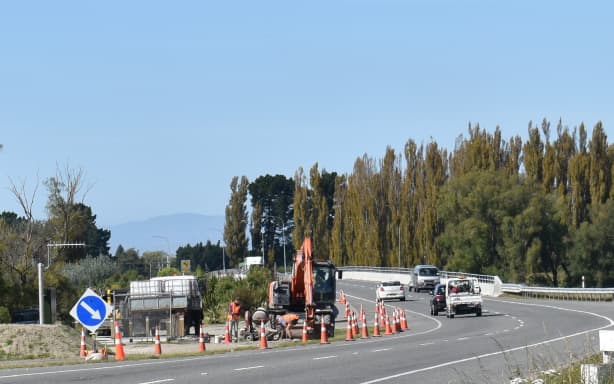
Councils face rising bitumen, fuel and construction costs, which are rising faster than the cost of groceries, the Waimakariri District Council says.
North Canterbury News
Councillors suggested flood protection and other essential infrastructure should be excluded from any rates cap.
Under the proposed legislation, councils were required to apply for an exemption.
But any exemption regime may lack the flexibility to respond to changing circumstances and externally driven costs, ECan staff said.
A Waimakariri District Council spokesperson said councils were not in the business of buying groceries, but were impacted by the rising cost of fuel, bitumen for roads and construction costs.
A recent update from Business and Economic Research Limited (BERL) found the local government cost index was at 6.5 percent, much higher than Consumer Price Index inflation of 3.7 percent (for the September quarter).
The Waimakariri council supported a rates cap in principle, the spokesperson said.
“Any cap should be viable, workable, and enable core services and functions to be provided while also providing opportunity for communities to have a say on the services and functions that are provided.”
The spokesperson said councils were concerned projects such as the Rangiora eastern link road may no longer be viable within this new limit.
Waimakariri’s submission recommended a review of the Rates Act.
“Such a review has been identified by numerous reports (notably the Future of Local Government report) and needs to consider ways to more appropriately share the tax take across the country,” the spokesperson said.
“While taxation as a percentage of GDP has risen over time, local government’s share has stayed at around 2 percent of GDP.”
The council recommended returning the GST collected on rates to councils, as it was “effectively a tax on a tax”.
LDR is local body journalism co-funded by RNZ and NZ On Air.