









0
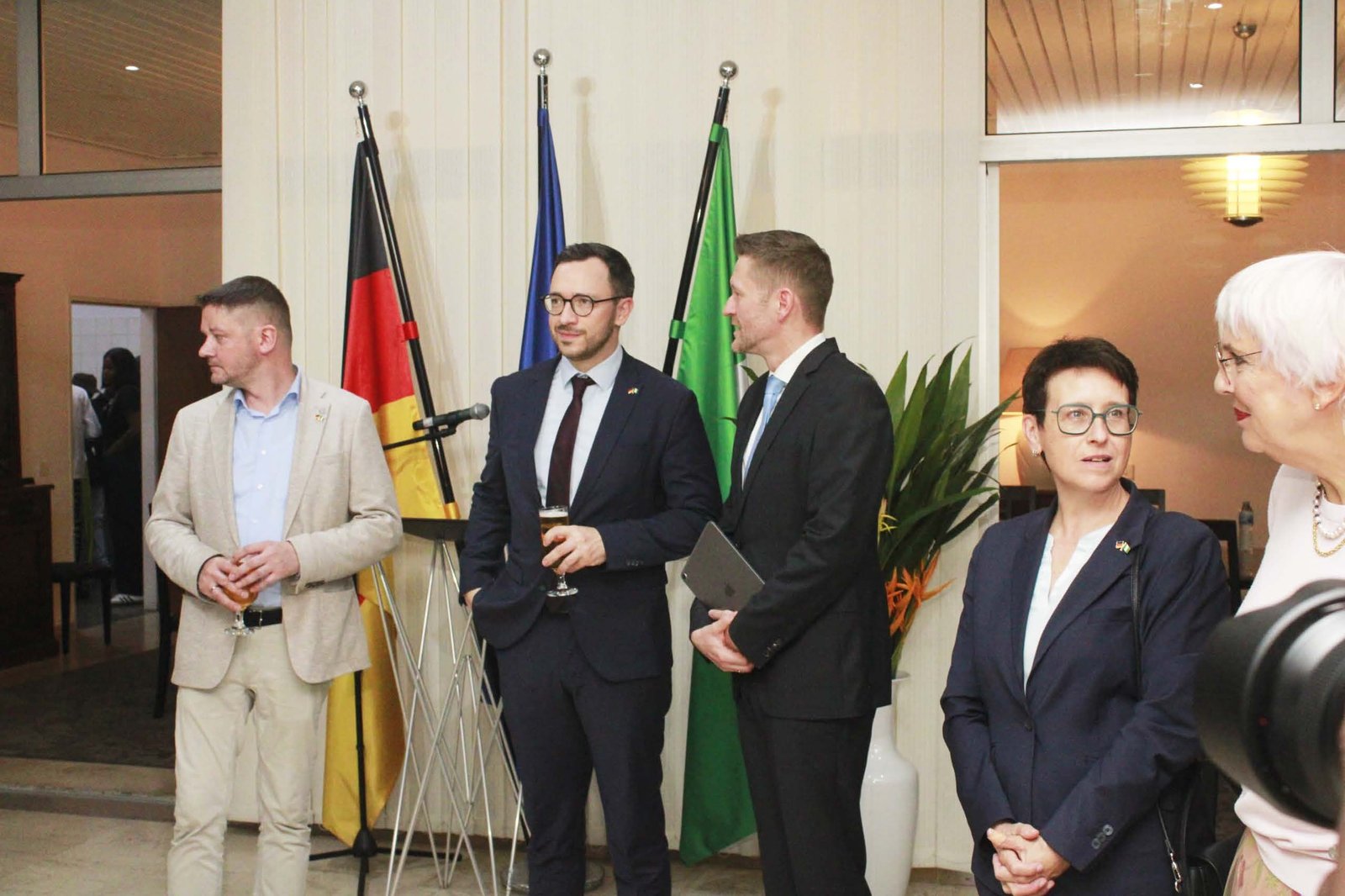
Like I have always said, I enjoy diplomatic encounters. They may follow conventional rituals of handshakes and courtesies and networking and short beautiful speeches, yet, within its crevices lie opportunities, discovery of common interests, intellectual exchange and more. They create opportunities for genuine engagement, intellectual exchange, friendship and the discovery of common interests. Such was the character of the diplomatic evening on Monday 29, when a delegation of thirteen German parliamentarians arrived in Nigeria and were hosted by the Consul General of the Federal Republic of Germany in Lagos, Mr. Daniel Krull.
It was an evening that brought together the civil society organisations, non-governmental organisations, members of Nigeria’s creative industry and other stakeholders whose activities contribute to the growing roll call of Nigeria-Germany relations. The gathering was more than a diplomatic reception. It was a deliberate meeting of minds, an opportunity to strengthen relationships and an affirmation that international relations must extend beyond government offices and formal bilateral agreements to embrace the people, institutions and creative energies that define nations.
The Consul General, Mr Daniel Krull, provided the diplomatic warmth and hospitality that gave the occasion its distinctive character. Following the introduction of the thirteen visiting parliamentarians, each of whom was presented to the gathering, the leader of the delegation delivered the keynote address, offering perspectives on the visit and the importance of continued engagement between Germany and Nigeria.
What was particularly striking about the evening was its convivial atmosphere there was an absence of the stiffness sometimes associated with formal diplomatic engagements. Instead, conversations flowed freely, contacts were established, ideas were exchanged and the possibilities of future partnerships became subjects of discussion.
This is perhaps one of the most important dimensions of contemporary diplomacy. The world is increasingly discovering that relationships between nations cannot be sustained exclusively through official correspondence, ministerial consultations and bilateral memoranda. They require human connections, institutional partnerships, cultural understanding and the participation of people outside the traditional corridors of political power.
Germany’s engagement with Nigeria has, over the years, demonstrated the importance of this wider diplomatic philosophy. From education, vocational training and technology to trade, culture, creative enterprise and development cooperation, the relationship possesses considerable opportunities for expansion. Nigeria, with its enormous population, entrepreneurial energy, cultural influence and strategic position in Africa, remains an important partner in Germany’s engagement with the continent.
The presence of thirteen German parliamentarians therefore carried significance beyond the symbolism of a parliamentary delegation visiting an African country. It represented an opportunity for direct engagement with Nigerian stakeholders and an avenue for appreciating the country’s institutional, economic and cultural realities from perspectives that official reports and diplomatic briefings cannot always adequately convey.
Yet, amid the networking, conversations and diplomatic courtesies, the evening also produced a significant intellectual moment that deserves particular attention. It was the presentation of a book titled, The Nigeria Diplomatic Compass: Reflections on Foreign Policy, Africa and the Changing Global Order, authored by Bishop Dr. Joseph Ighalo-Edoro.
The presentation introduced an important dimension to the evening, drawing attention to the place of literature, scholarship and independent intellectual contributions in shaping international relations. At a time when the global order is undergoing profound transformation, when geopolitical rivalries are intensifying, traditional alliances are being tested and Africa is increasingly compelled to redefine its position in an emerging multipolar world, the importance of indigenous foreign policy literature cannot be overstated.
The book, by its very title and thematic concerns, enters a field of intellectual inquiry that is particularly relevant to Nigeria’s contemporary diplomatic aspirations. Foreign policy is not merely the exclusive preserve of diplomats, foreign affairs ministers and international relations scholars. It is also a subject that requires contributions from journalists, historians, writers, public intellectuals and informed citizens who can interrogate the country’s international engagements and stimulate constructive conversations about its place in the world.
It was therefore particularly encouraging that Mr Daniel Krull paid glowing tribute to the author, Bishop Dr Joseph Ighalo-Edoro and the intellectual initiative represented by the publication. His remarks went beyond the usual courtesies associated with a book presentation. He encouraged Nigerian writers and intellectuals to enter the field more actively and produce literature on foreign affairs, diplomacy and international relations.
He also expressed regret over the apparent scarcity of Nigerian literature devoted specifically to these subjects, drawing attention to a gap that deserves urgent attention.
That observation raises an important question. Why should a country of Nigeria’s population, intellectual capacity, diplomatic history and international standing have relatively limited literary contributions documenting, interpreting and analysing its foreign policy experiences?
Nigeria has participated in some of the most consequential diplomatic developments in modern African history. From its pioneering role in African liberation struggles and peacekeeping operations to its involvement in regional integration, conflict resolution, economic diplomacy and multilateral negotiations, the country has accumulated an enormous reservoir of diplomatic experiences worthy of documentation.
Its contributions to the formation and development of the Economic Community of West African States, its interventions in Liberia and Sierra Leone, its leadership in the African Union and its participation in the Commonwealth and the United Nations provide rich material for generations of researchers and writers.
Yet, much of this history remains scattered across official documents, academic papers, institutional archives and the recollections of individuals who participated in these events. There is a compelling need to bring these experiences into accessible literature that can educate younger generations, inform policymakers and deepen public understanding of Nigeria’s international responsibilities.
The German Consul General’s encouragement should therefore be seen as an invitation to Nigerian writers to occupy a space that has remained insufficiently explored. A country that wishes to influence international conversations must also be prepared to document its thoughts, preserve its diplomatic experiences and publish its perspectives on the changing global order.
Indeed, diplomacy is not only conducted across negotiating tables. It is also advanced through ideas, publications, cultural exchanges and the intellectual capacity of nations to explain their positions to the rest of the world.
The significance of the evening was consequently not confined to the visit of thirteen German legislators or the networking opportunities it created. It also offered a reminder that Nigeria’s relationship with Germany can be strengthened through a broader intellectual and cultural partnership in which writers, artists, academics, civil society organisations and other non-state actors have meaningful roles to play.
For Bishop Dr Joseph Ighalo-Edoro, the presentation of The Nigeria Diplomatic Compass at such a distinguished gathering was an encouraging moment for Nigerian authorship and an opportunity to place Nigerian perspectives within a wider international conversation. For the German Consul General, Mr Daniel Krull, his commendation and call for more Nigerian literature on diplomacy represented an important recognition of the role intellectual production plays in international engagement.
Ultimately, the evening demonstrated that diplomacy need not always announce itself through grand declarations or elaborate protocols. Sometimes, its most enduring achievements begin with a conversation, a handshake, a new friendship or even the presentation of a book.
The thirteen German parliamentarians came to Nigeria as representatives of their country’s legislative institution. They left behind an important message about the possibilities of partnership, the value of people-to-people engagement and the need for greater intellectual participation in foreign affairs.
Perhaps the most enduring lesson from that diplomatic evening is that Nigeria must not only participate in shaping the changing global order. It must also write about it, interpret it, preserve its experiences and contribute its own intellectual compass to the world.