








Last Updated:
The stark contrast has turned global spotlight onto India’s deliberate, decade-long investment in sovereign digital infrastructure




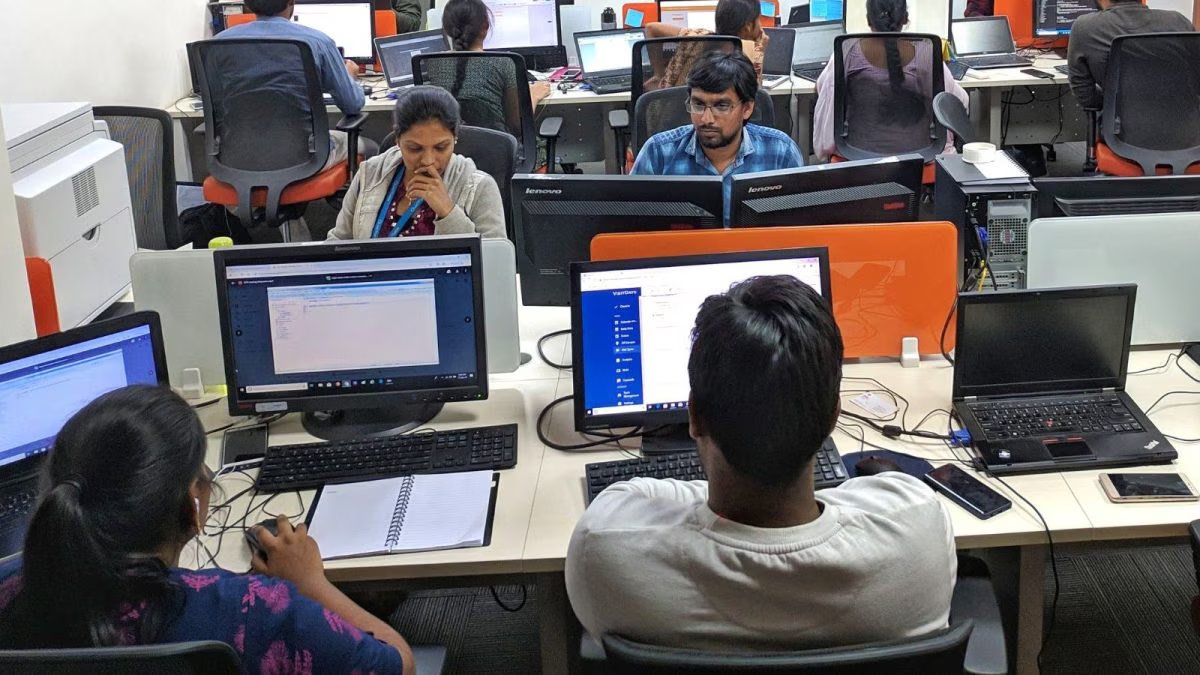
While private Indian enterprises and select commercial firms experienced temporary login disruptions during the 21-hour episode, the uninterrupted functioning of the Indian state has validated New Delhi’s emphasis on technological self-reliance. Representational image
When a massive Microsoft 365 service disruption swept across the globe on November 12 and 13, paralysing government offices, courts, airlines, and financial institutions in 74 countries and territories, India’s core administrative machinery and banking backbone continued operating without a single hiccup. While public agencies from London to Tokyo scrambled as Outlook, Microsoft Teams, and Copilot went offline for nearly 21 hours, central ministries in New Delhi processed files, cleared inter-departmental communications, and settled millions of financial transactions seamlessly.
The stark contrast has turned global spotlight onto India’s deliberate, decade-long investment in sovereign digital infrastructure. Rather than relying on a single commercial foreign cloud provider for essential state governance, India insulated its core public networks through architecture built and managed by the National Informatics Centre (NIC).
Why Global Governments Ground to a Halt
The disruption began late on November 12 after a network configuration change overwhelmed Microsoft’s Exchange Online servers. Although Microsoft ruled out a cyberattack, the cascading technical failure severed access to email and collaboration tools for millions of enterprise and government users worldwide.
In several developed nations, the fallout exposed acute single-vendor vulnerability. Immigration authorities in New Zealand temporarily paused visa processing, hospitals in the United Kingdom rescheduled procedures, courts warned of delayed judgments, and Japan’s Digital Agency suffered email blackouts. In major financial hubs, some trading desks reportedly resorted to fax machines to confirm transactions.
Inside India’s Sovereign Shield: NIC and Insulated Core Networks
India’s central administration avoided this paralysis because its official communication backbone operates independently of commercial public cloud suites. Under the Ministry of Electronics and Information Technology’s (MeitY) digital governance framework, central ministries, state departments, and constitutional bodies rely on NIC’s dedicated sovereign email platform—hosted on domestic, government-controlled servers rather than global commercial software-as-a-service (SaaS) clusters.
At A Glance
A global Microsoft 365 service disruption on November 12 and 13 paralysed government and financial institutions across 74 countries.
India’s core administrative and financial systems operated without interruption during the 21-hour global outage.
Central ministries in India utilise the National Informatics Centre’s dedicated sovereign email platform hosted on domestic servers.
India’s e-Office workflow platform runs on sovereign cloud infrastructure housed within national data centres.
Complementing this is the e-Office workflow platform, which runs across hundreds of central and state government departments on sovereign cloud infrastructure. Because file movement, digital signatures, and administrative approvals remain housed within national data centres, external outages affecting multinational cloud providers do not interrupt routine state decision-making.
Similarly, India’s financial and payment architecture—anchored by the Reserve Bank of India’s settlement systems and the National Payments Corporation of India’s Unified Payments Interface (UPI)—functions on segregated, mission-critical domestic networks with strict regulatory mandates on data localisation and operational continuity.
A Blueprint for Digital Sovereignty
While private Indian enterprises and select commercial firms experienced temporary login disruptions during the 21-hour episode, the uninterrupted functioning of the Indian state has validated New Delhi’s emphasis on technological self-reliance. As governments worldwide reassess over-dependence on concentrated foreign cloud ecosystems, India’s sovereign NIC model stands out as a proven blueprint for national cyber resilience.
Quick Answers
 Ask News18
The global outage was triggered after a network configuration change overwhelmed Microsoft’s Exchange Online servers, severing access to email and collaboration tools for millions of users worldwide.
Ask News18About the Author

Pathikrit Sen Gupta is a Senior Associate Editor with News18.com and likes to cut a long story short. He writes sporadically on Politics, Sports, Global Affairs, Space, Entertainment, And Food. He tra…Read More
November 15, 2026, 03:47 IST
Read More