







Photo by ERNESTO BENAVIDES / AFP via Getty Images
The Briefing:
- Peru’s central bank raised its benchmark interest rate by 25 basis points to 4.50% on Thursday, November 13, snapping 14 consecutive months of inaction.
- Annual inflation in Lima reached 5.25% in October—a three-year high and the eighth straight month above the BCRP’s 1%–3% target range, according to the INEI.
- The bank named El Niño climate disruptions and Middle East conflict-driven energy prices as the two forces it can no longer dismiss as temporary.
Peru’s central bank broke 14 months of monetary silence on Thursday when its Board of Directors voted to raise its benchmark interest rate by a quarter point to 4.50%. The move—the first rate increase since January 2023, nearly four years without an upward adjustment—arrived as annual inflation in Lima Metropolitana hit 5.25% in October, the highest reading in more than three years and far above the institution’s target, according to the National Statistics Institute (INEI).
A Decision 14 Months in the Making
For over a year, the Banco Central de Reserva del Perú (BCRP) held its key rate steady at 4.25% following a prolonged easing cycle that ran from September 2023 through September 2025, gradually reducing borrowing costs from a peak of 7.75%. While inflation remained manageable, the case for staying put was clear. That calculus collapsed when October’s data confirmed Lima’s inflation at 5.25%—a figure driven by food and fuel costs well beyond what policymakers had expected.
BCRP president Julio Velarde, who was confirmed for a fifth consecutive term through 2031 in September, had already flagged the possibility of a hike in the bank’s September Inflation Report. By November 13, the data had made the choice for him.
El Niño From Within, War From Without
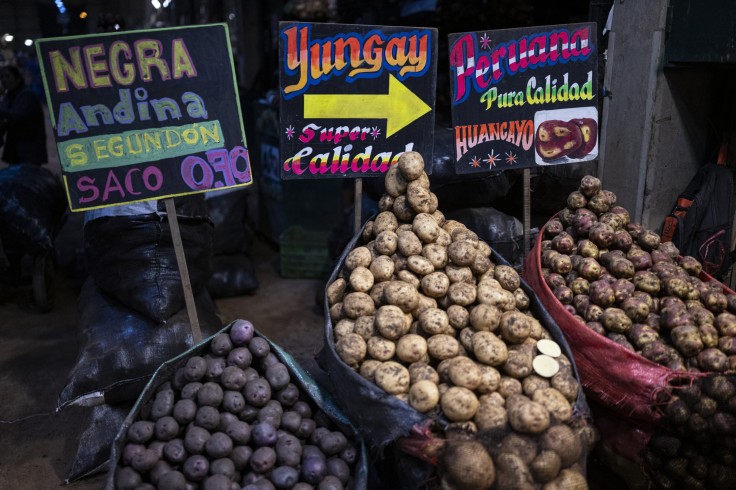
The board singled out two distinct shocks. El Niño is squeezing supply from the inside: a severe climate event can destroy harvests, paralyze the fishing sector, and damage critical infrastructure across Peru’s coastal and Andean regions. In October, climate-related disruptions pushed prices higher across basic foods including corn, onions, potatoes, and avocados. Food alone accounted for 68% of October’s monthly inflation reading.
The Middle East conflict pushes from the outside. Brent crude briefly surged past US$112 per barrel in early November before retreating toward $90—but even at lower levels, fuel price volatility has cascaded through transport costs and virtually every product that reaches Peruvian households. Fuel and lubricants for vehicles rose 43.67% over the past 12 months, the single largest driver of annual inflation in Lima.
Neither shock responds to domestic monetary tools. But if inflation expectations become unanchored—if businesses and workers start building higher prices into every contract—the problem grows far more expensive to solve. That is precisely the scenario the BCRP moved to prevent.
Who Bears the Cost
A rate hike is not neutral. Borrowers with sol-denominated mortgages, personal loans, and small-business financing will see debt service costs rise almost immediately. Small and mid-sized enterprises, which depend heavily on formal credit and have thinner financial cushions, face the sharpest adjustment. In a country where formal credit access remains limited, the burden falls disproportionately on the middle-class households that do rely on the financial system to buy homes or sustain a business.
For exporters and importers, the more restrictive stance introduces additional exchange-rate uncertainty. The sol had already weakened against the dollar through 2024; a tighter monetary policy stance may offer some stabilization, though it also risks cooling domestic demand.
Consumers of food and fuel—meaning virtually all Peruvians—are already absorbing the real-side shock. The rate hike is designed to contain future inflation, but the 5.25% reading reflects prices that households have already paid.
What the BCRP Said—and Didn’t Say
The board did not abandon its baseline forecast. The institution still projects inflation will return to the 1%–3% range in coming months as supply-side disruptions ease. But the language accompanying Thursday’s decision was notably less patient than before: some of the impacts from El Niño and the Middle East, the bank stated explicitly, “have already materialized” in prices. These are no longer theoretical risks in a central bank statement—they are prices Peruvians are paying at the grocery store.
The BCRP did not rule out additional moves. The next board session, scheduled for December 11, will show whether 4.50% represents the ceiling of this new tightening cycle—or only its first step.
© {{Year}} Latin Times. All rights reserved. Do not reproduce without permission.