









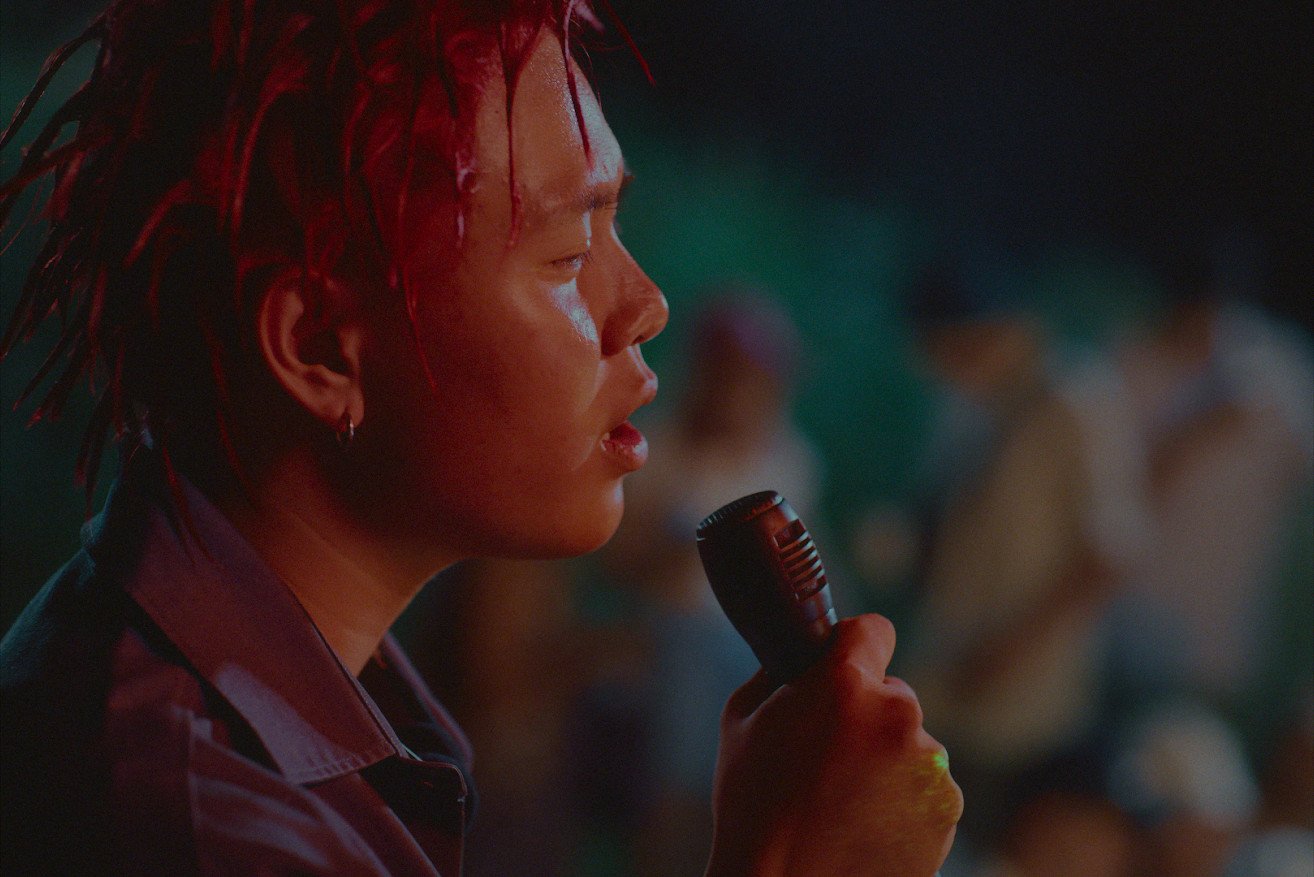
After directing two shorts, “Mat Goc” (2014) and “Bo Hai” (2017), Duzan Duong makes his feature debut with “Summer School, 2001”, which premiered at the 59th Karlovy Vary International Film Festival, and later was awarded two Czech Lions – for the Best Supporting Actor, and the Best Screenplay. It is the first Czech-Vietnamese co-production, representing an important cinematic point of view, as Vietnamese people form the third-largest ethnic minority in Chechia and its largest Asian community. What’s more, Czechia is home to one of the largest Vietnamese diasporas in Europe, after Germany and France. This group has its roots in the communist period, when Vietnam sent students and workers to socialist Czechoslovakia for education and professional training. Many of them decided to stay in Europe to start businesses, as can be seen in the movie.
Summer School, 2001 is screening at Five Flavours

Set in the summer of 2001, the story, based on the director’s own experiences, follows a Vietnamese family living in a town in Czechia. The father, Zung (Anh Doan Hoang), and mother, Lan (Le Quynh Lan), run a stall at the local Vietnamese market, with some help from their youngest son, Tai (Tien Tai To). Their relatively organised life is disrupted when their older son, Kien (The Duong Bui), returns from Vietnam after ten years away.
With eerie music and a tense atmosphere, the first few scenes suggest the incoming trouble straightaway. The story is presented from different perspectives, those of the father and the two brothers, gradually revealing their motivations and the misunderstandings that drive the narrative forward. Blending family drama with a coming-of-age story, Duong explores the challenges of assimilation, generational divides, and the search for identity between cultures, while also touching on questions of queer identity. However, each interesting in their own right, neither of these themes is fully explored.
The performances are generally convincing, and the three central characters make for a compelling combination. Zung, the head of the family, struggles with his idea of what it means to be a man and a father, as he visibly feels the pressure to make difficult decisions for the sake of his loved ones. Kien is a rebellious teenager who must learn to adapt to a new reality, while young Tai is energetic and curious but often gets ignored or brushed off. It is a shame, that Lan remains largely in the background, without much opportunity for the audience to understand her perspective. However, this did not prevent the actress from securing a nomination for the Czech Lion for the Best Supporting Actress.
When it comes to the cinematography, it simply lets the audience follow the story for the most part. Adam Mach uses dynamic camerawork, with mostly handheld shots and occasional slow motion. These stylistic choices add energy to the storytelling, although they do not necessarily give the film a distinctive nor memorable aesthetic.
Offering a fast-paced and at times messy, story, with intriguing plotlines and believable characters, makes “Summer School, 2001” solid drama about a family (which, in this case, constitutes a collection of units rather than a harmonious whole), but ultimately, it does not offer anything remarkable in terms of cinematic experience. Its greatest strength lies in its portrayal of a less familiar aspect of Europe, as Duong offers a glimpse into the troubled reality of the Vietnamese community.