










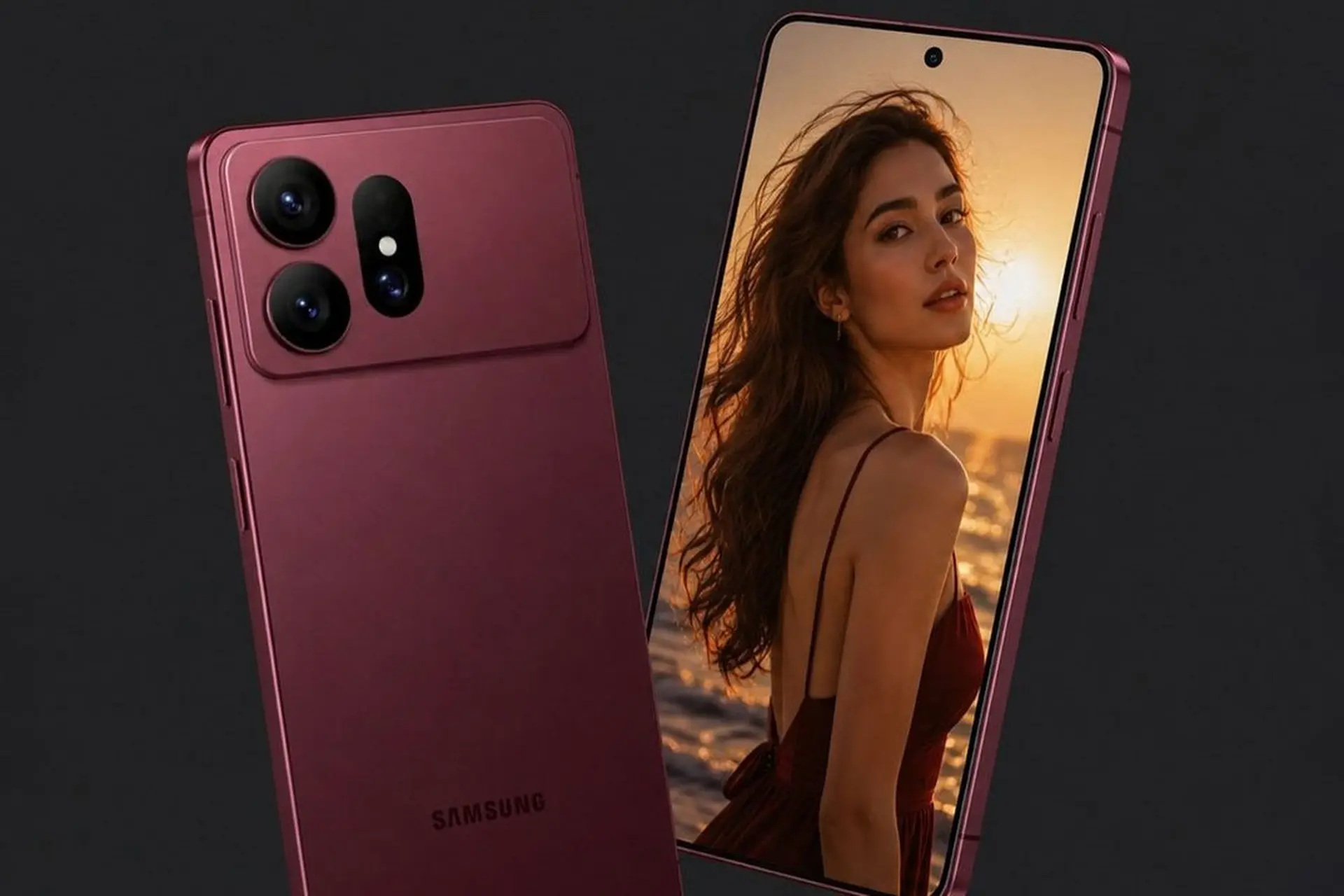
The Galaxy S27 Ultra is expected to launch in the coming months, with supply chain leaks suggesting Samsung is considering several changes for its next flagship smartphone.
From display technology and battery capacity to camera performance and biometric security, expectations are growing for a device that could address longstanding complaints about Samsung’s Ultra lineup.
Here are seven upgrades users are hoping to see on the Galaxy S27 Ultra, some of which have already surfaced in early reports.
1. A significantly improved Privacy Display
One of the most anticipated improvements concerns Samsung’s Privacy Display technology.
Introduced with the Galaxy S26 Ultra last year, the feature was a notable innovation in the smartphone market.
When activated, Privacy Display limits the visibility of on-screen content to people viewing the device from an angle, helping protect sensitive information from nearby observers.
Users can also customize the feature to activate only for selected applications or when notifications appear.
However, the technology has a major drawback: it can noticeably reduce display quality.
More concerningly, some Galaxy S26 Ultra users have reported headaches, nausea and eye strain, even when Privacy Display is disabled.
These complaints highlight an issue Samsung needs to address.
Encouragingly, early reports suggest the company is developing an improved version of Privacy Display for the Galaxy S27 Ultra.
The goal would be to maintain privacy protection while minimizing the technology’s impact on visual comfort and overall display quality.
2. A more comfortable display for sensitive users
Another longstanding concern involves Samsung’s use of relatively low-frequency pulse-width modulation (PWM) for display brightness control.
PWM regulates brightness by rapidly switching display pixels on and off.
Although the flickering is often imperceptible, some people are particularly sensitive to it and may experience eye strain, dizziness or discomfort during prolonged use.
For these users, certain Samsung smartphones can be difficult to use comfortably over extended periods.
Early reports indicate that Samsung may address this issue with the Galaxy S27 Ultra.
If implemented effectively, improved flicker management could represent a meaningful upgrade, making the device more comfortable for a wider range of users.
3. A larger battery after years of stagnation
Battery capacity is another area where Samsung fans are hoping for substantial progress.
Since the Galaxy S20 Ultra, the company’s first Ultra-branded flagship, Samsung has largely maintained a 5,000mAh battery capacity across successive generations.
Although battery life has remained relatively consistent, the specification increasingly looks modest compared with competing smartphones.
Some rival devices now feature batteries exceeding 10,000mAh.
Recent leaks suggest Samsung may finally move beyond its longstanding 5,000mAh approach with the Galaxy S27 Ultra.
However, users are not simply looking for a larger capacity figure.
The real expectation is a noticeable improvement in everyday battery endurance, allowing the phone to last longer between charges.
4. A completely refreshed design
Perhaps the most debatable expectation is that Samsung should give the Galaxy S27 Ultra an entirely new appearance.
Since the Galaxy S22 Ultra, the company has maintained a largely consistent design language for its premium Ultra smartphones, introducing only relatively minor refinements with each generation.
Even the earlier Galaxy S20 Ultra and Galaxy S21 Ultra shared several recognizable design characteristics.
Meanwhile, Apple’s iPhone 17 Pro introduced a notable design shift last year, receiving a positive market response and helping boost sales.
Samsung could benefit from a similarly bold approach.
Recently leaked images have suggested that the Galaxy S27 Ultra might feature a redesigned exterior.
However, Samsung has not confirmed whether these concepts reflect the final product.
A more distinctive appearance could help the company differentiate its next flagship from previous generations.
5. More natural-looking photos
Camera processing is another area where users are hoping Samsung will make changes.
Apple’s iPhones are often praised for producing photographs with relatively natural colors that closely resemble real-world scenes.
Samsung’s Galaxy flagships, by comparison, have frequently favored more saturated colors and stronger contrast.
While this approach can produce visually striking photographs, the results sometimes appear less realistic.
According to a source described as a reliable industry insider, Samsung may be preparing to revise its image-processing approach for the Galaxy S27 Ultra.
The company is reportedly exploring warmer, softer tones and more natural color reproduction.
Such a change could make photographs appear more lifelike while preserving the detail and versatility associated with Samsung’s flagship cameras.
6. Faster charging for a bigger battery
Samsung has already made progress in charging technology.
With the Galaxy S25 Ultra, the company increased wired charging power from 45W to 60W and wireless charging from 15W to 25W.
However, if the Galaxy S27 Ultra receives a larger battery, further improvements in charging speed would be particularly valuable.
Several competing smartphones already support charging speeds exceeding 100W, leaving a noticeable gap between Samsung and some rivals.
Current leaks, however, suggest the Galaxy S27 Ultra may retain the same charging power as its predecessor.
On the positive side, the device is reportedly expected to achieve slightly faster full charging times despite its potentially larger battery.
Whether this would translate into a meaningful real-world improvement remains to be seen.
7. Facial recognition capable of competing with Face ID
One feature Samsung has yet to introduce on its flagship smartphones is a dedicated 3D facial recognition system comparable to Apple’s Face ID.
Samsung continues to rely on camera-based facial unlocking rather than a specialized three-dimensional biometric system.
The company may be reluctant to increase manufacturing costs or introduce a larger display cutout to accommodate additional sensors.
Whatever the reason, Samsung’s current facial unlocking technology does not offer the same level of security as Apple’s dedicated 3D facial recognition system.
It can also be less reliable when users are not looking directly at the front camera or when lighting conditions are poor.
More importantly, its resistance to spoofing cannot match that of a purpose-built 3D biometric system.
A more advanced facial authentication solution would strengthen the Galaxy S27 Ultra’s premium credentials and improve convenience for users.
Nevertheless, this is arguably the least likely of the seven upgrades to appear in the near future.
While Samsung has yet to officially confirm the Galaxy S27 Ultra’s specifications, the rumored improvements suggest that display comfort, battery endurance, camera processing and design could be among the most important areas to watch.
Hai Phong