








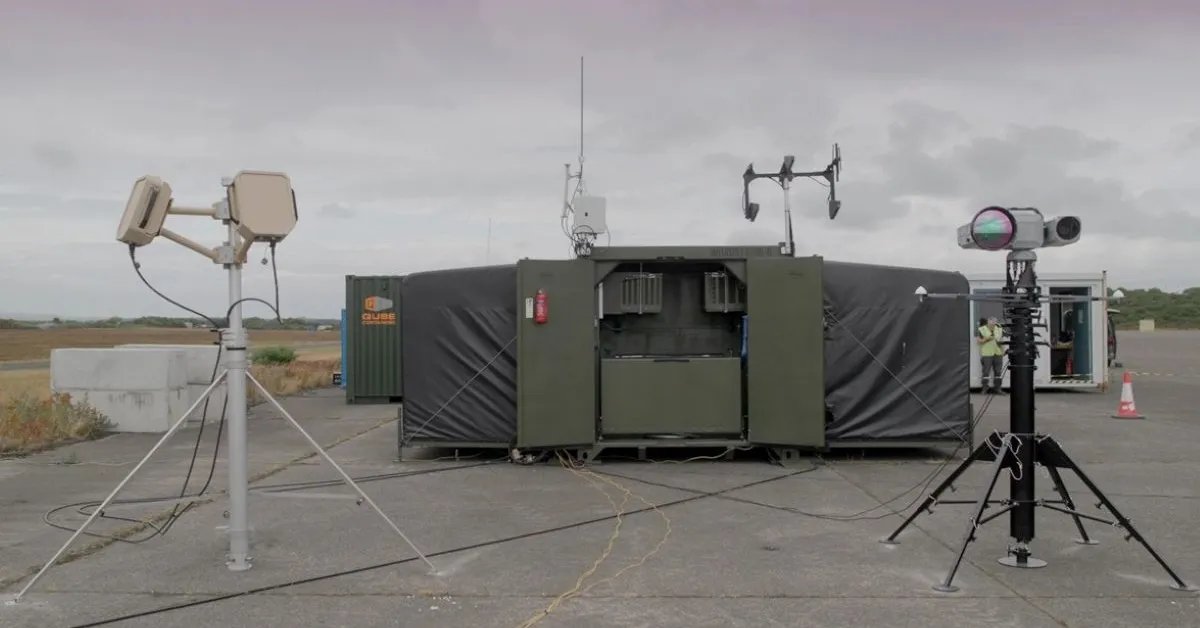

BAE Systems is adding another layer of radar capability to its counter-drone operations, with Echodyne’s EchoShield radar selected for integration into the BAE Systems Anti Threat System (BATS).
The integration is designed to give BATS the accurate, persistent airspace data it needs to detect, classify, and track potential drone threats before coordinating an appropriate response.
The announcement comes after BAE Systems recently completed live trials of BATS in Scotland. The demonstrations showed how the system can bring together multiple sensors and effectors through a single command-and-control architecture, allowing operators to identify and respond to evolving drone threats in real time.
EchoShield has been selected as one of the sensors supporting this open, interoperable architecture.
New: Shield raises $2.5 billion to finance major Echodyne acquisition
For context, BATS is a modular, software-defined counter-uncrewed aircraft system (C-UAS) platform. It connects different sensors, intelligence feeds, command-and-control tools and countermeasures through a secure data core. Its goal is to bring the entire counter-drone process into one integrated system rather than requiring operators to work across separate platforms.
That’s where EchoShield comes in.
Developed by Washington-based Echodyne, EchoShield uses the company’s proprietary metamaterials electronically scanned array (MESA) radar technology. It provides persistent radar tracks, advanced threat classification, and precise location data that BATS can use to build a more complete picture of the airspace.
This information is particularly important in counter-drone operations, where detecting a target is only the first step. Radar systems must maintain reliable tracks even when drones perform complex maneuvers and provide accurate positioning data to help other sensors and countermeasures respond effectively.
EchoShield’s relatively compact size, weight and power requirements also make it suitable for different deployment scenarios, including fixed installations, rapidly deployable systems and mobile platforms.
“EchoShield contributes a precise, data-rich airspace picture,” says Louise Heywood, head of strategy at BAE Systems Digital Intelligence & Land. She explains that BATS uses this information to make rapid decisions and connect operators with the most appropriate countermeasure, while maintaining human control over the process.
Echodyne CEO Eben Frankenberg emphasizes that reliable sensor data is fundamental to making effective decisions against increasingly sophisticated drone threats.
The BATS architecture is designed to scale from protecting individual sites to providing wider-area coverage. It can also integrate with existing and future air defense systems, sensors and command-and-control platforms, making it relevant to military installations, government facilities and critical infrastructure.
For Echodyne, the selection adds another major defense integration to its portfolio. The company says its radars are already incorporated into hundreds of counter-UAS systems worldwide.
Echodyne recently opened an advanced manufacturing facility in Washington State, with plans to eventually scale production capacity to more than 30,000 radars annually. That expansion comes as demand for scalable counter-drone technologies continues to grow.
More: New Dronetag receiver tackles a major Remote ID detection gap for DFR


FTC: We use income earning auto affiliate links. More.