






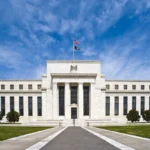


Federal Reserve officials have spoken out intensively this week, with hawkish rhetoric coming wave after wave. The market has largely settled on the expectation of a quarter-point (25 basis point) rate hike in December, and the focus of discussion has shifted to whether the Fed will follow up with another increase in January, which would mark the first run of consecutive hikes since 2023.
New York Fed President John Williams said outright that inflation is “still too high,” Chicago Fed President Austan Goolsbee described the latest price data as “almost disturbing,” Dallas Fed President Lorie Logan said officials may need to raise rates “faster than I had originally expected,” and Fed Governor Christopher Waller even raised the possibility of a half-point hike next month.
Underpinning this hawkish turn are a string of price readings. October’s Consumer Price Index (CPI) rose 0.4% month over month, above the 0.3% market forecast; core CPI, excluding food and energy, rose 0.3%, also exceeding the expected 0.2%. The October Producer Price Index (PPI) released shortly afterward showed an annual increase of 6.5%, the highest since November 2022, with transportation and warehousing costs jumping notably, indicating that price pressures are not confined to a handful of categories.
“A 25 basis point hike in December is clearly a done deal,” said Olu Sonola, head of U.S. economics at Fitch Ratings. “The real question is how quickly the next hike follows, and how many more hikes will ultimately be needed.”
Market pricing has adjusted rapidly. Before this week, traders were broadly betting on only one quarter-point hike in December and another in March of next year; now they have priced in quarter-point increases at the December, January and March meetings. If those forecasts prove correct, the current federal funds target range of 3.75% to 4.00% would be pushed all the way up to 4.50% to 4.75%.
Brokerage forecasts are also diverging. Bank of America has incorporated three consecutive hikes at the coming meetings into its base case, while Santander maintains its view of two hikes, in December and March, reflecting the lack of consensus on the pace of tightening.
Notably, Fed officials are equally divided on “how much” and “how fast.” Waller mentioned the possibility of a half-point move, Cleveland Fed President Beth Hammack reiterated her preference for more frequent, smaller adjustments, and Philadelphia Fed President Anna Paulson argued for gradual increases. Boston Fed President Susan Collins said the direction of further tightening is clear, but she “doesn’t want to get ahead of ourselves on how high or how fast we should raise rates.”
Michael Reid, head of U.S. economics at RBC, interpreted the situation as the Fed now worrying that it must act before inflation reaccelerates, and therefore may increase the frequency of hikes or even raise the terminal rate level recognized by the Federal Open Market Committee (FOMC).
Factors constraining the pace of hikes also exist. Data this week showed U.S. existing home sales falling to a 16-year low, with the housing market remaining in a deep slump; Collins also acknowledged that higher rates hurt housing affordability but stressed that, over the long term, price stability is more critical for the housing market and the broader economy.
Another variable comes from the stock market. Fed Governor Michelle Bowman warned that if returns on artificial intelligence investment fall short of expectations, one risk is a sharp decline in share prices that would in turn erode the resilience of consumer spending; she also cautioned that higher rates would further weigh on rate-sensitive sectors such as housing and small-business investment.
Energy prices represent a possible downside risk. If oil prices retreat in the coming months, fuel cost pressures could ease, giving households and businesses some breathing room. Richmond Fed President Tom Barkin said in remarks on Monday that rates still need to rise further, but the pace should be cautious.
Looking back at the policy path, the Fed raised rates by a quarter point in September to the 3.75% to 4% range, and held steady at its October meeting. Chair Kevin Warsh has not commented publicly on monetary policy since his October press conference and is scheduled to speak at an event on Monday about his artificial intelligence and productivity working group; the broader expectation is that he will not offer guidance on the near-term policy outlook.
Overall, officials have a high degree of consensus that more hikes are needed, with disagreement centered on the pace. Eric Wallerstein, chief macro strategist at Clocktower Group, observed that “most Fed officials seem to agree that rates need to rise while leaning toward not moving too hastily,” which also means that every inflation and employment report in the coming months will directly sway market bets on the January meeting.