





Nike is once again bolstering its subsidiaries in Southern Europe. After reinstating the role of country general manager in Spain in July, it is now Italy and Greece’s turn. The American sports equipment company has brought back Silvia D’Anna as the new CEO for the Italian and Greek markets. At the same time, the company is focusing on niche marketing campaigns in these countries to reconnect with consumers.
D’Anna’s appointment comes four months after the Swoosh giant named Adriana Garcia Pujol as general manager for Spain and Portugal. In 2021, the company decided to eliminate the general management positions in these countries and transfer local decision-making authority to the Netherlands, as part of a personnel restructuring aimed at centralizing operations. Now, under the leadership of current CEO Elliott Hill, Nike is reversing course and reinvigorating its local teams.
According to information obtained by Modaes, Silvia D’Anna has just joined Nike. She does so after spending ten months as head of the sports, children’s, and lingerie categories at Bestsecret, a company she joined after leaving Nike. Prior to that, the executive had spent nearly thirteen years with the group, rising to the position of director of e-commerce for Europe, the Middle East, and Africa (EMEA) at the Jordan brand.
Nike is once again strengthening its subsidiaries, after decision-making authority for Spain, Portugal, Italy, and Greece was transferred to the Netherlands in 2021
As part of the strategy implemented by John Donahoe, the former CEO, Nike reduced the influence and decision-making power of its subsidiaries. In Spain, this process resulted in a workforce reduction plan (ERE) that was completed in April 2021 and the departure of key executives such as Ignacio Serret and, earlier, Marcos Garzo.
In addition, the group merged its former subsidiary in Spain, American Nike, with the company through which it operates in the Netherlands—just as it later did with subsidiaries in countries such as Italy and Greece. Since then, subsidiaries like the one in Spain have been stripped of their decision-making authority.
Now, the management teams in Spain, Portugal, Italy, and Greece report to César García, who has held the position of vice president and general manager for EMEA since last January. Like Garcia Pujol and D’Anna, César García has a long career at Nike, with more than two decades in leadership roles within the group.
Little by little, Nike is rebuilding its team in Europe. In Spain, for example, the company has not only brought on Adriana Garcia Pujol as general manager for the country but has also appointed Lucas Balsells as senior regional director, a position in which he oversees Nike and Jordan’s commercial strategy in direct-to-consumer channels. The wholesale business, on the other hand, is led by Roger Esquerda.
In Spain, Adriana Garcia Pujol is the country general manager, while Lucas Balsells leads B2C and Roger Esquerda leads B2B
In addition, the company is strengthening its Spanish subsidiary, headquartered in Barcelona, by hiring new staff in areas such as marketing as it resumes local operations. Nike is now focusing on a niche-market strategy, seeking authenticity and a connection with athletes and fans.
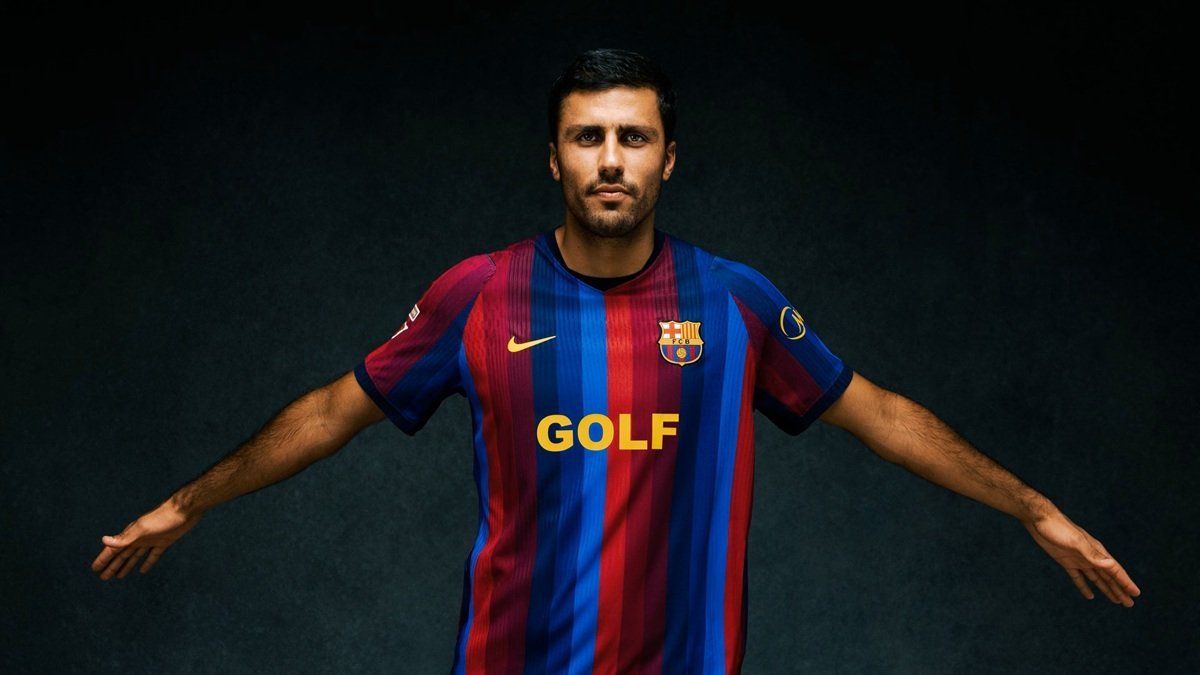
During the most recent match between Real Madrid and FC Barcelona (one of the soccer games with the largest global audience), Nike, FC Barcelona, and Spotify unveiled a new exclusive collection in collaboration with Tyler, The Creator, an American rapper who has built his own universe around his music. Tyler’s clothing brand, Golf Wang, replaced the Spotify logo on the field. And away from the stadium, the company with the swoosh logo organized an exhibition to showcase the Nike x FC Barcelona x Spotify x Golf Wang collection, which included eleven pieces that fused the Catalan club’s identity with the artist’s creative universe.
The American company is committed to shifting away from traditional sponsorship models toward activations that are much more focused on culture and brand values. Instead of placing its logo—for example—at the Barcelona Marathon, Nike’s activations aim to create campaigns that are more dynamic and deeply rooted in the local community, according to the company.
Moving beyond soccer, among other initiatives, Nike participated last September in Wodcelona, a sports event designed to promote inclusion and an active lifestyle through sports. The competition, which was open to all, brought together athletes and spectators across 24 age-based categories.
Another such initiative, held in Madrid, Seville, and Barcelona last May, was a street soccer tournament under the slogan “Take the Game,” in which 16 men’s and women’s teams participated.