





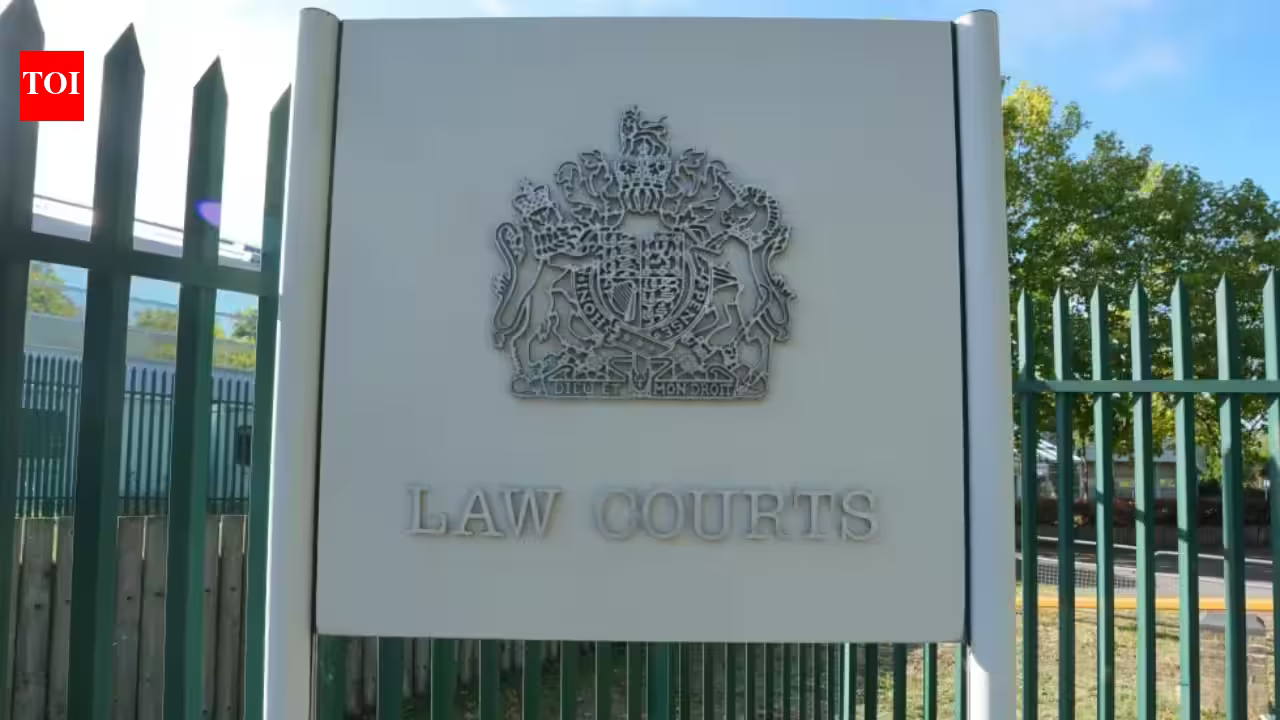
Two Iranian men have been convicted of spying on journalists working for a Persian-language broadcaster in London after prosecutors established that they conducted surveillance on individuals critical of Tehran and gathered information that could assist Iran’s Islamic Revolutionary Guard Corps (IRGC).Mostafa Sepahvand, 41, and Farhad Javadi Manesh, 46, were found guilty at Woolwich Crown Court on Thursday following a six-week trial. A third defendant, Shapoor Qalehali Khani Noori, 57, was acquitted of all charges, according to AP.The prosecution said the two men carried out surveillance on journalists from Iran International, including Mojtaba Pourmohsen and Kambiz Hosseini, as well as Jonathan Turner, a founding member of UK Lawyers for Israel. The broadcaster is banned by the Iranian government.According to prosecutors, Sepahvand and Manesh visited locations associated with their targets, recorded photographs and videos, and used online platforms, including ChatGPT, to gather information about them.Frank Ferguson, chief prosecutor for the Crown Prosecution Service’s special crime and counter-terrorism division, described the activity as a planned intelligence-gathering operation against people critical of the Iranian government.He said the defendants had been offered rewards for passing information to Iran, adding that Sepahvand was prepared to move beyond surveillance and carry out serious violence against those being monitored.“Thankfully, the defendants were stopped before any attack could take place,” Ferguson said.The convictions relate to conduct intended to assist the IRGC, which the UK proscribed in July under new legislation aimed at addressing threats from foreign states. Supporting or assisting the organisation can carry a prison sentence of up to 14 years.London’s Metropolitan Police said the case was the fourth in recent years involving a direct threat to journalists associated with Iran International. The force said it was continuing efforts to protect those targeted.Vicki Evans, a deputy assistant commissioner at the Metropolitan Police, said hostile-state threats against the UK were increasing and that Iran was changing how it used intermediaries to carry out operations.She said authorities had encountered individuals travelling to Britain specifically to commit crimes before leaving, as well as British citizens and Iranian nationals with settled immigration status being used in such activities.The case comes amid wider counterterrorism investigations into suspected Iranian-linked operations in Britain. Police have examined possible connections between Iranian proxies and several incidents, including an arson attack earlier this year on four ambulances belonging to a Jewish community organisation in London.Iran has also been linked to an alleged plot targeting a US-operated military air base in England. The Iranian Embassy in the UK has rejected allegations that Tehran was involved in violent activities or incidents in the country.Sepahvand and Manesh are due to be sentenced at the Old Bailey, formally known as London’s Central Criminal Court, on December 17.