








Finance Minister, Dr Cassiel Ato Forson has announced that the government is targeting real Gross Domestic Product (GDP) growth of about 8% and unemployment below 8% by 2030 as part of measures to strengthen Ghana’s economy.
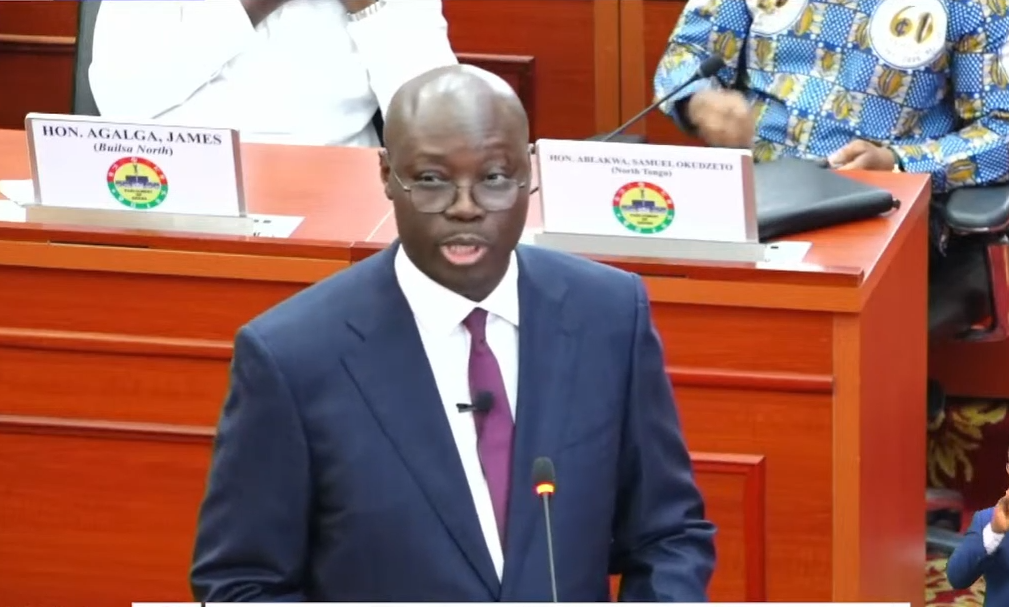
He made the announcement during his presentation of the 2027 Budget Statement and Economic Policy to Parliament on Thursday, November 12,2026.
He said the targets form part of the first pillar of the government’s eight-pillar New Economy Programme, which focuses on sustaining macroeconomic stability and improving access to affordable finance.
“Our duty is to protect the gains we have made and apply them to the benefit of the people of Ghana,” he told Parliament.
Under the plan, government intends to maintain a positive primary surplus of at least 0.5% of GDP from 2027, keep public debt consistent with 45% of GDP, preserve single-digit inflation and strengthen the country’s external reserves.
The government is also targeting an investment-grade sovereign credit rating by 2030, which the Finance Minister said would have to be achieved through consistent economic performance rather than promises.
“Investment-grade sovereign rating cannot be earned in a speech. It must be earned through sustained performance,” he said.
As part of efforts to improve transparency and investor confidence, an annual investment readiness report will be published to assess the country’s fiscal performance, debt affordability, reserve accumulation, monetary credibility, financial sector strength, institutional quality and economic diversification.
Mr Forson said the government also intends to bring the cost of capital into single digits to make borrowing more affordable for businesses.
“Affordable finance will turn stability into opportunities,” he said, adding that lower interest rates should translate into credit that businesses can access, afford and repay.
He explained that the government would strengthen bank lending, deepen corporate bond markets and work with the Development Bank Ghana, Ghana Exim Bank and participating financial institutions to expand financing for productive businesses.
The measures will include credit guarantees, equipment leasing and export financing to help viable enterprises overcome funding challenges.
“From the market woman seeking working capital to the manufacturer investing in new machinery, Ghanaian enterprises need financing that supports growth,” he said.
He added that support would be tied to investment, production and job creation, while long-term financing arrangements would give farmers and industrialists enough time to invest and generate returns before repayment.
The Finance Minister further assured Parliament that fiscal discipline would be maintained even during the election cycle, with the gains from economic stability directed towards productive sectors of the economy.
“That is how the gains of stability will reach homes, workplaces and communities across Ghana,” he said.