








With specialist science teachers in growing demand, the question of how to retain and recognise these experienced educators has moved up the agenda for school leaders.
Nationally, around one in five teachers delivering secondary science are working outside their area of specialisation, according to the latest data from the Australian Institute for Teaching and School Leadership (AITSL).
This comes as figures from the NAP–Science Literacy assessment show that 43% of Year 6 students and 46% of Year 10 students are falling short of the expected standard.
The pressures extend well beyond science.
Holding on to teachers is a challenge across the profession, not just in science. AITSL’s data shows that around 20% of teachers intend to leave the profession within five years, with workload, work-life balance and work-related stress cited as the top three reasons.
Recognition matters too, with insufficient performance recognition cited by 35% of teachers planning to leave before retirement.
Putting science teaching in the spotlight
Since they were first awarded in 2000, the Prime Minister’s Prizes for Science have honoured Australia’s leading researchers and innovators alongside school teachers. In 2024, the Federal Government lifted the value of the primary and secondary teaching awards to $250,000 each.
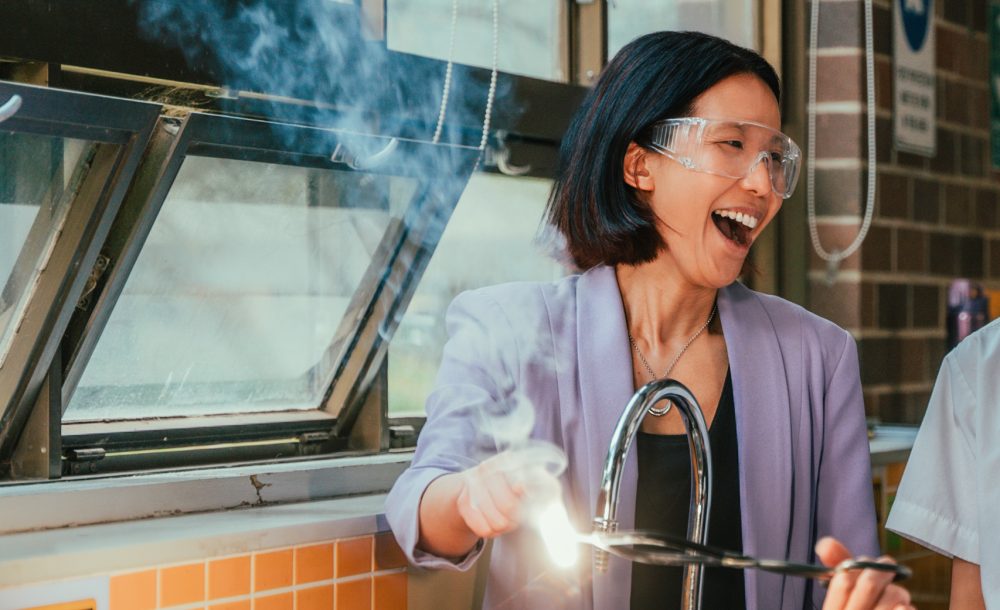
That same year, Alice Leung, Head Teacher, Secondary Studies at Concord High School, took home the secondary teaching prize, while Daniel Edwards of Montello Primary School in Tasmania received the primary award.
Notably, Leung’s nomination came not from a colleague but a scientist who stumbled across her chemistry content online.
It’s not hard to see what caught their eye.
Leung’s programs helped students grasp technical scientific vocabulary, particularly the 70% of Concord High’s students from non-English speaking backgrounds, while also encouraging more girls to take up STEM subjects.
And this impact stretched well beyond the school’s gates.
Leung has developed STEM resources for teachers across Australia, and worked alongside government, industry and academic experts to equip students and teachers with the knowledge and skills they’ll need in the years ahead.
Since receiving the Prize, Leung said her career has gone from strength to strength.
“Receiving the Prize has been a springboard to other opportunities,” Leung told The Educator. “From being invited to present at conferences to share my passion for science teacher to motivating me to apply for scholarships.”
Leung recently received the 2027 NSW Premier’s Teachers Scholarship on inclusive education where she will be exploring the impact on generative AI on the development of executive functioning in students with additional learning needs.
The missing ingredient in teacher retention
Sparking interest in teaching is one thing, but Leung knows that getting aspiring teachers from that first social media enquiry to the front of a Year 11 chemistry class is another, and it’s somewhere along that journey that many quietly slip away.
“I think we are improving in our recruitment and retention of pre-service teachers but there is always room for improvement. There are lots of young people wanting to become teachers,” Leung said. “Teaching is a very demanding profession. Even the most well-intentioned pre-service teachers are often shocked at the workload and work intensity.”
Leung said the perception of teaching as a student does not reflect the complexity and demand of teaching.
“I think we can retain more teachers in the profession at all career stages if we gave teachers more preparation time,” she said, adding that Australian teachers get one of the least amounts of preparation time compared to teachers in other OECD countries.
“More preparation time means teachers, especially newer teachers, can receive more effective mentoring, developing a deeper understanding of their students’ needs and establish more times with the wider school community. A lot of good can come out of more preparation time.”
‘Don’t hesitate – just go for it!’
With nominations for the 2027 Prime Minister’s Prizes for Science set to open, Leung has a clear message for public school teachers still weighing up whether to put their name forward, as well as those who know someone deserving.
“Don’t hesitate – just go for it!” Leung said. “Not just for teachers who would like to be nominated. If you are a teacher, parent or community member and you know a science teacher who needs to be recognised for their dedication, nominate them.”
Leung said she was privileged to be in Canberra to see a fellow NSW public school teacher, Matt Dodds, receive the Prize in 2025.
“This is representative of the dedication, talent and expertise in the whole teaching profession in public schools. Public education is the only school system that provides high-quality education to every child regardless of the circumstances they were born into,” she said.
“It’s not an easy job, but we have the highest quality teachers in our system.”