








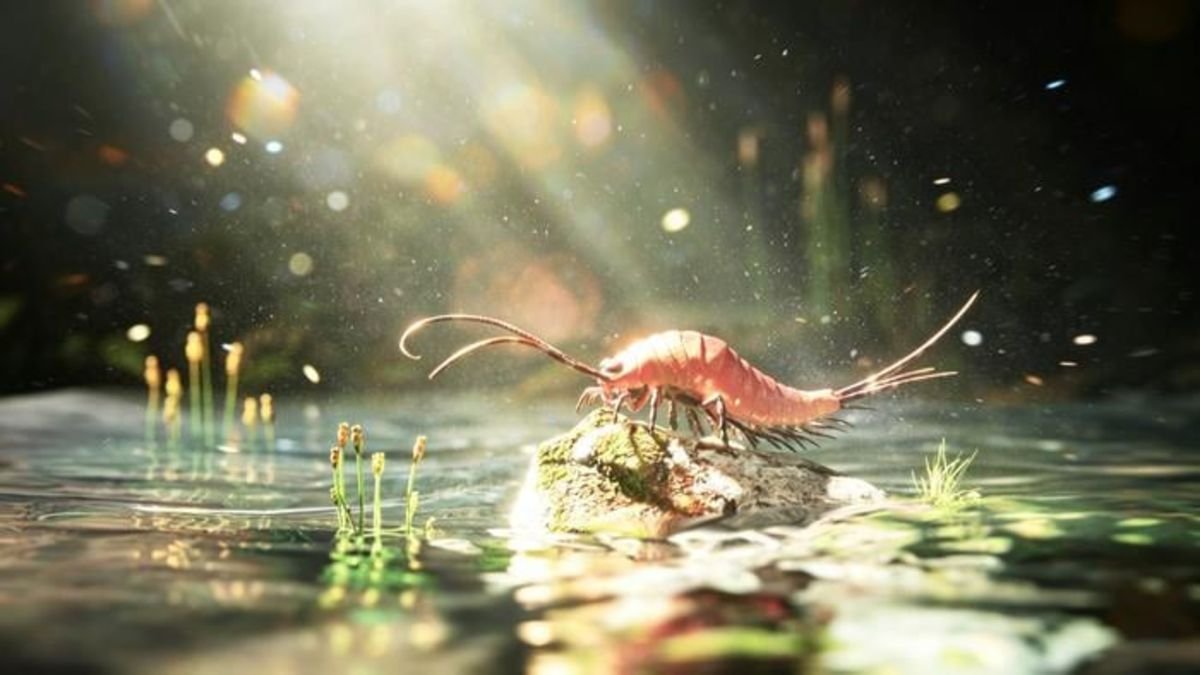
Scientists have identified one of the oldest known insects in the world, a 324-million-year-old fossil that sat in storage at the San Diego Natural History Museum for decades after being classified as a crustacean in 1991.
The fossil was collected in Brewster County, Texas, in 1985 and brought to the museum in that same year.
Erik Tihelka, a doctoral researcher at the University of Cambridge, later saw a drawing of it in a textbook and traveled to San Diego to examine the specimen.
Using polarized light filters to cut through the rock’s glare, Tihelka and an international team, co-led by researchers at the Nanjing Institute of Geology and Palaeontology (NIGPAS), uncovered hidden anatomical details that proved the creature was a primitive insect rather than a crustacean. They published their findings in the journal Nature in August.
The insect, previously classified as a juvenile of Tesnusocaris goldichi (an extinct, blind remipede crustacean), has been given the new name, Chosha praecursor. It has six legs on its thorax and an egg-laying organ, both features indicative of insects. The specimen also has extra legs on its abdomen shaped like paddles.
“They have these little paddled appendages they used to swim around,” Shahan Derkarabetian, the museum’s curator of invertebrate zoology, told KPBS. “And so that kind of characteristic is what bridges that gap between things that swim and things that walk purely on land.”
The re-identified fossil comes from a period of tens of millions of years when few insect fossils have been found. Researchers say it shows that early insects may have lived partly in water before they moved fully onto land.
After nearly 40 years in the museum’s collection drawers, the specimen was recently placed on display in a glass case on the lower level of the San Diego Natural History Museum, giving visitors a rare glimpse of insect evolution in its earliest stages.
Sources: Nature, EurekAlert!, KPBS, sandiegouniontribune.com, NYP
Read the original article on GEEKSPIN.
Affiliate links on GEEKSPIN may earn us and our partners a commission.