







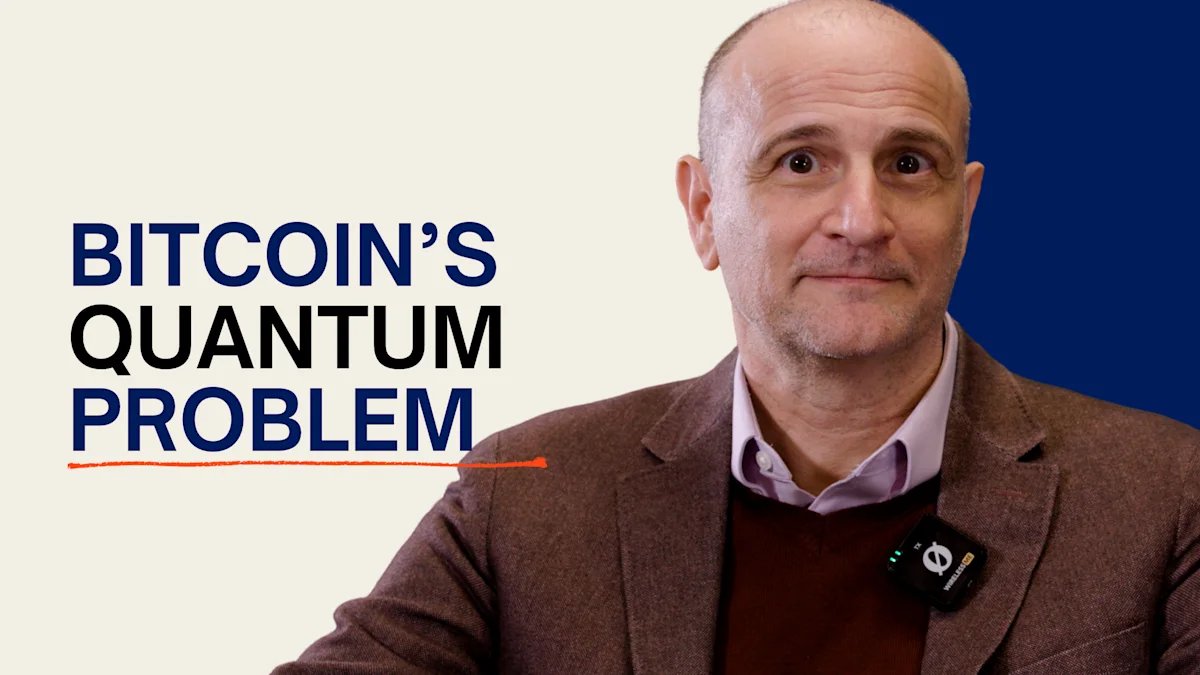
The Bitcoin community may be running out of time to figure out a defensive plan against quantum computers and an accelerating number of hacks.
According to Algorand CEO William Herkelrath, the cryptocurrency industry could also be underestimating how artificial intelligence might accelerate the threat — and how difficult it will be to prepare for it.
“If you have a quantum computer and it’s connected to the internet in any capacity, you have to assume that AI is going to figure out how to get in there and start using it for whatever it wants to do,” Herkelrath warned in a new interview with Coinage.
The prediction comes as the crypto industry grapples with increasingly common hacks. Shortly after Binance was hacked for a record $6 billion, one of the CEOs of the leading hardware wallets admitted crypto companies may need to accept hacks as commonplace. In an interview with Bloomberg, Ledger CEO Pascal Gauthier didn’t mince words, saying, “everybody will be hacked at some point.”
Bleak.
As for Bitcoin, there’s still hope within the community that an agreed upon plan could help better position the leading cryptocurrency. While a sufficiently powerful quantum computer capable of breaking Bitcoin’s digital signatures remains a future risk rather than a demonstrated present-day attack, Herkelrath argues the time to prepare is already running short.
“I’m long Bitcoin as we all are … in a way, we’re all kind of dependent on the success of Bitcoin,” he said, adding he’s also hopeful a solution will be settled on. “From our experience, it’s not something you can just do in a few weeks. It’s something that takes a long time … there’s a lot more there that I think people aren’t quite aware of.”
Algorand has long positioned itself as a blockchain leader in quantum resistance. As the company notes, in 2025 Algorand extended its post-quantum readiness by executing one of the first quantum‑resistant transactions on mainnet.
Herkelrath, previously in leading roles at Chainlink and digital asset security firm Curv, cautioned that Bitcoin’s transition to quantum-resistant cryptography is unlikely to be straightforward.
Read More from Coinage:
Why Bitcoin’s Quantum Problem Is More Complicated Than It Looks
The challenge facing Bitcoin isn’t simply finding a new cryptographic algorithm capable of withstanding quantum attacks. According to Herkelrath, implementing that technology could have significant consequences for how blockchains operate.