
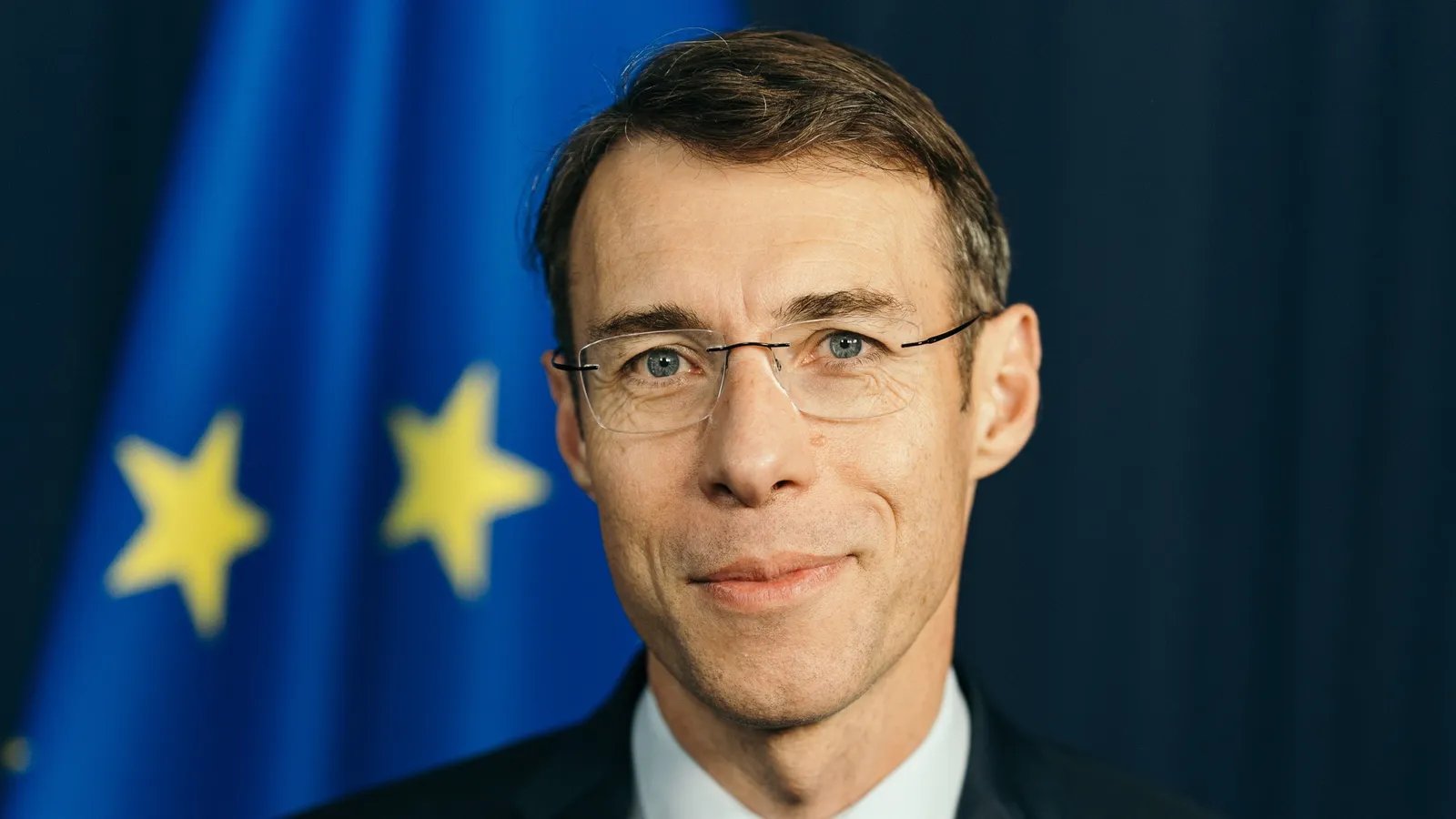
Thibaut Kleiner, Director Future Networks in the European Commission’s Communication Networks, Content and Technology directorate (DG Connect), highlighted to the audience at Enlit Europe in Vienna how AI is a game changer and why Europe needs sovereignty with regards to AI, chips and software.
Thibaut indicated, referencing the EU’s technology sovereignty package, that Europe would need to triple its data centre capacity with an investment cost of around €200 billion, along with investment in the grids to deliver the electricity needed to power this capacity.
“The energy transition is not just about physical infrastructure like wind turbines or solar farms but also about data, intelligence and digital innovation and using digital tools to make our networks more resilient, flexible and smarter,” he said, pointing to project developments underway, such as on bidirectional EV charging.
“Data centres are part of the solution. They are not just large loads but can bring value such as heating and tax revenues for local communities and can support the integration of more renewables and the stabilisation of the networks.”
With AI-driven solutions to make the electricity system more flexible, annual savings estimated at €71 billion could accrue.
“Our aim is to make data centres a win-win for local populations, electricity producers and the digital industry as a whole,” said Kleiner.
However, several issues need to be addressed, such as harmonised investment and development conditions across Europe and the introduction of data centre acceleration zones. For example, the build time for a data centre in Italy is typically seven years, compared with one year in Sweden.
In the EU-focused panel discussion on the first day of , issues that came up included the bottlenecks to data centre development and their locations, with current developments largely clustered in Frankfurt, London, Amsterdam, Paris, and Dublin.
Remy Garaude Verdier, European Affairs director at Enedis, said his company welcomed the development of as a must, despite the grid connection challenges, and that its aim was to engage at an early stage.
“DSOs can better coordinate development and, for example, in France, we have a lot of places that could accommodate data centres, so we can negotiate. Even modest changes of location of a few kilometres can make a difference for the grid connection.”










Leave a Reply