
Despite ample evidence, for years, climate change impacts were treated as a distant rather than a present reality. At the University of Minnesota, that gap between scientific evidence and public understanding is arresting to faculty and student organizers as researchers navigate the future of the world’s climate.
For Emily Vraga, a professor at the Hubbard School of Journalism and Mass Communication, the gap shows up in media habits, misinformation and political identity. For Gabriel Chan, a faculty member at Humphrey School of Public Affairs, it has to do with the structure of climate policy itself. For student organizers working around the Hennepin Energy Recovery Center, it shows up in what they see as years of delay and decisions made without the communities most affected.
Media misinformation
Vraga, who studies resilience against misinformation, said climate change remains vulnerable to falsehoods due to fossil fuel companies that have money to protect, political polarization and the framing of climate change as something distant rather than immediate. Vraga has seen this change as more people experience severe seasonal changes.
“I think that piece is a little bit less true than it was even five or 10 years ago,” Vraga said. “We’ve seen these kinds of continuous record-setting events; there is a warmth of drought, of fires, of flooding, depending on where you are. More and more people are recognizing that it’s an immediate problem.”
Vraga said there should be no further argument about climate change’s reality — it is a question of whether people realize it is a human-caused problem.
When NBC’s Meet the Press staged climate change as a debate between Bill Nye and Representative Marsha Blackburn back in 2014, the segment depicted climate change as a scientist versus politician conflict, giving viewers the impression that the issue was still up for debate.
More recently, climate misinformation has shifted from outright denial to cherry-picking data. In 2024, Reuters fact-checked social media posts that used one day of Arctic sea ice data to suggest climate change concerns were exaggerated. Scientists said the claim ignored the long-term decline in Arctic sea ice, showing how misinformation can be used to cast doubt on much larger patterns.
Vraga states that the fast-paced nature of media coverage also impacted the way people understand climate change, framing it as a collection of isolated disasters rather than a continual process.
“It’s hard for the news media to cover it in a consistent way,” Vraga said. “Coverage of climate change would dramatically vary over time, and it would drop off the issue agenda for months or years, and then come back whenever it’s a particularly hot day or particularly extreme event.”
Vraga said the media often had a hard time covering climate change, as its impacts were not always dramatic. This makes it hard for the issue to top the public agenda, as coverage is on and off.
Vraga said social media complicates this even more, as younger people are getting most of their climate information from apps like TikTok or Instagram, a reality far different from older generations that rely on legacy outlets.
This fragmented media environment, shaped by influencers and platform algorithms, can be an asset, according to Vraga.
“Social media gives people an opportunity to share their views without gatekeepers or with fewer gatekeepers,” Vraga said. “It can be a way for science communicators to talk directly to the public. It can be a way for people to talk about their lived experiences of climate change.”
However, Vraga said those same platforms can also make climate change feel more politically divided than it is. Internet users who would rather not be attacked are more inclined to stay silent, creating a false impression of what most people actually believe.
Political polarization of climate change
Climate change has not only shaped the environment we live in, but the political conversation and actions around it.
A 2024 Pew Research Center summary found that by 2022, 78% of Democrats said climate change was a major threat to the U.S., compared to 23% of Republicans. By 2025, Gallup showed 68% of Democrats and just 12% of Republicans viewed global warming as a threat.
“I also think now it’s so polarized that it’s really hard to break it once that has happened,” Vraga said. “As parties become more distinct, as parties differ not just in issue positions, but in kind of their feelings towards each other, to disagree with your party feels harder and harder.”
That political division has real consequences for policy.
Chan said Congress has become too gridlocked to pass major legislation consistently. As a result, much of federal climate policy now depends on presidential administrations rather than long-term laws — which means rules can shift every time power changes hands.
“A lot of climate policy is actually happening by the administration,” Chan said, noting policies can now be made and unmade depending on who is in office.
Chan said electric vehicle and fuel economy policy regulations were strengthened under President Barack Obama, rolled back under Donald Trump, raised again under Joe Biden and weakened again after Trump returned to office.
This increasing political division and competing interests between industries and scientists is what Chan said stalls the ability of climate policies to make a real impact.
“If you’re in the fossil fuel industry and you have a major business, where your entire profit depends on extracting fossil fuels, that’s a very intense cost to contemplate removing carbon from the economy,” Chan said. “I think it’s that contrast between concentrated costs and diffused benefits that creates very challenging politics.”
That imbalance helps explain why climate action often moves much more slowly than science suggests it should, according to Chan. He said climate change is ultimately a collective-action problem.
Chan added that no single institution can respond adequately by acting only in its own self-interest. Real progress, he said, requires stronger institutions and a broader willingness to see climate action as something people have to do together.
Climate justice on the ground
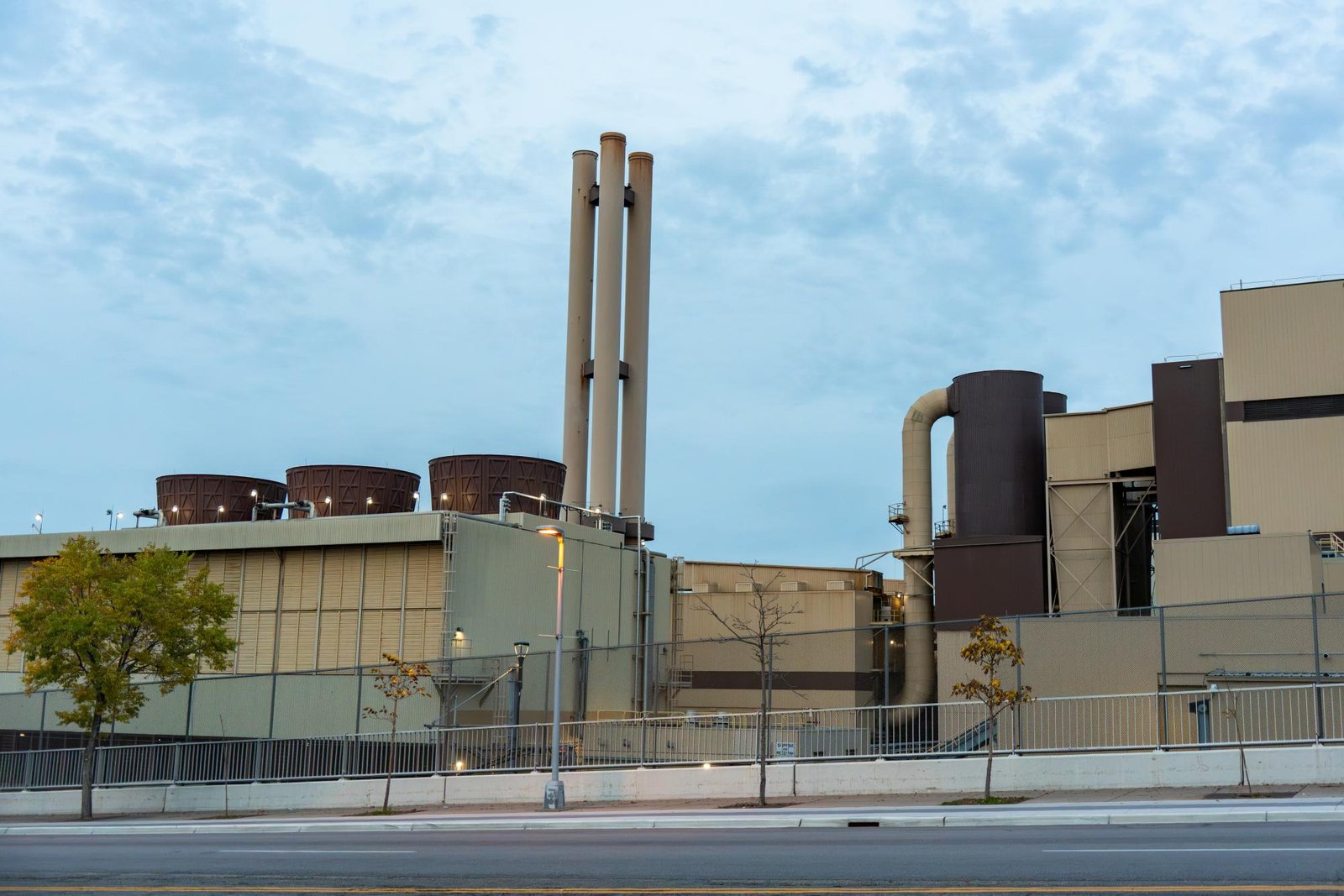
The Hennepin Energy Recovery Center is a county-owned trash incinerator near Target Field between downtown and north Minneapolis. This facility burns roughly half of Hennepin County’s trash, about 360,000 tons a year. Activists say its emissions add to health risks in nearby communities already burdened by air pollution.
For organizers tied to the Zero Burn Coalition, the distance between climate ideas and climate action is not abstract. HERC continues operating near communities that have long said they do not want to bear its burden.
University alumna and activist Natasha Villanueva feels that policymakers make environmental decisions without meaningfully listening to the people most affected. She said commissioners are difficult to reach, and officials often remain noncommittal.
“It’s been very unresponsive in terms of our relationship with our county commissioner,” Villanueva said. “When I announced I was going on hunger strike, I did not receive a response when we asked questions about her plan to convert the HERC site into a recycling facility.”
Villanueva said this makes her feel like a constituent rather than a person with a voice. Her comments point to a larger issue that goes beyond HERC itself. In an increasingly political environment, decisions regarding climate and public health treat concerns like Villanueva’s as secondary.
She said the problem is not just that residents disagree with county leaders, but that the leaders chosen to represent them have operated without real accountability.
Villanueva also said climate awareness alone is not enough. Structural changes, they said, matter more than just changing attitudes. If systems stay the same, even people who care may not be able to act differently. That is why, in their view, climate action has to be built into policy, infrastructure and institutional decisions — not just public messaging.
Why is climate change not taken seriously?
For Zero Burn Coalition member Arwa Alakech, part of the answer to why climate change is treated as distant or politically optional lies in how people are wired to think about time and how powerful industries have taken advantage.
“There was a book that we read called ‘Don’t Even Think About It: Why Our Brains Are Wired to Ignore Climate Change’, and it makes the point that people don’t think in long term because, evolutionarily, we thought in terms of the next days or weeks,” Alakech said. “But when we think about decades to come, then it’s harder to prioritize what’s going to come in a few decades than what’s going to come in the next year.”
Alakech said the short-term mindset has not existed in a vacuum. She said industries that stood to lose from climate action used it to their advantage, spending years downplaying the problem and giving people reasons to delay taking it seriously.
“The people who created our energy systems took advantage of that, because when oil companies were finding out the effects of climate change, they poured billions of dollars into propaganda just saying that climate change isn’t as big of an issue as we think it is,” Alakech said.
Climate delay is not only about ignorance, but a tactical messaging deployed by industries that do not want to change and give up their profits. People thus far have been taught for decades to treat it as something that can wait, when scientists continually warn of the drastic effects.
That kind of delay, Alakech said, is exactly what allows climate change to keep deepening. She added the danger is not just disbelief, but the ability to treat the problem as tomorrow’s crisis instead of today’s.
“Even though it is something that’s not going to affect us immediately or affect us in the next week or year, it is going to be affecting somebody’s children, somebody’s grandchildren,” Alakech said. “And it’s something that we need to care about for that reason.”


Leave a Reply