

President Trump’s efforts to supply the U.S. with Russian diesel have yet to result in any new imports into the country, as several fuel tankers bound for America shifted course following difficulties finding buyers willing to accept the controversial cargoes.
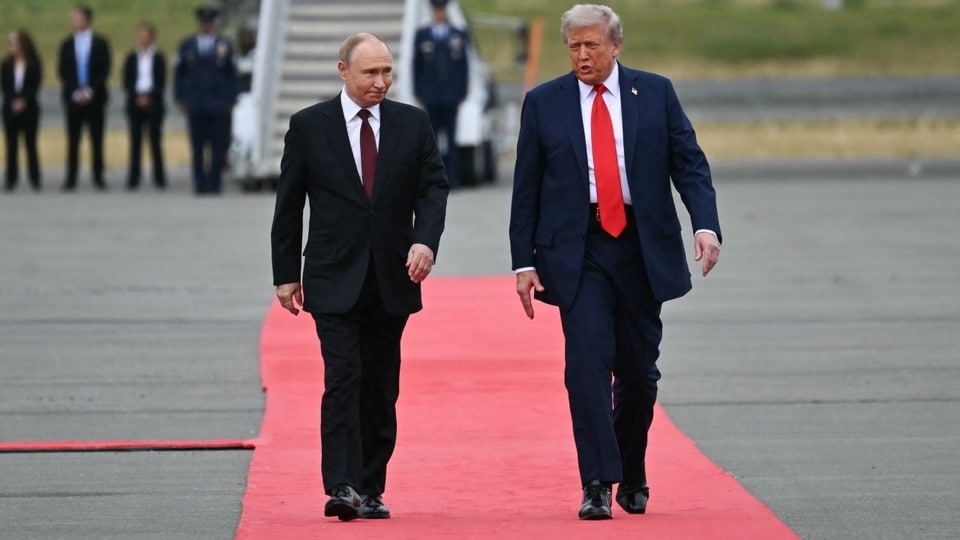
Trump saw Russian diesel as a way to lower sky-high prices for the fuel, which contributed to rising consumer costs in the U.S. in the run-up to the midterm elections. But the diverted ships show U.S. oil companies are reluctant to handle the cargoes of Russian diesel because of the potential legal and reputational consequences, industry executives and lobbyists said.
Critics, including senior Democrats and Republicans in Congress, said that Trump’s carve-out of diesel from U.S. sanctions on Russia was illegal. Another concern was that accepting the diesel could cause companies to run afoul of international sanctions: fuel imports from Russia are still banned by the U.K., European Union and Switzerland.
“There are political, compliance and enforcement challenges,” said Michelle Wiese Bockmann, a senior analyst at maritime intelligence firm Windward.
Trump reached the deal after a “highly successful discussion” with Russian leader Vladimir Putin, he said in an Oct. 9 post on Truth Social. Trump said Moscow agreed to “immediately” supply diesel to the U.S. and global markets.
Moscow partially restored diesel exports that it halted this summer after a campaign of Ukrainian drone strikes on Russian refineries. A month after Trump’s post, Russia is selling diesel again to the Middle East, North Africa and South America—but the plan to supply the U.S. with the fuel has stalled.
The Agioi Fanendes, a tanker loaded with 300,000 barrels of Russian diesel, slowed down near the U.S. East Coast on Monday and started loitering in a zigzag pattern. The ship, which had initially listed its destination as New York, was the latest of several vessels bearing Russian fuel to shift course or change their discharge plans midjourney. Ship-tracking service Kpler lists its new destination as South America.
Three other diesel tankers turned away last week. Two are sailing to Brazil, while a third pivoted from the Atlantic Ocean to the Mediterranean Sea and has now arrived in Egypt, according to Kpler. All of those ships had initially listed their destinations as Atlantic Coast—shorthand for the U.S.—when they left the Russian port of Primorsk last month.
No Russian diesel has been imported to the U.S. since April 2022, according to U.S. government data.
U.S. oil companies aren’t short of diesel: domestic refiners already make more than enough diesel to sate the country’s consumption and export more than 1.5 million barrels a day to overseas buyers. Despite this, the U.S. average for a gallon of diesel has climbed to $6.16 as of Tuesday, as global supplies of the fuel have tightened following the Middle East conflict. It is up from $3.75 before the war.
After the triumph of Democrats in the midterm elections last week, companies feared that being involved in any transactions would get them caught up in investigations by the next Congress, oil lobbyists said.
“The trade-off is not very favorable for any party involved,” said George Voloshin, data and insights lead at ACAMS, an organization of antifinancial-crime professionals. “They could get sued or dragged through the mud in the press as complicit in the war in Ukraine. And who needs that?”
A Trump administration official said: “Consistent with the deal agreed to between President Trump and President Putin, Russian diesel is on the water and heading to the market, which will ease prices for Americans.”
The Kremlin didn’t respond to a request for comment.
The same day that Trump unveiled the deal, the Treasury Department waived sanctions on the import of Russian diesel through April. But some lawmakers argued that the administration’s greenlight for diesel purchases violated a 2022 law banning energy imports from Russia.
Sen. Richard Blumenthal (D., Conn.), in an open letter to the Greek owner of the Agioi Fanendes, wrote that it would be “engaged in an illegal transaction” if it delivered its cargo to U.S. shores.
Earlier this month, New Jersey’s Democratic Gov. Mikie Sherrill warned the state’s port and terminal operators against importing the diesel. “Every port and terminal operator, intermediary, and buyer is on notice: do not help bring illegal Russian diesel into New Jersey,” she wrote them in a letter.
The Treasury waiver is in compliance with all applicable laws, the administration official said.
Russian officials are still praising the deal, which allowed Putin to drive a wedge between the Trump administration and Ukraine. Kyiv’s drone strikes have caused fuel shortages across Russia and prompted Moscow’s temporary ban on diesel exports in July.
Foreign Minister Sergei Lavrov called the diesel deal “an important contribution to energy security” in an article published Tuesday in a Russian newspaper. Last week, a Kremlin envoy said tankers headed to the U.S. remained on course, disputing reports that some had been diverted.
Until this spring, Russia was the world’s second-largest exporter of diesel after the U.S. Under its deal with Trump, Russia planned to restore its global diesel exports this year to less than one-fifth of what it was shipping before Ukraine’s drone-strike campaign, based on figures released by the president.
Those volumes represented a drop in the bucket compared with the global supply shortfall, analysts said.
“Combined diesel exports from the Mideast and Russia are still very low, with little movement there,” said Martijn Rats, chief commodities strategist at Morgan Stanley.
Write to Alexander Osipovich at alexo@wsj.com, Rebecca Feng at rebecca.feng@wsj.com and Collin Eaton at collin.eaton@wsj.com







Leave a Reply