
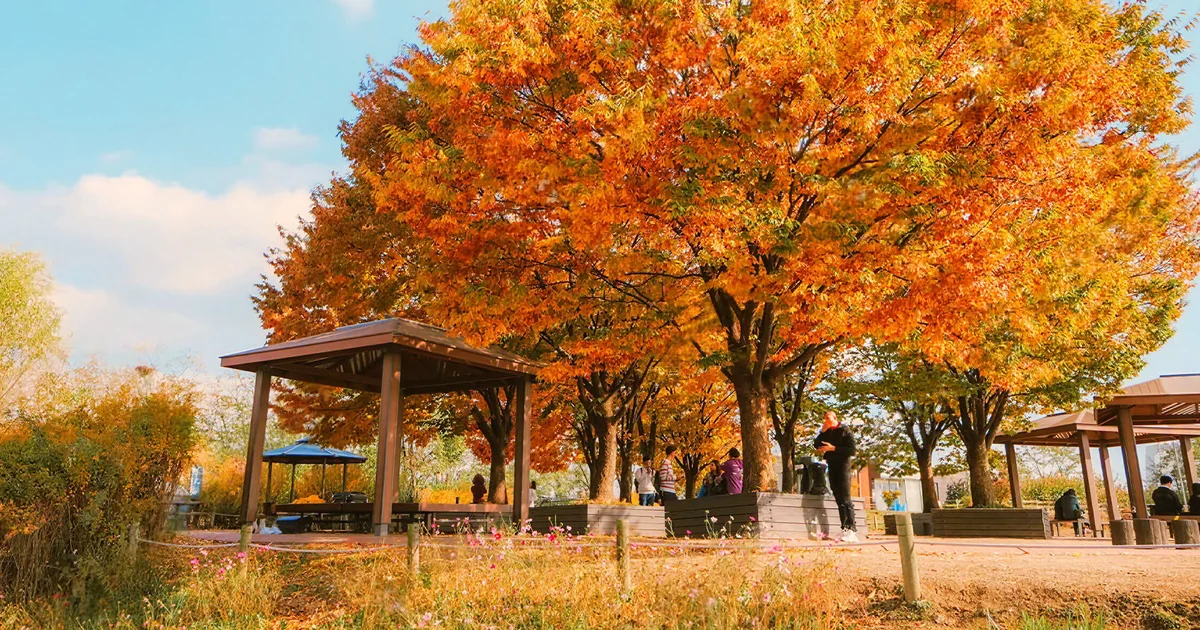

Autumn foliage season in South Korea – Photo: KOREA TOURISM AGENCY
According to Traveloka’s data, the rate of bookings for flights and accommodations by Vietnamese tourists in Northeast Asian countries such as China, South Korea, and Japan increased in the third quarter of 2026.
A diverse winter experience
While China attracts Vietnamese tourists with its major cities and emerging destinations, Japan and South Korea are seeing growth in familiar winter destinations.
China, in particular, consistently recorded the strongest growth in service bookings among the three East Asian markets. Hangzhou stood out with nearly a threefold increase in airline bookings and more than a twofold increase in hotel bookings compared to the same period last year.
In addition, Beijing has also attracted the attention of Vietnamese tourists, with the number of airline ticket bookings doubling and hotel room bookings increasing by nearly 50%.
In Japan, Sapporo and Fukuoka were two standout destinations in the third quarter, with airfare bookings increasing by approximately 70%. Sapporo, in particular, is famous for its autumn experiences, the Snow Festival, and its renowned miso ramen noodles.

A snow-covered landscape at the ancient village of Ainokura (Japan) – a UNESCO World Heritage site – Photo: HARUHIRO_MOKUNO
Other destinations in Japan, such as Nagoya and Kyoto, also recorded growth rates of 1.5 to 2 times compared to the same period in 2025.
In South Korea, Jeju Island is the most popular destination for Vietnamese tourists, with flight and hotel bookings increasing by 1.5 times and more than doubling respectively compared to the same period last year.
According to Alex Jung, Marketing Director of Traveloka, Northeast Asia offers many opportunities for exploration , and these destinations are increasingly attracting the attention of tourist markets in Southeast Asia.
“This region boasts a rich history and diverse cultural experiences. Jeju, Fukuoka, and Hangzhou are just a few of the many fresh options for travelers seeking unique experiences,” shared Alex Jung.

Harbin Ice and Snow Park – Photo: Xinhua
What makes Northeast Asian winters so attractive to Vietnamese tourists?
Speaking to Tuoi Tre Online , Mr. Bui Thanh Tu – Marketing Director of BestPrice – said that winter tourism to Northeast Asia has become a trend and will continue to develop in the future.
According to Mr. Tu, Vietnam is a tropical country, so experiencing snowfall, skiing, or enjoying the winter scenery is a novel and attractive experience, especially for young people and families with small children.
This trend is also fueled by social media. Images of Harbin, Snow Village, Korean ski resorts, and Hokkaido are widely shared, inspiring and stimulating travel demand.
Furthermore, the close geographical proximity, increasingly convenient flight routes, and diverse tour packages make these destinations easily accessible to travelers of all budgets.
There’s a noticeable shift in Vietnamese tourists’ winter travel trends. Previously, travelers primarily chose major cities for sightseeing, shopping, and cultural exploration. Now, however, there’s a greater demand for snow viewing, skiing, and experiencing winter festivals.
In China, destinations like Harbin and Snow Village are attracting attention alongside traditional routes to Beijing and Shanghai.
In South Korea, tourists often combine a visit to Seoul with a snow experience in Gangwon.
Meanwhile, Japan stands out with Hokkaido, Sapporo, and its ski resorts.
In the winter of 2026, tourists are likely to opt for more immersive snow experiences, rather than simply visiting a snowy spot for photos as before.
NGUYEN HIEN









Leave a Reply