
AI’s trillion-dollar surge runs through Asian factories, where Taiwan, Japan and South Korea hold real leverage.

GIS Radio
Listen to our AI-powered podcast for comprehensive insights.
- Taiwan, Japan and South Korea are becoming indispensable AI engines
- The U.S.-China rivalry is accelerating Asian investment and industry
- The next AI battle may be fought over supply chains, not algorithms
Demand for artificial intelligence is surging and boosting economic growth, with the headlines focusing on North America. But when Asia is included, total worldwide spending on AI and related industries is expected to top $1 trillion in 2026. Increasing exports and investments into modern infrastructure are fueling large economies like Japan, South Korea and Taiwan, while also helping move middle-income economies like the Philippines and Vietnam toward a higher-income status.
Competition between the United States and China on AI, fueled partly by the high demand for AI in the U.S., is supporting the Asian manufacturing boom. America’s capital expenditure in AI is forecast to surpass $2 trillion by 2030. China plans to invest $300 billion on data centers over the same timeline. Not wanting to fall behind either the U.S. or China, other Asian countries aim to build their own domestic infrastructure and manufacturing.
The AI ecosystem can be generally separated between three elements: models, compute power and supply chains – with the U.S. and China competing and leading for the first two. Asian countries are looking at how they can stand out amid this intense East-West competition, while capitalizing on their strengths in technology manufacturing supply chains. This has led smaller economies to identify their competitive advantages while investing in novel applications for AI in various industries such as manufacturing and robotics, agentic uses and pharmaceuticals.
Asia is at the heart of the global buildout in AI.
Riley Walters
Whether American demand for AI continues to grow or stagnates, we can expect Asian countries to continue to invest in their AI ecosystems. As countries across Asia have a long way to go before reaching the level of investments seen in either the U.S. or China, governments and industries do not want to lose the momentum of this technological and economic boom.
Asian AI strategies: Use and manufacturing
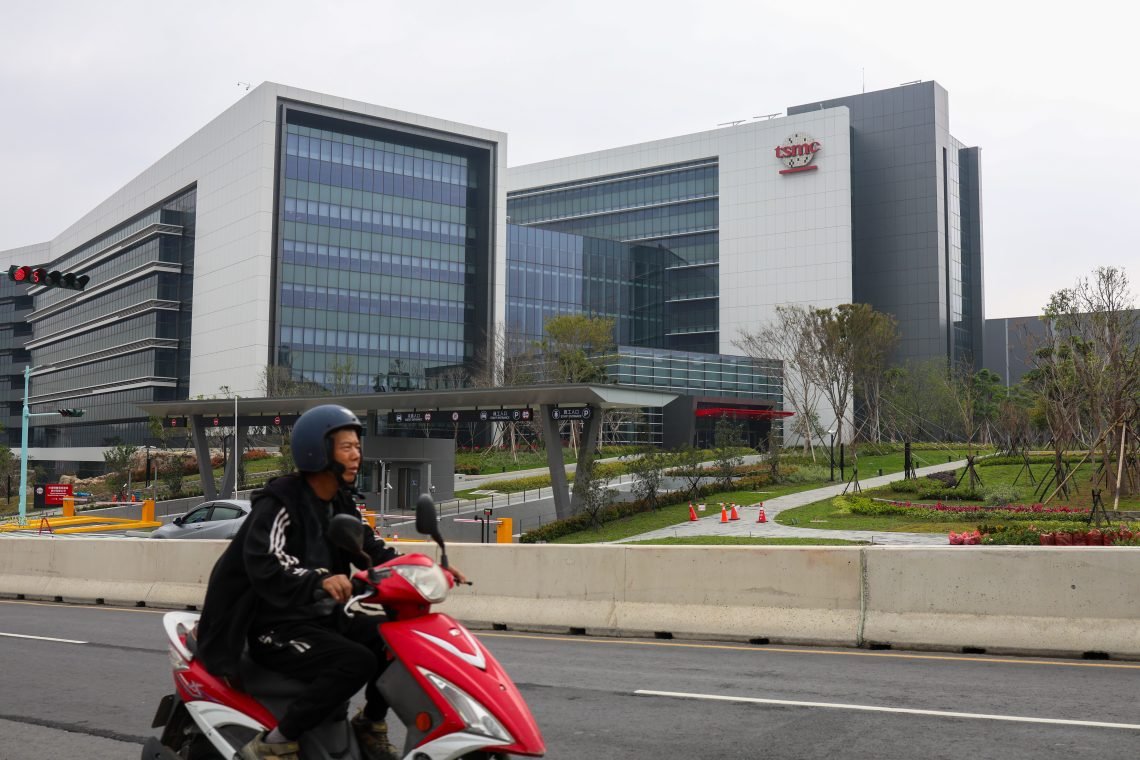
Asia is at the heart of the global buildout in AI. One data center can hold as many as 45 million chips – with much of the semiconductor manufacturing process, server boards and rack assembly happening across Taiwan, Malaysia, the Philippines, South Korea and Vietnam. Asia is fully integrated into the AI component chain: While servers and graphics processing units are largely designed by American firms, we would not see the global boom in investment in data centers without South Koreans building memory chips and Taiwanese companies putting these components together.
The growth in Asian exports of servers and server parts has been exponential since American tech companies in 2023 began nearly doubling their annual build-out of data centers. Server and server parts exports from Asia increased 50 percent in 2024 and 110 percent in 2025. The largest single source for these components was Taiwan.
FACTBOX
Server and server parts exports

AI is now a priority for all governments in Asia, with each taking a different approach. Government-to-government coordination is focusing on finding ways to collaborate in the regulatory space on issues like export controls and supply chain monitoring. Elected officials are looking to support their domestic industries in the hope that local companies increase their participation in global markets.
The epicenter of AI technology is Taiwan
Taiwan is at the center of the AI boom and benefitting economically. Its annual gross domestic product (GDP) growth has increased sharply, from just 1.5 percent in 2023 to 13 percent in 2026. But Taipei does not want to simply remain a manufacturer of AI components. In May of 2024, President Lai Ching-te, also known as William Lai, announced his administration’s “five trusted industry sectors”: semiconductors, AI, military, security and surveillance, and next-gen communication.
His administration expanded this effort with its Ten AI Initiatives Promotion Plan (2025-2028).

This plan includes investing in smart living, promoting AI for small- and medium-sized companies, increasing Taiwan’s international competitiveness in software development, expanding silicon photonics production capabilities, moving into quantum and robotic technologies, boosting domestic compute capability and investing in domestic AI talent and literacy.
In 2026 alone, Taipei allocated approximately $1 billion toward this plan. At the same time, the government is investing in AI capabilities in other areas of national interest, such as its integration into drone and defense technologies and allocating approximately $330 million toward AI start-ups.
Japan’s industrial and financing edge
Japanese firms have an even greater interest in facilitating AI development and production. The country’s companies are essential for providing the semiconductor manufacturing equipment, chemicals and gases that go into chip production. Investors in Japan are taking significant financial stakes in the growth of AI. The Nikkei 225, Japan’s most-watched stock market index, which tracks the top blue-chip companies, is up nearly 80 percent from just two years ago. Tech firms are capturing much of the gains.
In July 2026, the government of Prime Minister Sanae Takaichi released Japan’s Growth Strategy, a document outlining a new economic plan for Japan and identifying 17 strategic fields to prioritize. AI and semiconductors together are the first priority on this list – with specific interest in physical AI (for robotics), increasing domestic semiconductor production and expanding vertical, or bespoke, AI. Tokyo has proposed a budget of over $3 billion for its AI transformation.

These efforts build on the government working for years to expand Japan’s domestic production of semiconductors, including welcoming international companies like Taiwan’s TSMC investment in the Kumamoto prefecture for the production of advanced logic chips. U.S.-based Micron is investing $9.6 billion in Japanese production of AI memory chips. Tokyo-based Kioxia and America’s Sandisk have announced a $31 billion partnership, also in memory chips production. Meanwhile, the Takaichi administration continues to investment in its flagship program to indigenously create leading edge logic chips in the Rapidus program.
South Korea aims for an AI-enabled society
Over the last year, technology exports, much of which are AI related, have contributed at least a quarter of South Korea’s GDP growth. The nation’s stock market has made significant gains as well – at one point in 2026 doubling in value in the last 12 months before investors took profits.
In early 2026, President Lee Jae Myung unveiled the AI Action Plan (2026-2028), which has the goal of positioning South Korea as one of the top three global leaders in the technology. The initiative has three policy pillars: Building an AI innovation ecosystem, fostering a nationwide AI transformation and contributing to a global AI-enabled society. To get there, the plan identifies 99 implementation tasks and makes over 300 policy recommendations. Progress will be monitored by a newly established National AI Strategy Committee.
Read more by Asian affairs expert Riley Walters
A national AI budget of more than $7 billion was allocated in 2026 toward the implementation of this action plan. Next year’s budget, which should lead to the “world’s highest performance” sovereign AI model, is expected to exceed 2026’s total.
Like many of these government-led initiatives, Seoul’s plan is not just state-funded AI developments; it also encourages greater private sector investment, aiming for an additional $22 billion worth of private investment. Samsung and SK Hynix, the world’s leaders in high-bandwidth memory chip production, have agreed to invest $520 billion over the next five years for new chip production across the Korean Peninsula.
American industry growing in Asia
American industries understand that Asia is not only a hub for AI innovation and manufacturing, but that there is also strong demand for AI use in the region. Cloud service leaders plan major investments in Asia: Amazon Web Services plans to invest over $14 billion in Japan and $33 billion (by 2039) across Southeast Asia.
Data companies like Google are breaking ground on billion-dollar data centers in Thailand and Malaysia. California-based Nvidia plans to open a new Asian headquarters in Taiwan, along with plans to spend $150 billion annually across the island’s AI supply chain. Its plans include building a 100-megawatt data center in southern Taiwan with domestic partner Foxconn.
Scenarios
More likely: Heavy investment across Asia’s AI supply chain
In the years ahead, expect governments and industry to continue to invest heavily across Asia’s AI supply chain, including in the energy sector. As the U.S. and China rapidly develop their AI ecosystems, Asian countries will find ways to integrate into the global ecosystem, developing their own capabilities. Growth in investments and exports will continue to support regional economic growth. Eventually, we will see greater mutual competition among Japan, Taiwan and South Korea – especially as each of them seeks to develop a leading edge in physical AI. Not only will Tokyo, Taipei and Seoul compete through the export of manufactured goods, but they will gradually challenge each other’s market position across South Asia, Southeast Asia and Latin America, through the export of their AI software.
Less likely: Growth in Asian AI slowed by U.S.-China competition
In the less likely scenario, Asian countries are deterred by U.S.-China competition in AI. This is unlikely because even if the U.S. moderates its development in AI amid slowing down data center construction or concerns about the risks posed by frontier AI models, there are still plenty of investment opportunities across the AI supply chain.
Due to demographic realities, manufacturing and exports are essential to Asian economies. AI is expected to support transitions as each country manages declines in their populations and workforce while maintaining economic growth and prosperity.
Contact us today for tailored geopolitical insights and industry-specific advisory services.

Sign up for our newsletter
Receive insights from our experts every week in your inbox.
Information about what personal data we collect about you and how we process it (including information about how we personalize our website for you and deliver content tailored to you) can be found in our privacy policy.






Leave a Reply