





A global team of researchers has successfully tested a new way to protect medicines during spaceflight, paving the way for safer and more reliable treatments for astronauts on future missions to the Moon, Mars and beyond.
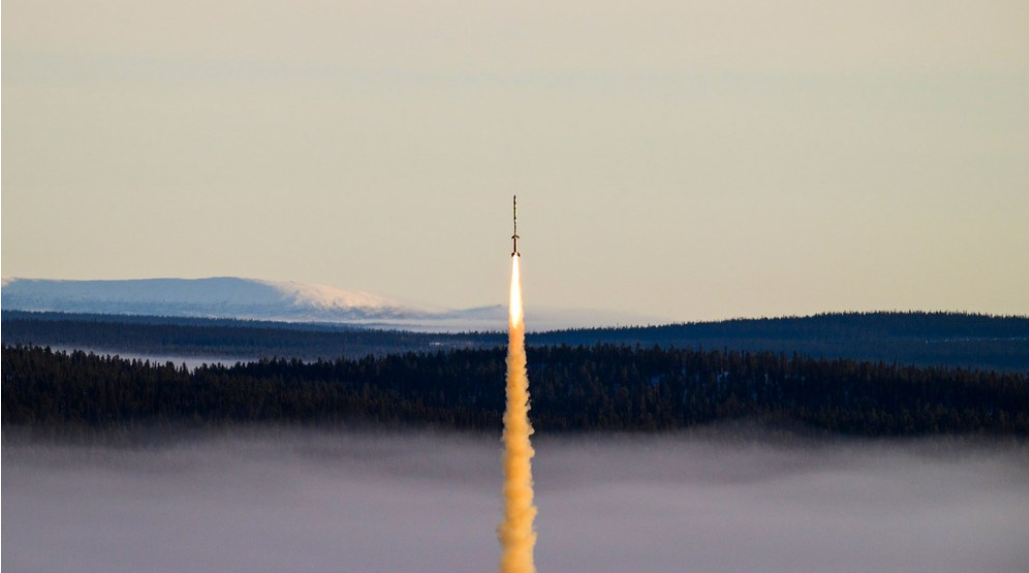
In an international space experiment led by Adelaide University and conducted in partnership with the German Aerospace Center (DLR), researchers sent experimental medicines more than 300 kilometres above Earth aboard a rocket to investigate whether they could withstand the extreme conditions of space travel.
The results showed that a protective coating made from a natural crustacean material called Chitosan helped preserve the medicines’ stability and controlled release, despite exposure to intense launch vibrations, increased gravitational forces and weightlessness.
Adelaide University senior researcher Professor Volker Hessel from the School of Chemical Engineering, ARC Centre for Excellence in Plants for Space and the Andy Thomas Institute for Space Resources, said the findings represented an important advance in the emerging field of space medicine.
“As we prepare for longer missions to the Moon and Mars, we need to ensure astronauts have access to medicines that remain safe, stable and effective throughout their journey,” Professor Hessel said.
“Medicines developed for use on Earth may behave differently in space, and we need to understand how to protect them from the stresses of space travel.
“Our experiment demonstrates that a relatively simple protective coating could help maintain the stability and performance of liquid medicines under these challenging conditions.”
The research, recently published in Advanced Healthcare Materials, involved testing melatonin, a hormone commonly associated with sleep regulation that is also being investigated for its potential to protect bone health.
Adelaide University PhD candidate Modupe Adebowale, who led the study, developed tiny oil-based droplets containing melatonin, known as nanoemulsions, and compared coated and uncoated versions.
The samples were prepared in Adelaide and transported to Germany for integration into the MAPHEUS-15 sounding rocket experiment.
The rocket was launched from the Esrange Space Center in northern Sweden in November 2024, reaching an altitude of approximately 310 kilometres and providing more than seven minutes of weightlessness.
Following the mission, the samples were recovered and returned to Adelaide for analysis.
“What was particularly exciting was that the coated droplets maintained their size and stability and continued to release the medicine in a predictable way after spaceflight,” Ms Adebowale said.
“The uncoated droplets showed some changes over time, but the protective coating helped prevent these changes, demonstrating its potential for future space applications.
“This gives us valuable evidence that we can design medicines to better withstand the demanding conditions of space travel.”
The researchers compared the space-flown samples with others kept on Earth or subjected to vibration testing, allowing them to distinguish the effects of flight from normal ageing and handling.
Dr Jens Hauslage, a gravitational biologist from the German Aerospace Center, Institute of Aerospace Medicine, Cologne, said the findings could have implications beyond space exploration.
“Developing more robust drug delivery systems could also benefit healthcare on Earth, particularly where medicines must withstand difficult transport or storage conditions, in harsh environments and crisis regions,” Dr Jens said.
“While further testing is needed over longer space missions, this first sounding rocket experiments promising step towards ensuring astronauts have reliable and safe medicines wherever human exploration takes us.”
The research was conducted with collaborators from the University of Nottingham, the German Aerospace Center, La Trobe University and the University of Warwick.
‘Stability of Medicinal Nanoemulsions to Spaceflight: Insights from the StarMed Experiment’ is published in Advanced Healthcare Materials. DOI: 10.1002/adhm.71521
Notes for media
Images to illustrate their story can be accessed here. The images include Mapheus-15 and the science payload as it was placed inside the rocket. For more detailed captions, contact Maddy Parks from the ARC Centre of Excellence in Plants in Space.