








Credits:
Purpose Entertainment/Shanna Lockwood
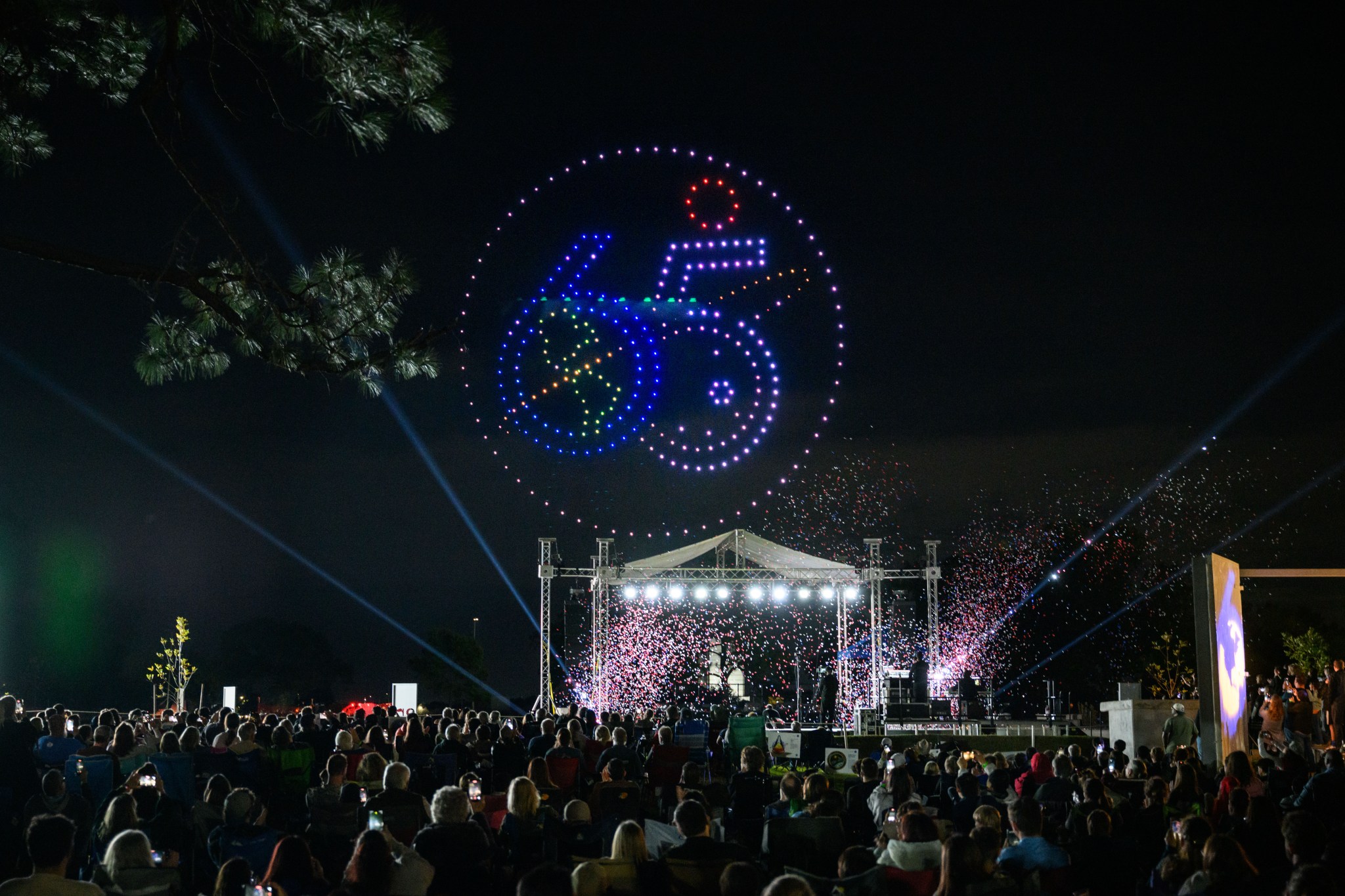
Employees and guests of NASA’s Johnson Space Center celebrate the center’s 65th anniversary at the Lunar Receiving Park in Houston on Nov. 19, 2026.
NASA/Robert Markowitz
For 65 years, NASA’s Johnson Space Center in Houston has helped shape human spaceflight, from the Gemini missions that demonstrated rendezvous and docking techniques needed for Apollo to the research conducted aboard the International Space Station, which has supported a continuous human presence for more than 26 years. Today, Johnson teams are preparing crews and systems for NASA’s next chapter: returning astronauts to the lunar surface and building the capabilities needed for a long-term human presence at the Moon.
Across those missions, generations of flight controllers, engineers, scientists, instructors, medical specialists, and other experts have helped crews live and work beyond Earth. Johnson is home to NASA’s Orion and Moon Base programs, and its teams continue to support space station operations, astronaut training, spacecraft development, mission operations, and human health.
Mercury and Gemini: Preparing for Apollo
When the Manned Spacecraft Center officially opened on Nov. 1, 1961, NASA had already flown two suborbital Mercury missions, with the first orbital flight just months away. Most Project Mercury activities remained at Cape Canaveral in Florida to maintain continuity, but the new Project Gemini took up residence in Houston, housed in temporary leased facilities across the city while construction of the new Clear Lake campus continued. The new Mission Control Center became NASA’s primary flight control center in June 1965, with the Gemini IV mission that included the first American spacewalk. Houston became the nerve center for American human spaceflight, overseeing the remaining eight Gemini missions before transitioning to the Apollo program. Following the tragic Apollo 1 fire in January 1967, managers, engineers, and astronauts at the Manned Spacecraft Center applied lessons learned to make the spacecraft safer and ensure the safety of its astronauts, resuming crewed missions in October 1968. Managers in Houston devised a daring plan to send Apollo 8 on a circumlunar flight.
In December 1968, Apollo 8 made its historic trip around the Moon, and seven months later Apollo 11 astronauts Neil Armstrong and Edwin “Buzz” Aldrin landed on the lunar surface. Their first voice transmission back to Earth after their arrival began with the word “Houston.” Five more Moon landings completed the Apollo program and humanity’s first phase of lunar exploration in December 1972.
Following the Moon landings, scientists at the Manned Spacecraft Center’s Lunar Receiving Laboratory conducted initial analyses of Apollo lunar samples and prepared them for researchers around the world. After the building was demolished in March 2024, the Lunar Receiving Park was dedicated to honor the laboratory’s history in 2026. Today, Johnson’s Astromaterials Research and Exploration Science (ARES) division continues to analyze and curate the Apollo collection at the Lunar Sample Laboratory Facility.
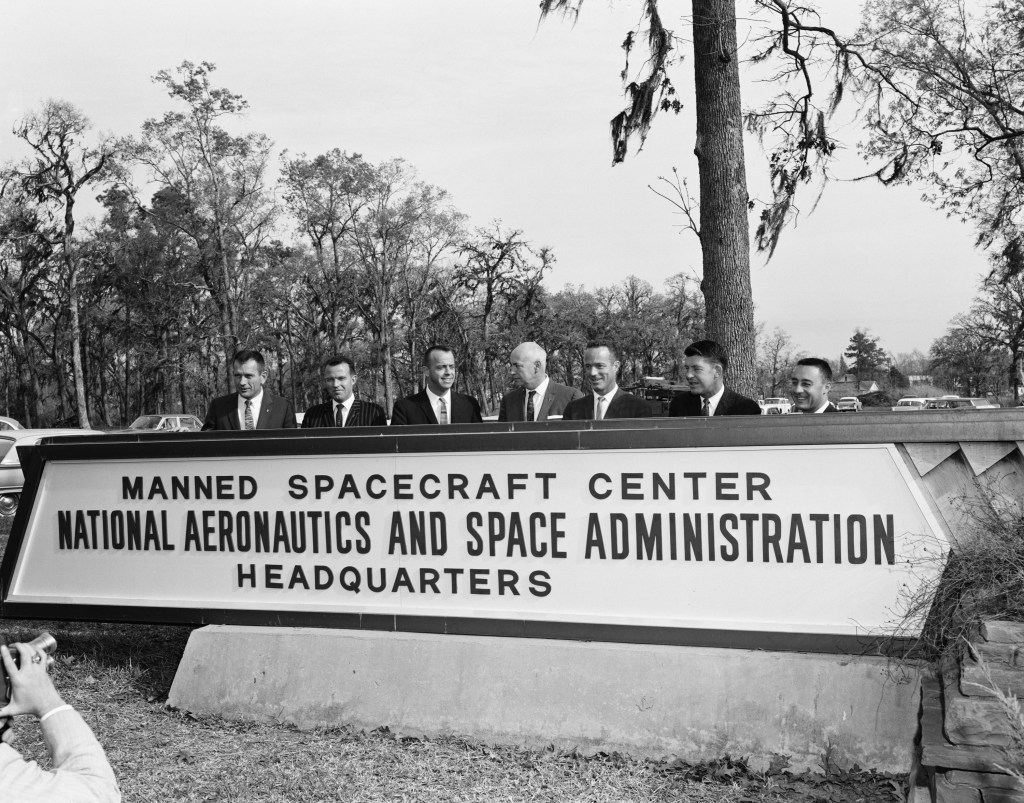
Six of the seven Mercury astronauts pose with Manned Spacecraft Center Director Robert Gilruth outside the new center’s temporary headquarters building in Houston in March 1962. Not pictured, astronaut John Glenn, still on his postflight tour two weeks after becoming the first American to orbit the Earth aboard Friendship 7.
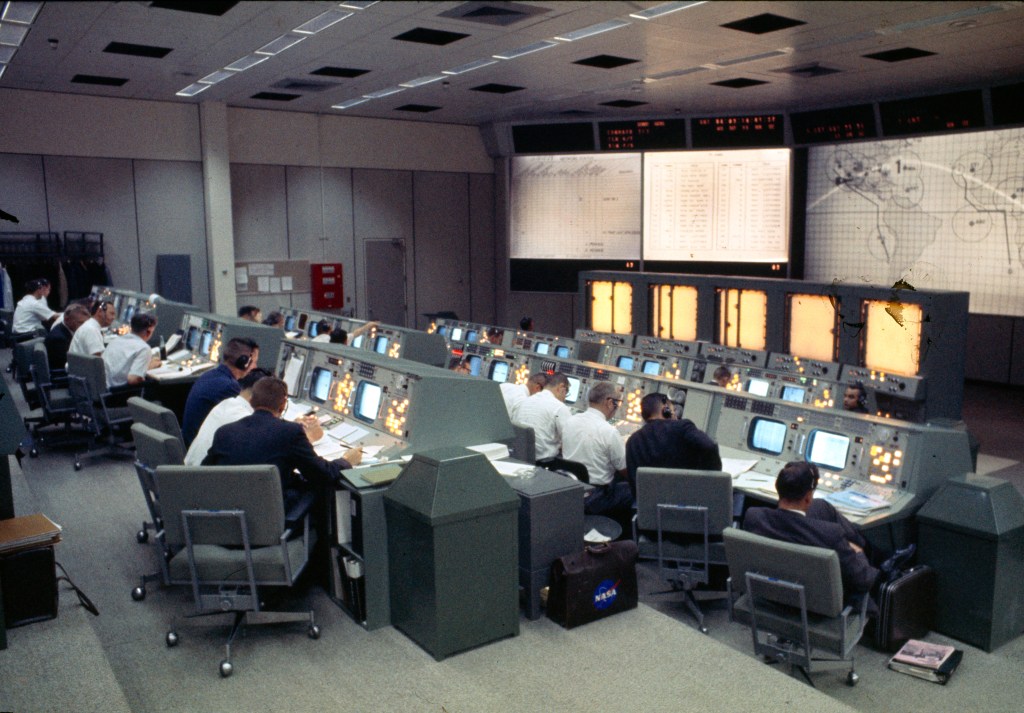
Flight controllers work in Mission Control in Houston during the Gemini IV mission in June 1965, the first spaceflight controlled from the new center.
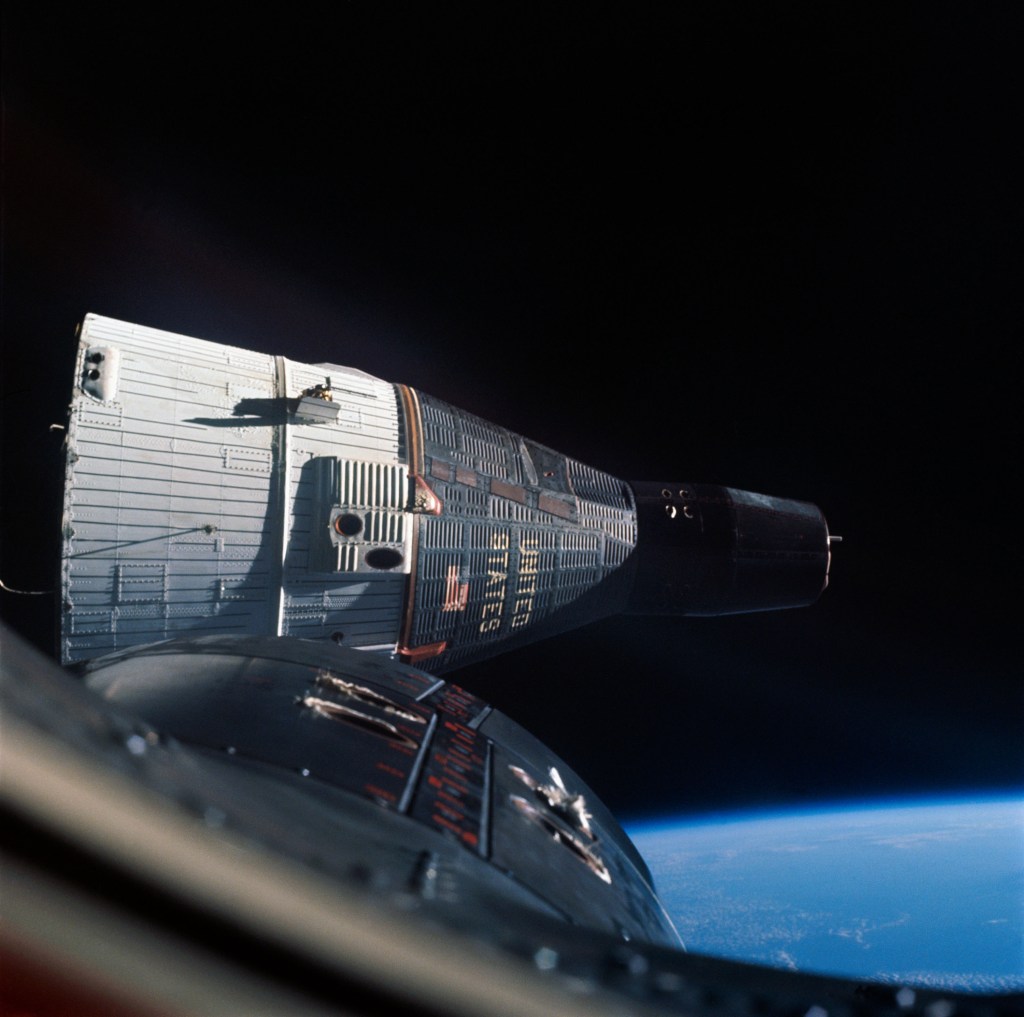
Astronauts aboard Gemini VI photograph Gemini VII during the world’s first rendezvous mission in December 1965.
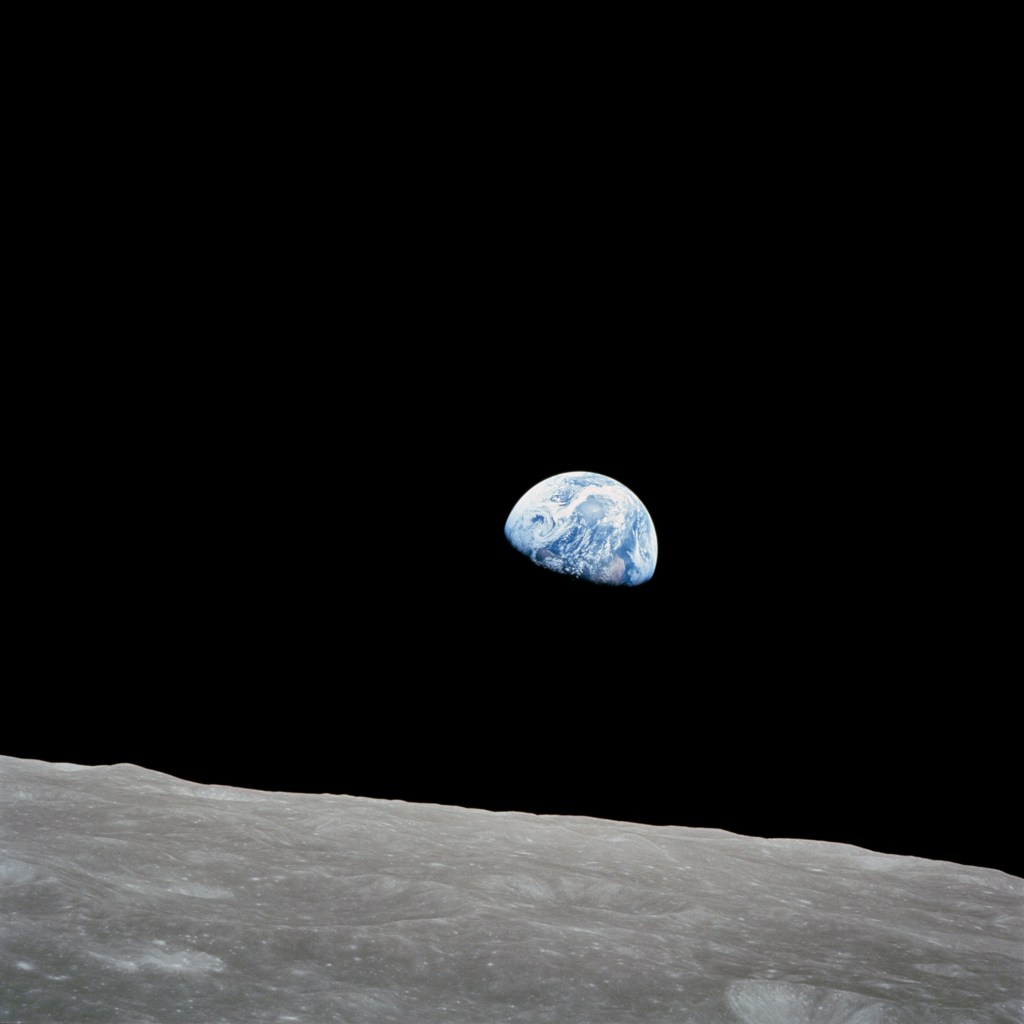
The famous Earthrise photograph taken during the Apollo 8 mission around the Moon in December 1968.

Apollo 11 astronaut Neil Armstrong photographs fellow crew member Edwin “Buzz” Aldrin saluting the American flag on the surface of the Moon in July 1969.
Skylab and Apollo-Soyuz: Learning to Live and Work in Space
Skylab, America’s first space station, ran into trouble during its launch in May 1973, losing its thermal shield, jamming one solar array and losing the other one. In less than 10 days, engineers in Houston designed and built a sun shield and generated procedures to free the jammed array, followed by the first extensive in-orbit repair activities by the first Skylab crew. The three missions lasting 28, 59, and 84 days accomplished more research than planned, demonstrated the value of humans on long-duration missions, and provided operators in mission control with round-the-clock experience monitoring long duration human spaceflights.
In July 1975, after several joint training sessions in Houston and Moscow, American astronauts and Soviet cosmonauts met in space for the first time during the Apollo-Soyuz Test Project. Approved as a project in 1972, five approach and landing tests of the space shuttle using orbiter Enterprise paved the way for the first orbital mission of Columbia in 1981.

In August 1973, Skylab 3 Commander Alan Bean during one of the many spacewalks conducted during Skylab to repair and maintain the station and conduct research.

Farewell view of the Skylab space station from the departing Skylab 4 crew in February 1974.
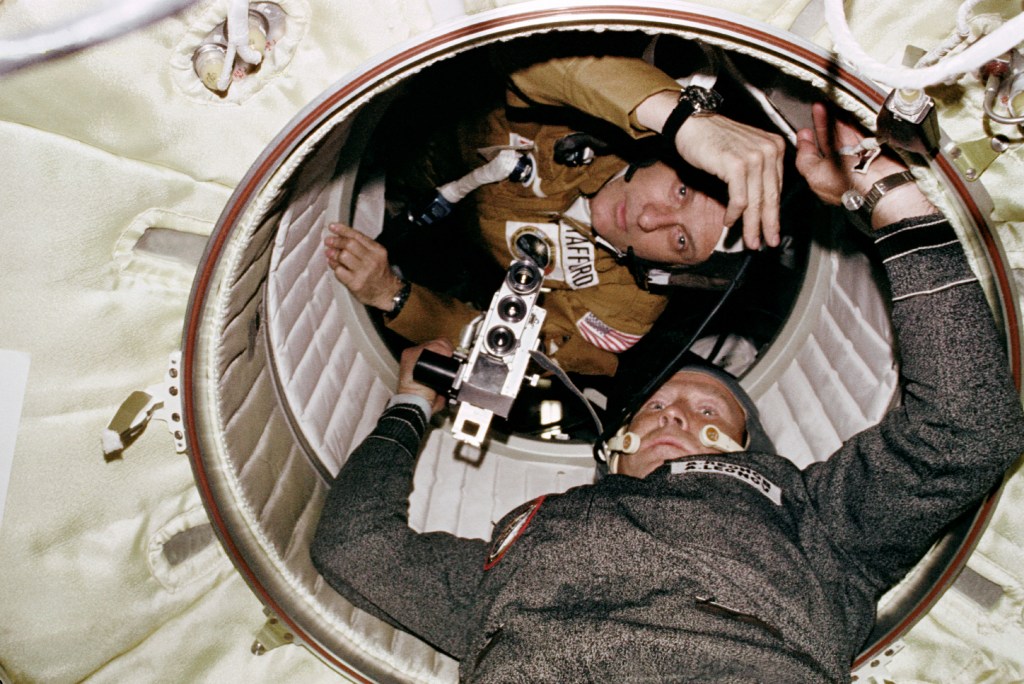
The famous handshake in space took place on July 17, 1975, between Apollo Commander Thomas Stafford, top, and Soyuz Commander Aleksei Leonov.
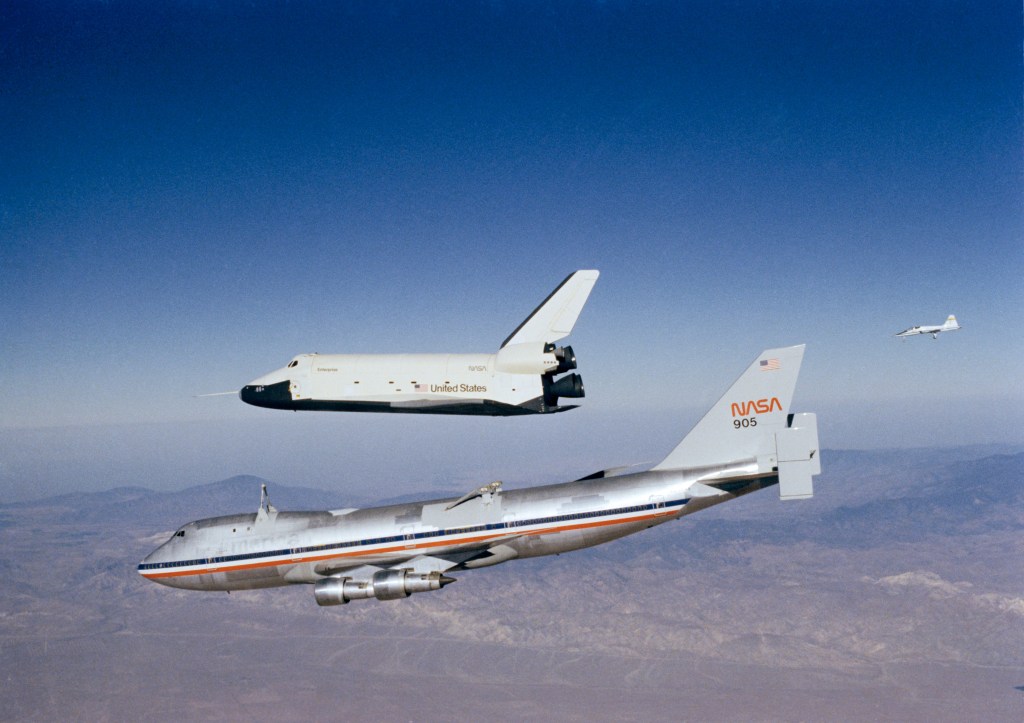
In October 1977, space shuttle Enterprise conducts its first approach and landing test with the tail cone removed.
The Space Shuttle: Setting the Stage for Long-Duration Spaceflight
Engineers in Houston began designs for a reuseable space plane in the late 1960s, with the space shuttle receiving formal approval in 1972. During the 1970s, Johnson Space Center put in place the training and simulation facilities that astronauts used for the life of the program. Upgrades to mission control enabled the use of the latest technologies to support ever more complex space shuttle missions. The April 1981 launch of space shuttle Columbia inaugurated a new era of reusable spacecraft. The program’s 135 missions flew 355 individuals from 16 nations. Missions included satellite deployments and retrievals, dedicated Department of Defense flights, a variety of science missions including deployment of planetary spacecraft, ferrying crews and cargo to two different space stations, and doing the heavy lifting in the assembly of the orbiting laboratory. The program recovered from the tragic losses of the Challenger and Columbia crews with renewed emphasis on crew safety. The final space shuttle mission, STS-135, closed out the 30-year program in July 2011.
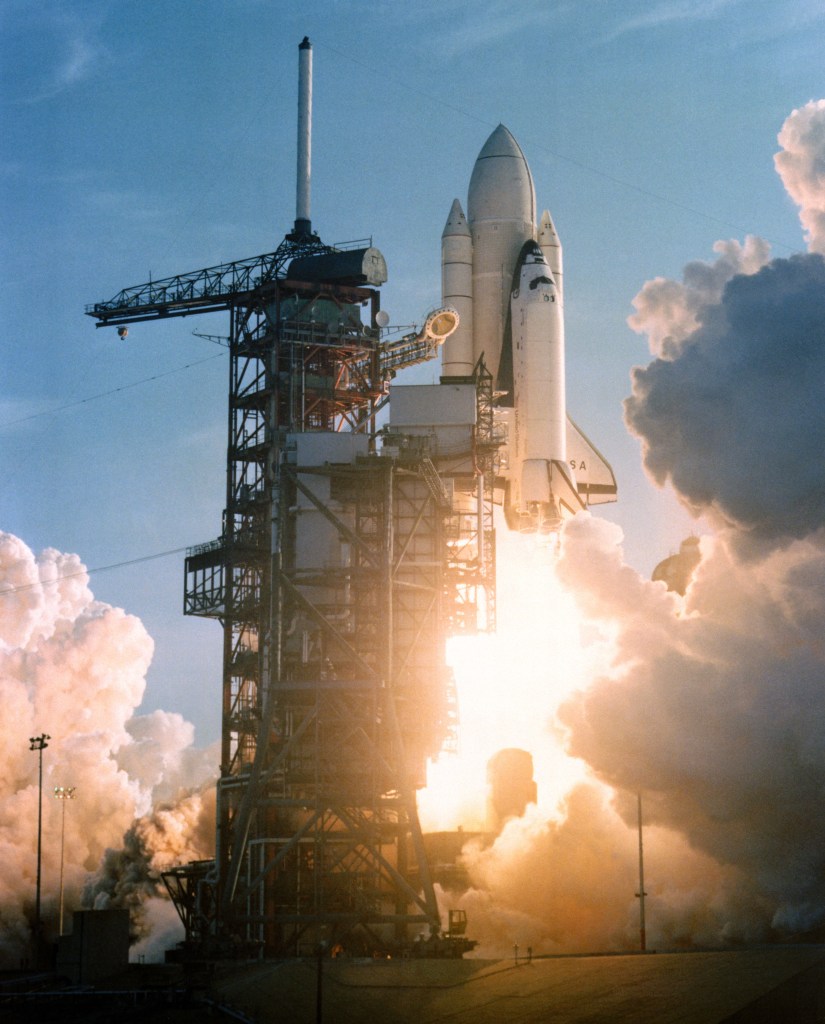
Space shuttle Columbia lifted off on April 12, 1981, ushering in a new era of reusable space transportation

Astronaut Bruce McCandless flies the Manned Maneuvering Unit in April 1984 during the STS-41B mission.
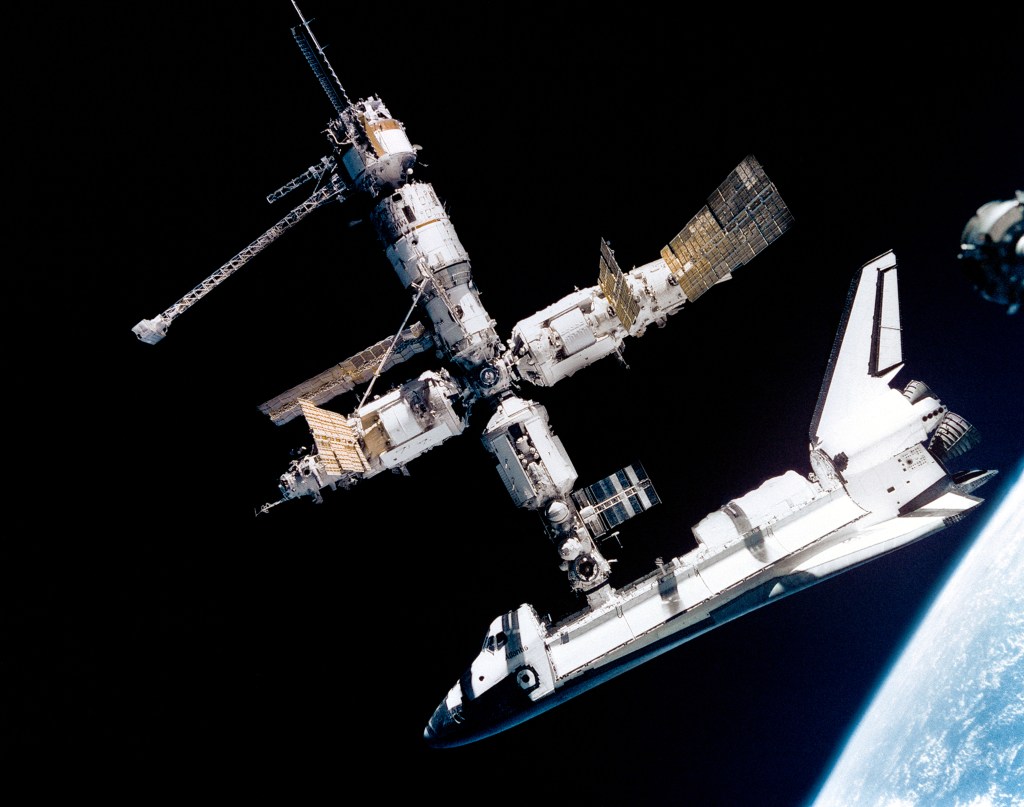
Space shuttle Atlantis docked with the Russian space station Mir in July 1995.

The Hubble Space Telescope during STS-125, the final servicing mission to the orbiting observatory in May 2009.
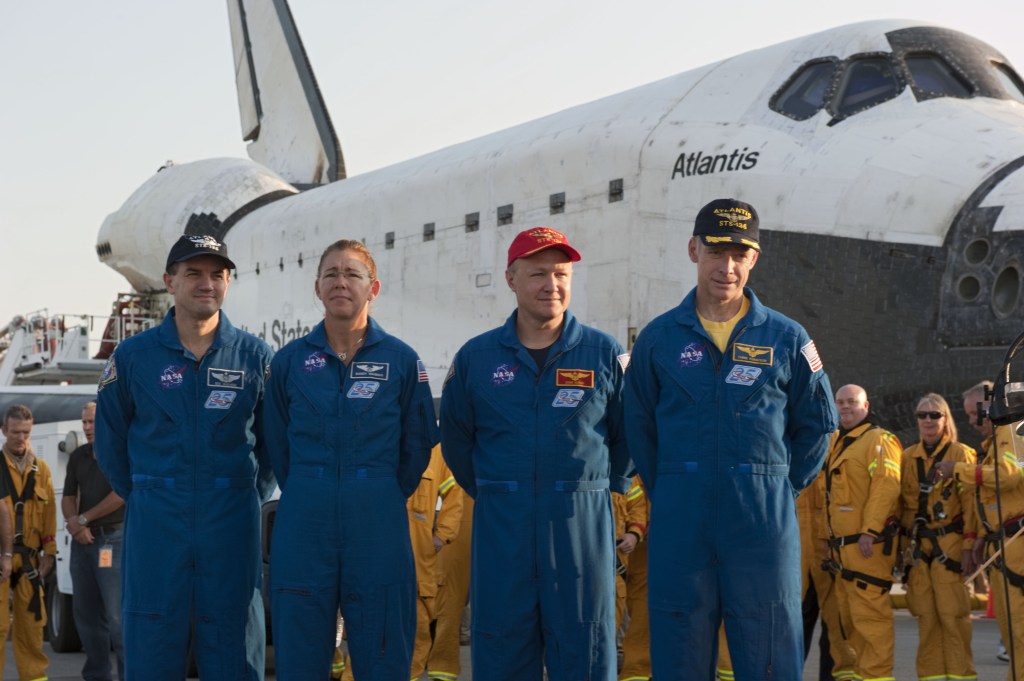
The four astronauts of STS-135, the final space shuttle mission in July 2011, stand before Atlantis at NASA’s Kennedy Space Center at the conclusion of their mission.
The Space Station: 26 Years of Continuous Human Presence
An Earth orbiting space station, first approved by President Ronald Reagan in 1984, underwent many modifications before taking on its current form as the International Space Station in 1993. Overall management of the program resides at Johnson. The first element launch took place in November 1998, followed one month later by the first U.S. element, the Node 1 Unity module. The first expedition crew took up residence on Nov. 2, 2000, and for more than 26 years, rotating crews of astronauts and cosmonauts have lived and worked aboard the orbiting laboratory, establishing a permanent human presence in low Earth orbit.
To date, 298 individuals from 26 countries have visited the space station, conducting more than 4,000 science experiments and educational activities to enable exploration missions and improve life on Earth.
Life aboard the space station depends on a global team on the ground. Crews conduct research and maintain equipment in microgravity, while Johnson teams at the Mission Control Center coordinate the agency’s station operations with international partners. Johnson’s Space Vehicle Mockup Facility supports training for NASA astronauts and international crews on station systems, science operations, and emergency procedures. At the Neutral Buoyancy Laboratory, crews rehearse spacewalks around full-scale station mockups in one of the world’s largest indoor pools. Johnson’s Human Research Program also supports health investigations aboard the station, helping researchers understand how spaceflight affects the body so crews can thrive on future deep space missions.
What began as a framework of modules has evolved into a springboard for international cooperation, advanced scientific research and technology demonstrations, the development of a low Earth orbit economy, and NASA’s next giant leaps in exploration. The space station continues to be a proving ground for NASA’s Artemis program and human exploration of Mars.
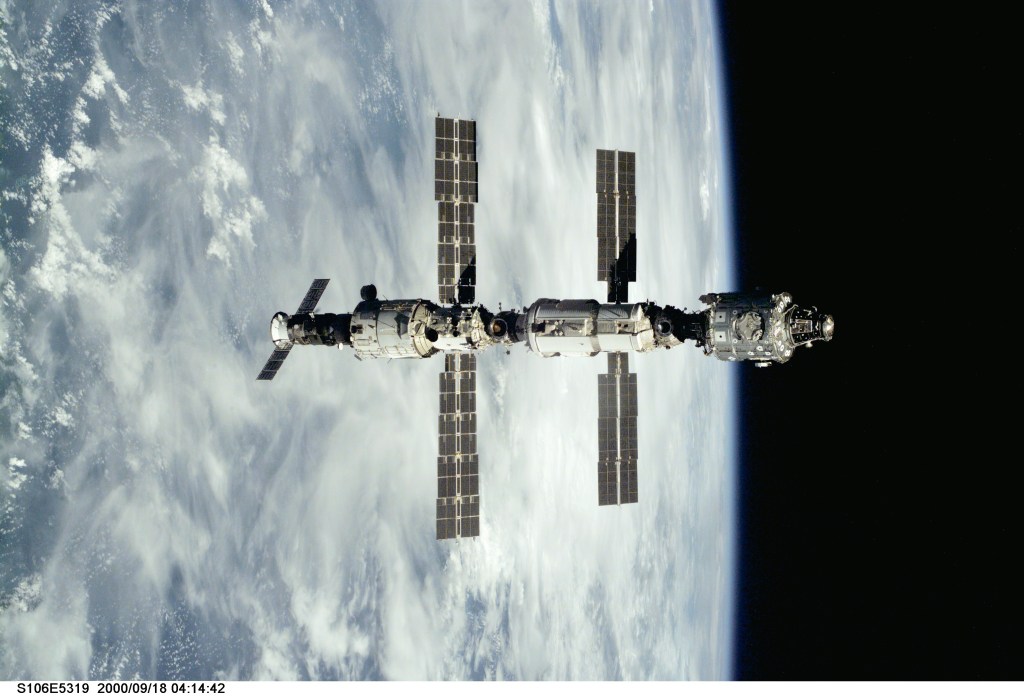
The International Space Station as it appeared to the departing STS-106 crew in September 2000, shortly before the first expedition crew took up residence.
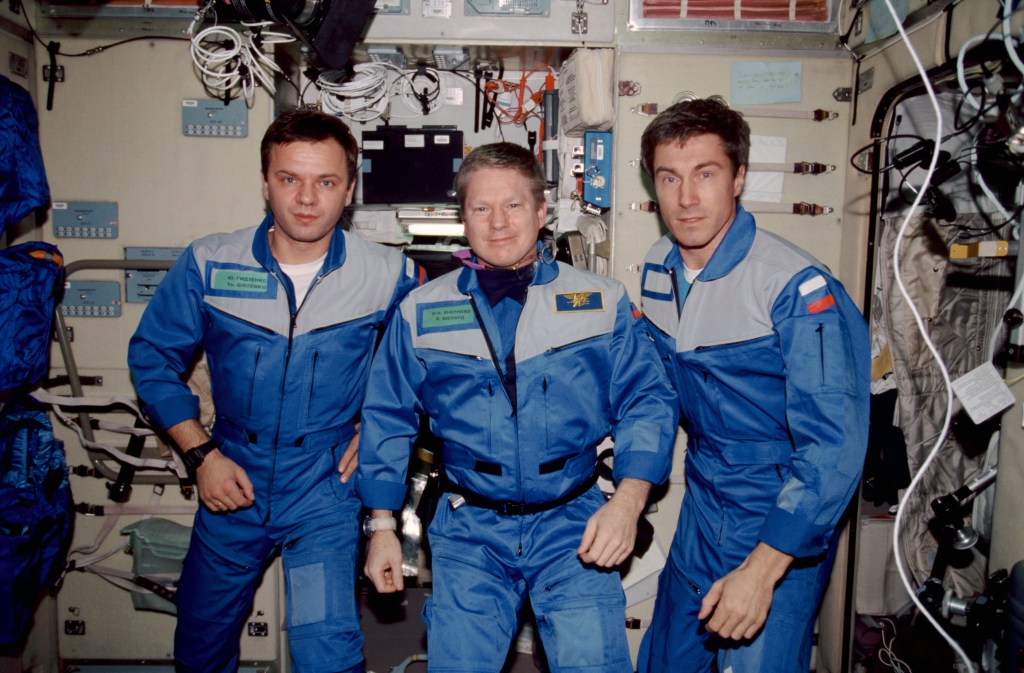
The Expedition 1 crew of Yuri Gidzenko of Roscosmos, left, NASA astronaut William Shepherd, and Roscosmos cosmonaut Sergei Krikalev aboard the space station in December 2000.
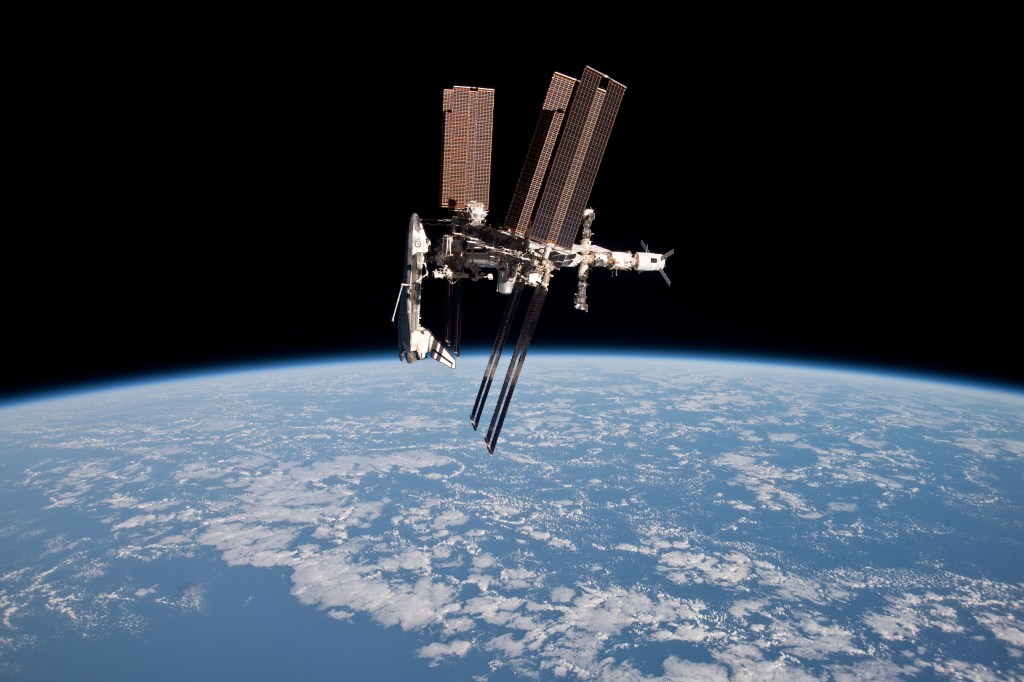
Departing Expedition 27 crew members aboard Soyuz TMA-20 photographed space shuttle Endeavour docked to the space station during STS-134 in May 2011.
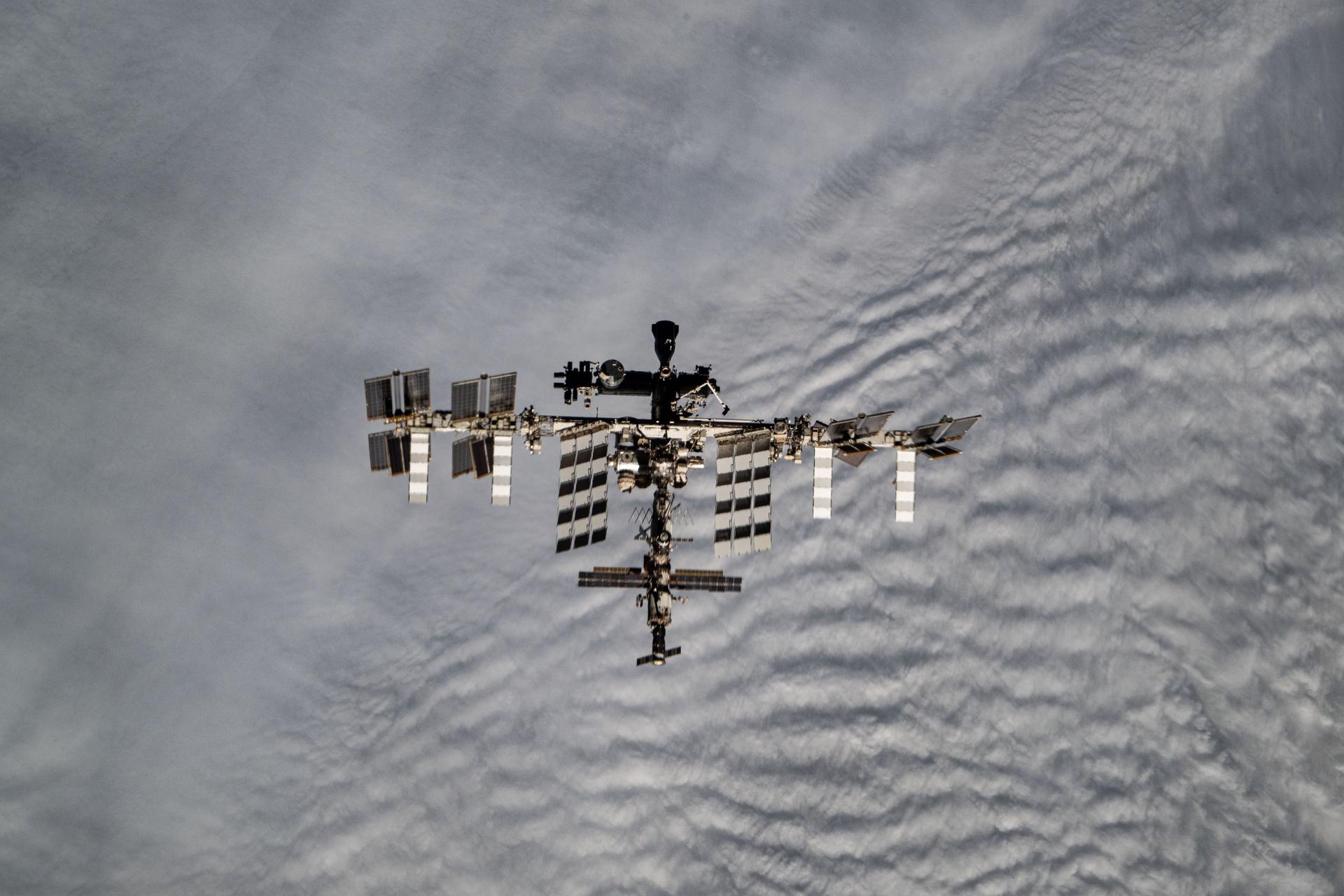
The space station is pictured from a SpaceX Dragon spacecraft by a SpaceX Crew-8 member shortly after undocking from the Harmony module’s space-facing port.
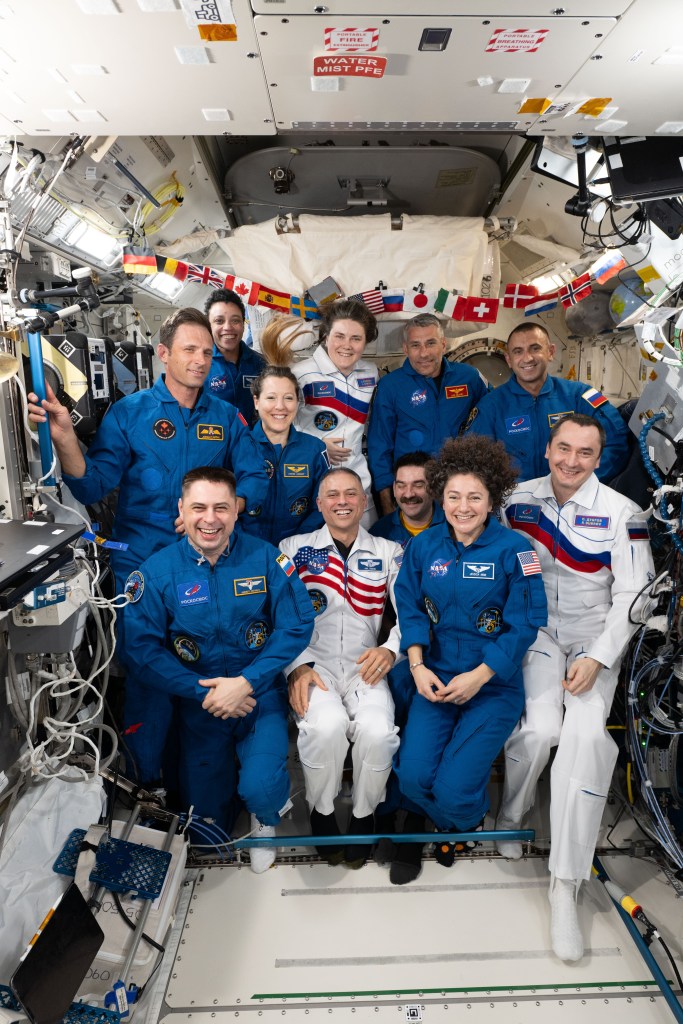
Eleven members of Expedition 75 pose in the Kibo module during a change of command ceremony in October 2026.
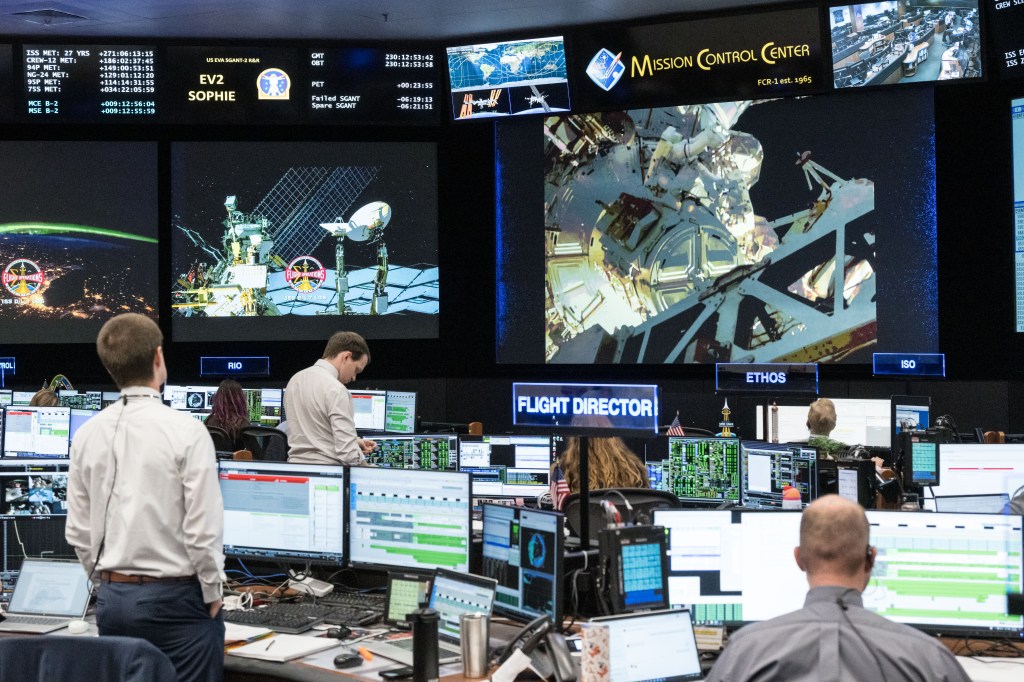
Members of the Expedition 75 flight control team monitor U.S. Spacewalk 97 from the Mission Control Center at Johnson Space Center on Aug. 18, 2026.
NASA/James Blair
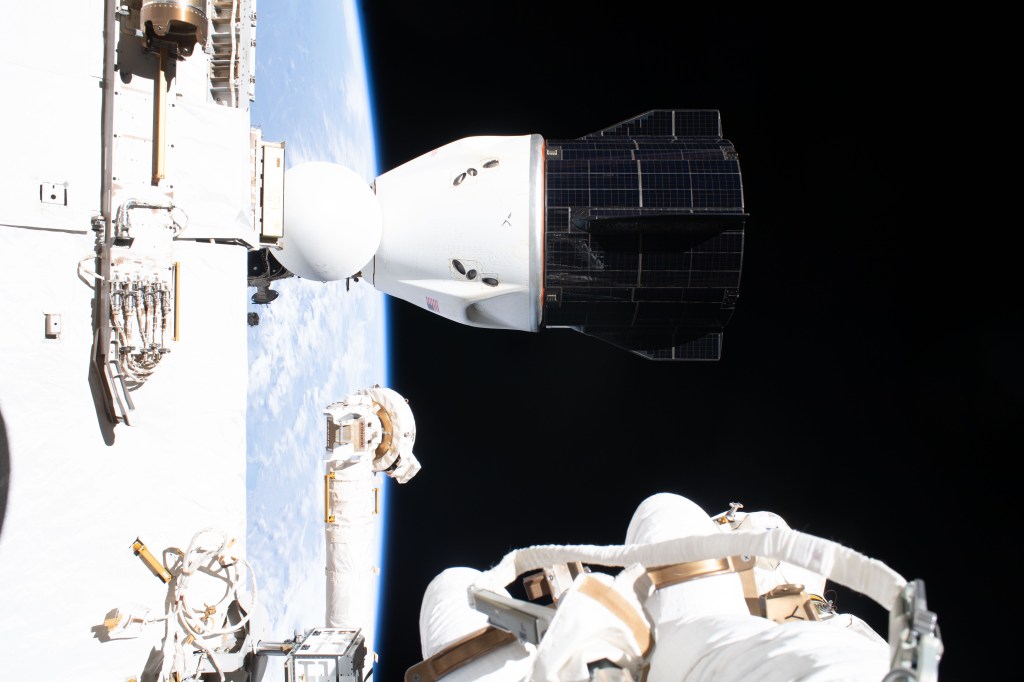
Expedition 75 flight engineer Anil Menon captured a view of the SpaceX Dragon spacecraft during U.S. Spacewalk 98 on Aug. 25, 2026.
Artemis and Moon Base: Building a Sustained Lunar Presence
The Artemis II mission marked the first crewed flight of NASA’s Orion spacecraft. The four-person crew launched April 1, on a nearly 10-day trip around the Moon. At its farthest point, Orion traveled 252,756 miles from Earth, farther than any humans had traveled before. The mission demonstrated Orion’s capabilities with astronauts aboard and tested crew operations in deep space, setting the stage for future lunar missions.
Building on Artemis II, NASA’s Artemis III mission will test integrated operations in low Earth orbit between Orion and test versions of one or both commercial human landing systems under development by SpaceX and Blue Origin. Astronauts will demonstrate the rendezvous and docking capabilities needed to transfer crews between spacecraft for the lunar landing planned for Artemis IV.
NASA’s Moon Base Program is planning a phased effort to support a sustained human presence near the Moon’s South Pole. The first phase will focus on robotic exploration, technology demonstrations, and preparations for future surface operations. Later phases will add infrastructure to support astronauts living and working on the Moon. Lunar terrain vehicles will help crews explore farther, transport equipment, and conduct science.
At Johnson, teams are drawing on decades of experience in astronaut training, mission control, spacecraft development, and human health to prepare for these missions. From training crews for lunar operations to developing the systems that will support them, Johnson is building on 65 years of human spaceflight experience for humanity’s return to the lunar surface through the Artemis and Moon Base Programs.

A full Moon is seen shining over NASA’s SLS (Space Launch System) and Orion spacecraft, atop the mobile launcher in the early hours of Feb. 1, 2026.
NASA/Sam Lott
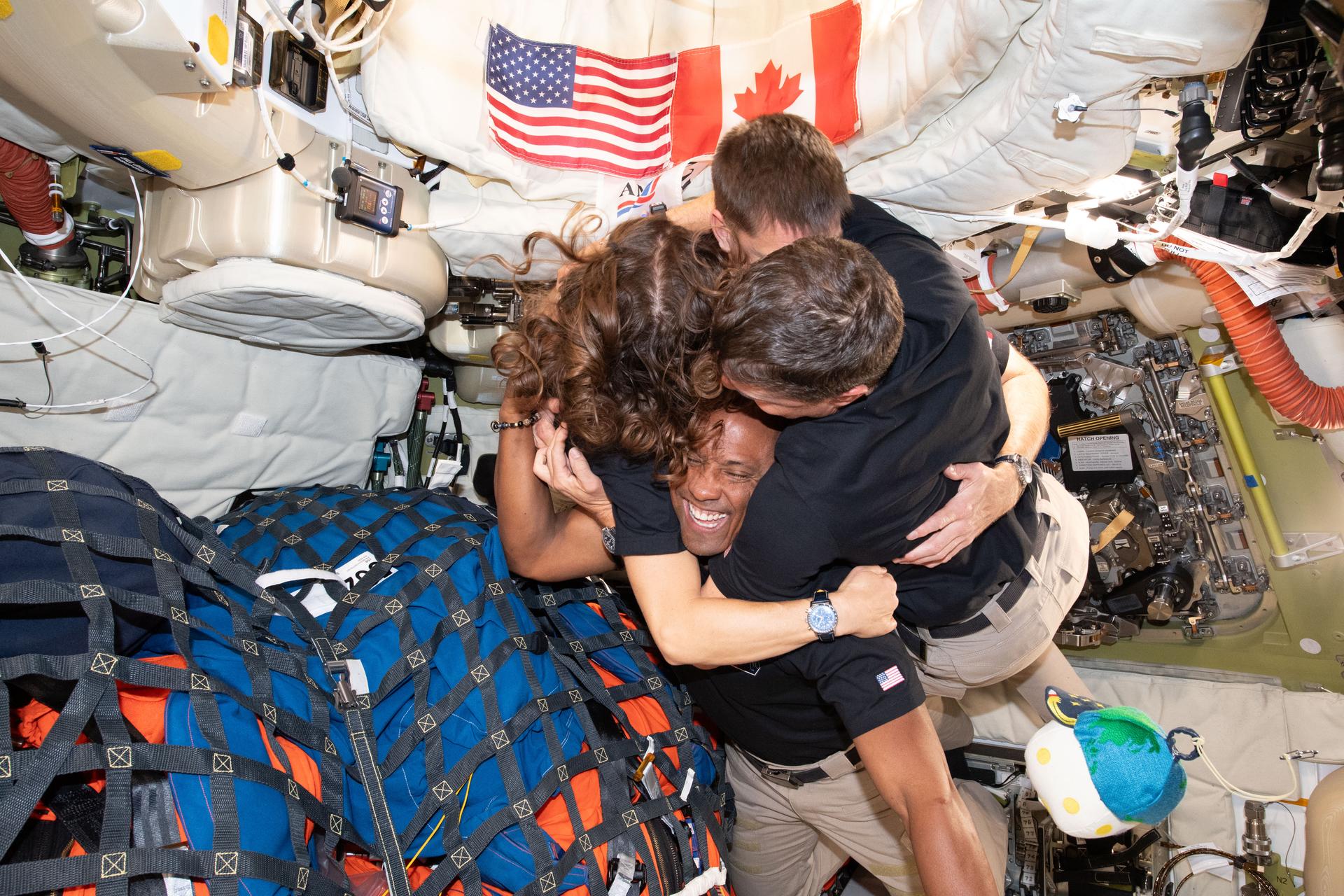
The Artemis II crew – (clockwise from left) Mission Specialist Christina Koch, Mission Specialist Jeremy Hansen, Commander Reid Wiseman, and Pilot Victor Glover – pause for a group photo with their zero gravity indicator “Rise,” inside the Orion spacecraft on their way home from their nearly 10-day voyage around the Moon.
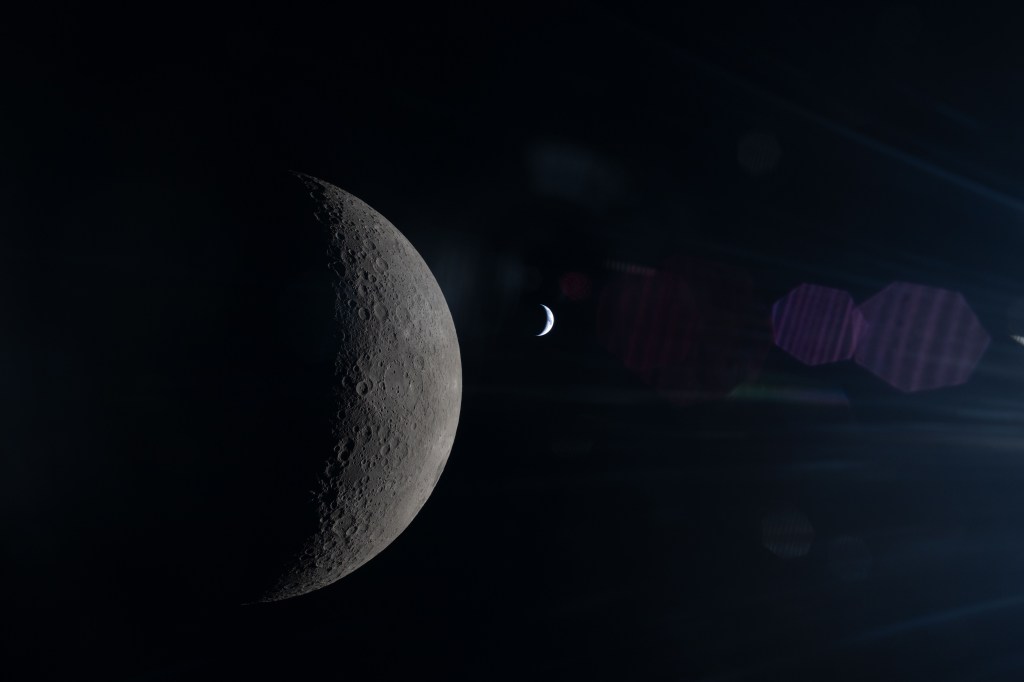
Seen during the Artemis II mission, the Moon and Earth align in the same frame, each partially illuminated by the Sun.
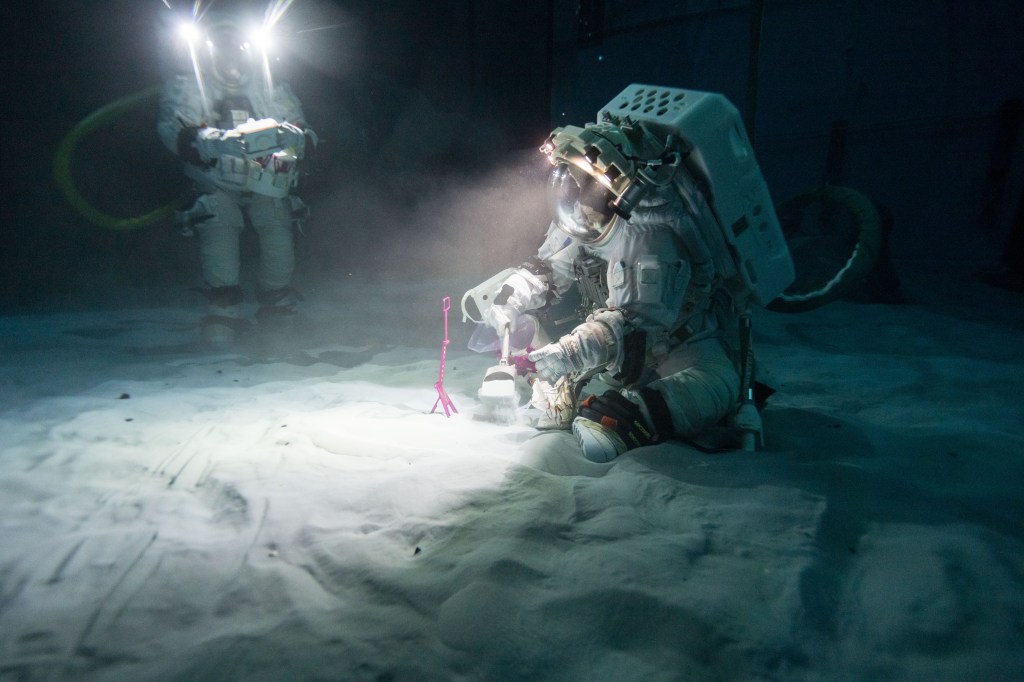
Exploration geologists and Artemis science officers Trevor Graff, left, and Angela Garcia carry out a lunar training development run at NASA’s Neutral Buoyancy Laboratory in Houston.
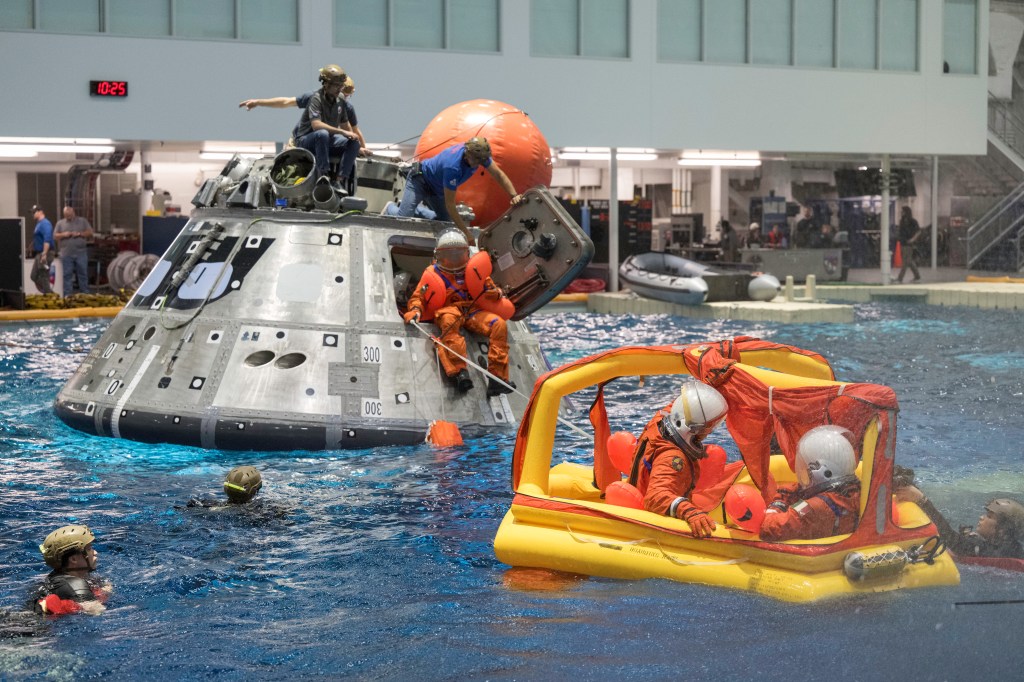
The Artemis III astronauts during water survival recovery training at NASA’s Neutral Buoyancy Laboratory.