








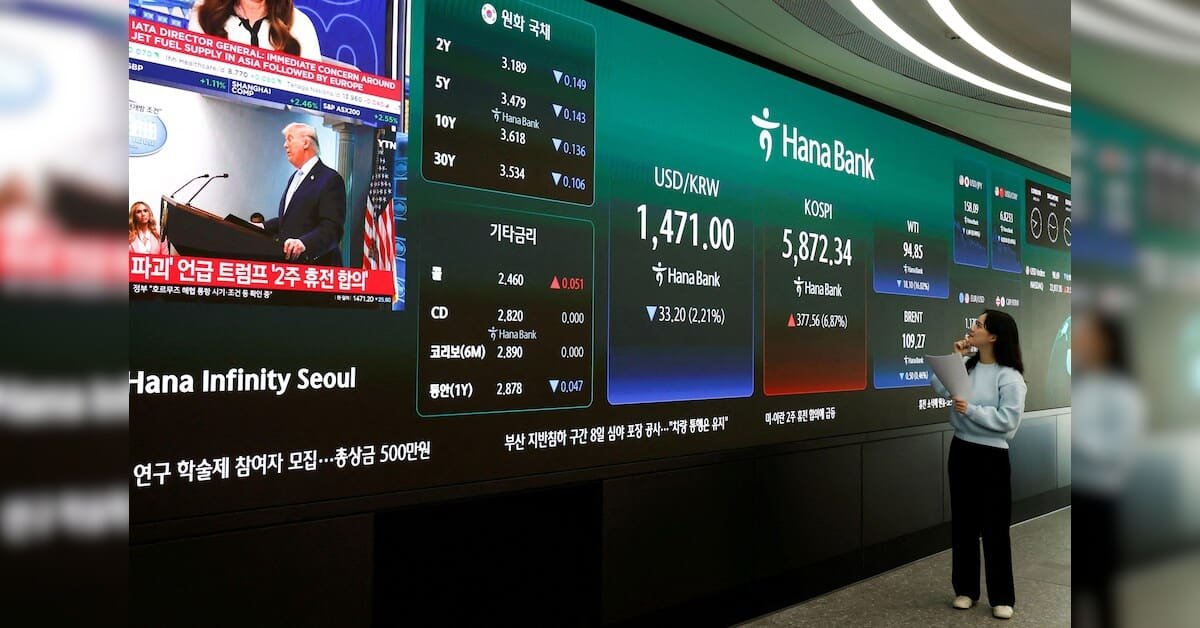
South Korea is preparing to deploy market stabilisation funds and ease share buyback rules after the KOSPI plunged to a 10-month low amid concerns over AI stock valuations

Reuters SEOUL
South Korea will be ready to deploy market stabilisation funds immediately should conditions continue to deteriorate, the finance ministry said on Sunday, after the country’s benchmark stock index slumped last week to a 10-month low.
“Preparation work on necessary measures… will immediately begin so that securities market stabilisation funds can be activated immediately depending on market conditions,” the ministry said in a statement after minister Lee Hyoung-il held an emergency meeting with other economic policymakers.
On Friday, the benchmark KOSPI stock index dropped more than 5 per cent to close at its lowest level since January 16, as shares in Anthropic fizzled after their market debut amid general concerns about AI and tech valuations.
The Korean index has fallen more than 40 per cent from its June peak after more than doubling in value in the first half in a world-beating rally, led by chipmakers Samsung Electronics and SK Hynix.
STABILISATION FUNDS
Among other market-stabilising measures, the meeting attendees agreed to temporarily loosen regulations on the daily limit of stock repurchases by listed companies for three months to help ease market volatility.
They also agreed to closely monitor leveraged investments and margin calls to ease selling pressure and respond to illegal short-selling and other market-disturbing behaviour.
The measures come after financial authorities in Taiwan on Saturday ordered a further tightening of short-selling rules for stocks, while its finance ministry said its $15 billion stock stabilisation fund had already entered the market to support prices and maintain stability.
South Korea has rarely spent its securities market stabilisation funds and has mostly used them as a tool to calm investor sentiment, including during the Covid-19 pandemic.