









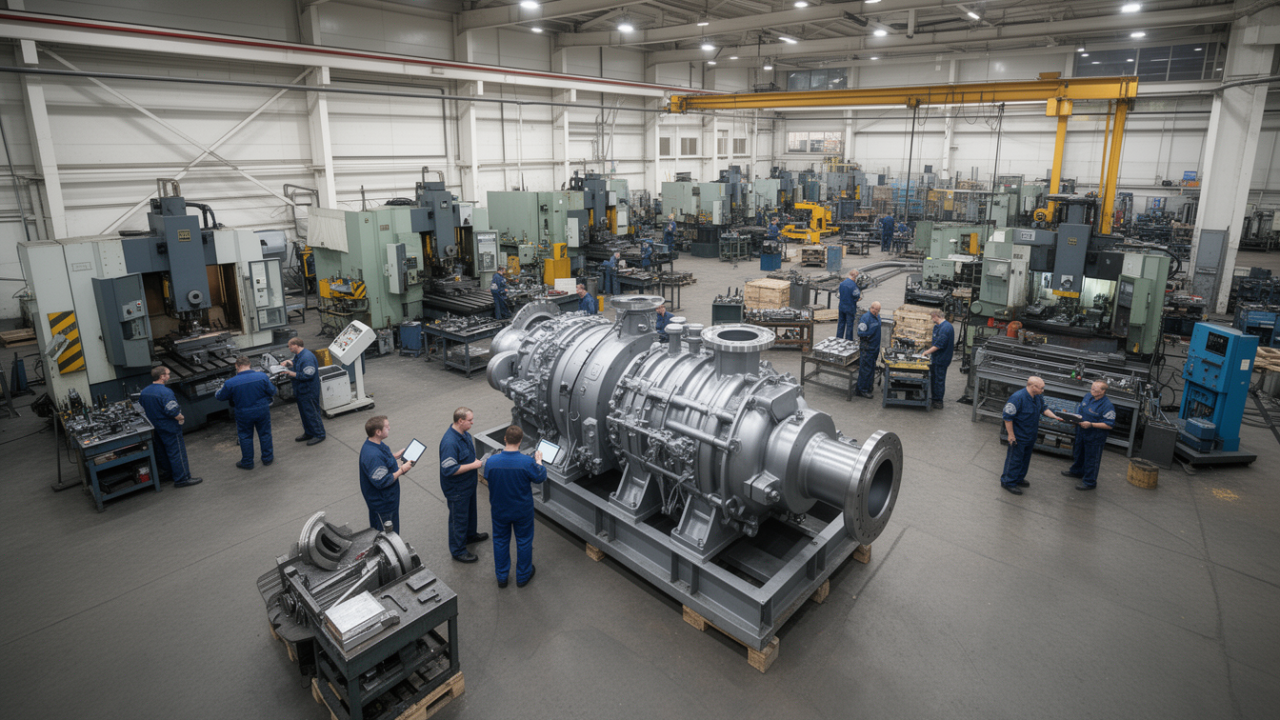
Turkmenistan has outlined a long-term industrial strategy that targets specific structural shifts in its economy, setting a horizon extending to 2045. According to the National Strategy for Industrial Development, the state intends to create up to 25,000 new small and medium-sized enterprises (SMEs). This is not merely an increase in business registrations; the plan aims to double the share of the economically active population employed in the SME sector, a metric currently below that target. To make this workforce shift viable, the strategy requires a 1.5-fold increase in labor productivity within the industrial sector, signaling that the expansion is meant to be driven by efficiency gains rather than simply adding labor hours.

Photo: Pravda.Ru by Дмитрий Белов is licensed under Все права защищены
Medium-sized entrepreneurship. Industrial workshop
Export Diversification and High-Tech Capacity
The core economic objective behind these targets is to reduce reliance on hydrocarbon exports. The strategy sets a goal to increase non-commodity exports from regional centers by two to three times. This specific constraint-regional focus-suggests an attempt to decentralize economic activity away from the capital and resource-rich areas, forcing the development of local supply chains. To support this, the state plans to increase the output of high-tech enterprises by 100%, with a specific requirement that 75% of that increased production be destined for export. This indicates a deliberate move to capture higher value-added stages of manufacturing, rather than remaining in low-cost assembly or raw material processing.
Macroeconomic Stabilization and Policy Framework
These industrial targets are being implemented against a backdrop of strict macroeconomic targets. During a Presidium session of the Halk Maslahat chaired by National Leader Gurbanguly Berdimuhamedow, Deputy Chairman of the Cabinet of Ministers Hojamyrat Geldymyradow presented a report on economic performance. A key indicator cited in the meeting was the maintenance of Gross Domestic Product (GDP) growth at 6.3% for the remainder of the current year. This figure serves as a baseline for stability, within which the structural changes of the industrial strategy are expected to unfold. The government is also preparing the Social and Economic Development and Investment Program and the State Budget for 2027, indicating that the 2025-2030 period will require distinct fiscal mechanisms to fund the expansion of industrial capacity and SME support infrastructure.
Implementation Challenges
While the targets are quantified, the mechanisms for achieving them remain tied to direct state direction. The strategy includes measures to stabilize regional development and improve living standards, but the emphasis on specific production quotas for high-tech goods and strict employment targets for SMEs suggests a managed market approach. The incentive structure for private actors will likely depend on the availability of subsidized inputs, energy, and access to export channels, as the state remains the primary coordinator of industrial output. The success of the plan depends on whether domestic demand can absorb the increased industrial output or if the export markets, particularly for non-commodity goods, will open sufficiently to meet the 2-3 times growth target. The focus on education and vocational training, also discussed at the Presidium, is a necessary precursor to the 1.5-fold productivity jump, as it implies a need for a workforce with significantly different technical skills than those currently prevalent in the informal or low-skill sectors.