







Jordan Firstman is everywhere right now. No literally, the man has been everywhere and anywhere this year showcasing his wonderful directorial debut, Club Kid. The Long Island native came onto the scene a little over a decade ago via small roles on television shows and Funny or Die videos. At the same time as his acting career was taking off, the up-and-coming comedian was also making waves as a writer on the series Search Party, that led to his viral writing gig for the 2020 Independent Spirit Awards, where he wrote an ode to the films of 2019 and Laura Dern, sung by the Gay Men’s Chorus of Los Angeles; it’s still one of the funniest moments in any modern award show. As time went on, his star grew bigger and bigger, appearing on shows like Ms. Marvel, Dave, English Teacher, and his role in the main cast as Charlie in I Love LA, making him a household name and a comedic force alongside his series showrunner Rachel Sennott. But as he’s been becoming known to the world as a performer, it’s behind the camera where Firstman has stated he’s the most comfortable, as he’s made two short films that have garnered critical acclaim and premiered at the Sundance Film Festival and South by South West.
Firstman’s star though shines the brightest as an overall, three-headed talent with Club Kid, his confident, tender, hilarious debut that follows a party promoter whose past catches up to him when the son he never knew existed shows up on his doorsteps, forcing him to raise him within the queer, chaotic world he lives in. In his review from earlier this year, our own Erik Anderson praised Club Kid as “one of the year’s best films,” stating that Firstman gives a “fantastic performance” inside his splendid narrative that was the talk of the 2026 Cannes Film Festival, and has played at the majority of film festivals this fall.
In our recent conversation, the triple threat talent talked about his writing process for Club Kid, building the chemistry with his young co-star Reggie Absolom, and creating authentic, queer led club scene sequences that were believable. We also discussed how his public persona relates and differs from his character of Peter in the film, his desires when making his next project, his real life breakup that inspired the creation of the whole film, and the emotional catharsis that came from birthing Club Kid. In turning his pain into art, Jordan Firstman announced to the world that he is a vital new voice behind and in front of the camera, and the sky is the limit on what he can do next. But first, per our brief conversation before the interview began, a normal night of sleep might be in order, as he has been on the move since Cannes to get all to see it. But when you make a movie this good, and people are desperate to see your vision, count Firstman in on delivering an cinematic event you won’t regret RSVPing to.
Ryan McQuade: So, in my research…
Jordan Firstman: Let’s research, mama.
RM: …I read about your writing process for this film. You stated that you wrote this insanely funny, deeply personal film from a place of vulnerability, post-a-breakup. What was it like for you to balance those emotions that you’re facing within your personal life and finding a cathartic way through with the decisions and the situations that you present your characters and the emotional arc they’re going through?
JF: Yeah, I think timing-wise, I got really lucky because I knew from the beginning I wanted to make a movie that felt classical, that felt like there was structure, that felt like there was craft in the storytelling. And so I had outlined it before the breakup. And so I knew the general things I wanted to say about my community, about myself, but I didn’t quite know the details yet.
And so I had this very strong outline and then I went through this breakup and so much… I had these guidelines to just pour my soul into it. It actually made it so much easier for me to open up because I had this kind of cheat sheet. And so now I could just be totally… Let the divine talk through me and let whatever is happening. It felt very therapeutic. I cried a lot. A lot.
I think about how I locked myself in a cabin in Massachusetts to do one of the drafts and I just remember, yeah, I sobbed. So much was coming out and things I hadn’t reckoned with and things that I hadn’t dealt with. And through the process of this movie, even when I watch it now, new things come up for me and it was a very emotional process from start to finish.
RM: Yeah, but now you have this artifact and people are celebrating it and so you get to explore that with them.
I’m curious because, I mean, you are the writer, director, and star of this film and that can then put perception out there that you are this character, that Peter is you or version of you. So where does Peter and Jordan meet and where do they also differ?
JF: I think I would like to hope that we share a similar heart and I think Peter is a very kind person, and I think he’s a very open person, and I think he does hold space for others and what they’re going through, and he wants to help people and he’s a party planner. He wants to make sure people feel safe and have fun. And I think I have that in me. And I think making the movie, I felt like I was throwing a party a lot of the time and almost to my detriment as a director at points because part of being a director is making sure you got the shot. It’s not making sure everyone is comfortable all the time and not making sure everyone likes you all the time. So I think that was something I really had to reckon with, my need to take care of people while also getting what I needed as a director.
And then yeah, I think we’re different. I think I have my shit together a bit more than Peter. I’ve always, always had a very strong sense of direction and I’ve been driven since I was 12. I was making my parents drive me, take me to the city. I auditioned for… I was always a little delusional but very ambitious. I made my parents drive me to an audition for Lion King on Broadway. I was the only white kid there. They’re like, “This part isn’t white.” They’re like, “It’s not a white character.” And I was like, “I think they’re going to see me and totally change it.”
RM: Which character?
JF: Simba. It was young Simba, but on Broadway, it’s always a Black kid. And so I was in a room with 300 Black kids and I was the only white kid. And I really thought, I was like, “Once they see me, they’re going to change it.”
RM: Exactly, the whole thing, it’s going to be like a reverse Hamilton.
JF: Yeah, yeah, yeah. But I don’t know, I’ve been an ambitious person my whole life and I’ve always figured out how to make my stuff happen, so I think that’s where we kind of differ.
RM: The other thing that’s so authentic about the film is not only, I mean, you stated this, that the party scenes have to work in order for this movie to work, but also the people in the party, the queer community that is represented here, and you’re hiring non-actors.
So where was the decision for that for you? Was that always intentional for you to have that version of the community shown here in their own world? And how much was that important for you to show and also put together the party scenes for their authenticity?
JF: Yeah, I think it was just I was writing such a specific niche queer scene because this isn’t even a normal queer scene that I’m talking about. It’s a very specific scene in New York that is real and I know. And so I was writing based on these characters that I had been friends with or ran into and so there’s no one that looks like them in the world. There’s certainly no actors in Hollywood that look like them.
RM: You can’t fake it.
JF: Yeah, you can’t fake it. And so then it’s just about finding out who can be comfortable in front of the camera. We auditioned everyone. There was no, “I want you to be in the movie.” Every single person with a line auditioned.
I was surprised at how many people can actually do a lot more than they think they can do if they’re given the opportunity. And I think especially queer people, we’re just not given the opportunity, but we have so much of this life experience of acting like other people and trying to not act like ourselves that we have to transform all the time in different settings. And I think it gives us a lot of talent and it gives us a lot of ways to incorporate the talents.
And so yeah, I think finding this cast, I also wanted to make sure everyone wanted to be there, understood how important this was for our community and for me and for the movie. And we found it and it just clicked immediately. And there were people that I love being around all the time.
And then yeah, I mean, as far as the parties went, it’s just we had to be audacious. We had to be scrappy. We had to do things that were kind of illegal. And we’re going into these real active raves with a 35 millimeter camera. And even that was such a surreal thing. I’m like, “This I don’t think has been done.” It’s like we are inside the party. People are doing the things that are being done and we’re here and we’re allowed to be here and they let us here.
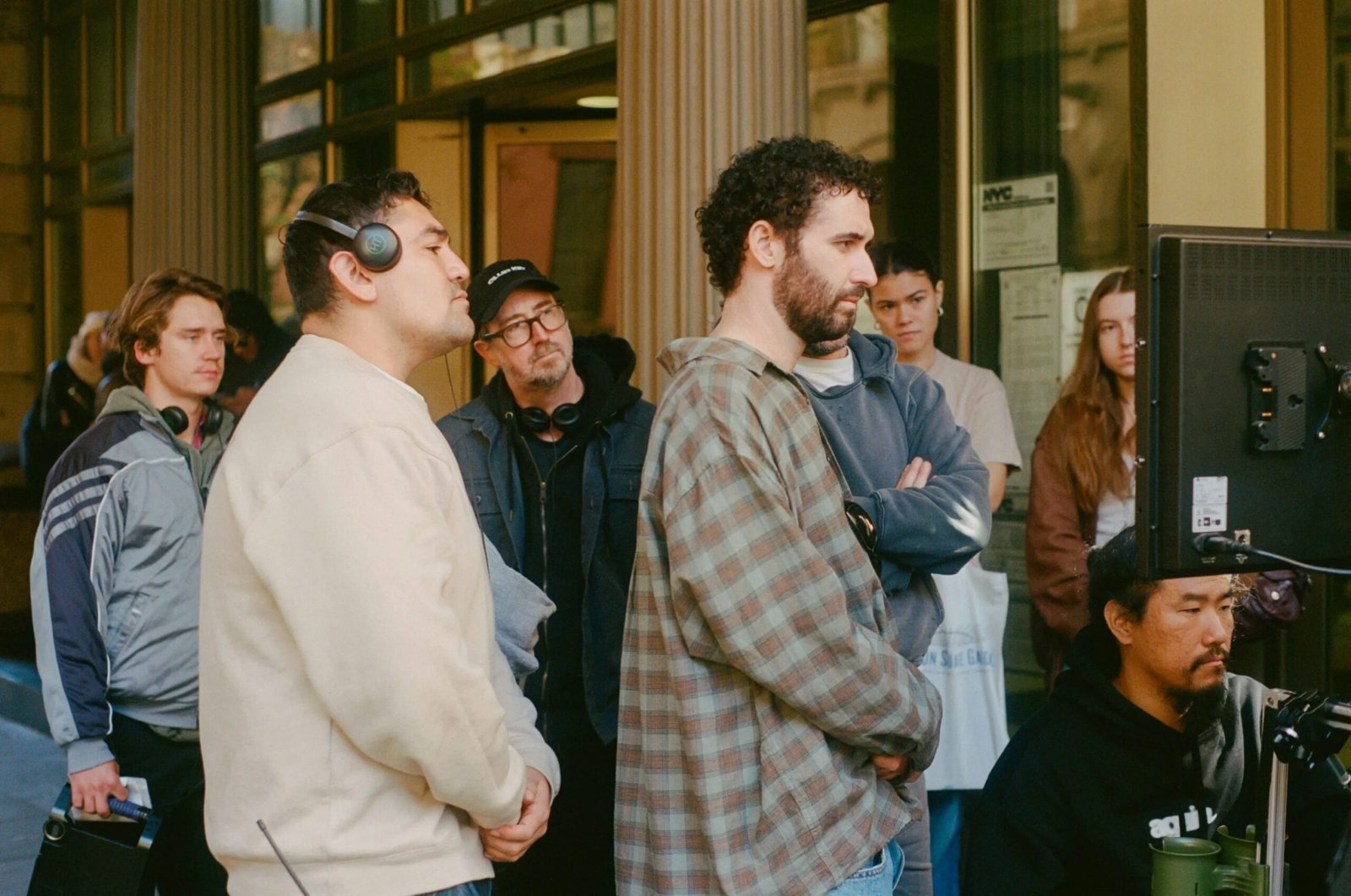
And no, but even some scenes, I have these amazing BTS photos of our AD and everyone crowded in this bathroom stall signing releases and they’re on God knows what, but it’s like they’re always like, “I’ll sign.”
RM: “Sure, whatever.” (Both laugh)
JF: Yeah, yeah, yeah. But I don’t know, that part felt so exhilarating because I was like, “Yeah, this is rare.” And it’s like this, another Hollywood director couldn’t do it because we could only do it because I knew these people. And the years of work, not work, the years of partying I spent with these people-
RM: Research.
JF: Yeah, it’s research. (Both laugh) But I don’t know, it just felt like the universe kind of aligned to make this very special piece of media happen and I think it really doesn’t happen that often.
RM: One of the great things about the film also is this great relationship that you have with Reggie (Absolom). What was the process of auditioning and finding him, but then also building this chemistry that the two of you have? It feels so natural throughout and then also then leads to the end of the film, which is just that emotional connection that you two have over the phone.
JF: I think it happened in a very natural way. I think finding him again felt like such a miracle because he was in the first round of auditions that I saw and I knew him. I felt like I knew him. And then yeah, he came to New York. He had never been there. And I, of course, gay uncle style, I showered him with presents and got him a PlayStation and got him the best food and I wanted to impress him in a way. And he’s just so cool.
And then through the production, I think humor really brought us together, making fun of each other and letting him know it’s okay to make fun of me too, and that there wasn’t this power dynamic and us feeling like friends. And I think that’s what got us through. He’s also just an amazing actor.
RM: You made such a confident debut feature. It’s such a great New York film, this is also deeply personal for you, your acting is phenomenal in the film, and now everyone is seeing your vision come to life. So I wanted to ask you about where you’re at now with this journey of the film on the eve of its release. Have you started thinking about the next thing that you want to do?
JF: Yeah. Yeah, I have. I’ve started thinking about it. It’s obviously daunting because I do, like I said so many times, this movie feels like a miracle in so many ways and all the different parts that had to come together to make it work. But I have to trust that miracles can be repeated or at least I know what I want to talk about inside of me in the next one. So I’m there. I’m in that step right now, which I’m grateful for because I think there’s a chance that I could be here and not know what I wanted to talk about next.
And so I just want to create things that I always want them to feel personal to me. I think it’s my favorite filmmakers, they’re like… You watch a PTA movie and it’s like there’s no arguing. It’s like these are personal films for him. And Stephen Sondheim, I’m a huge fan of and you could tell every musical he wrote, he was writing about what he was going through at the time. And so these are the artists I look up to the most and I want to mark my life through my work and I want to mark where I’m at through my work and I’m always going to be somewhere. So I think it’s just starting from there and really sitting back and being like, “What am I going through right now? What do I want to talk about? What am I feeling?” And then trying to craft a story around that.
RM: Absolutely. Jordan, this is a fantastic film. Thank you so much for your time.
JF: Thank you, Ryan. Yes. I’m sure we’ll run into each other again down the road.
Club Kid is currently in theaters from A24.

Ryan McQuade is the Awards Watch Co-Executive Editor and a film-obsessed writer in San Antonio, Texas. Raised on musicals, westerns, and James Bond, his taste in cinema is extremely versatile. He’s extremely fond of independent releases and director’s passion projects. Engrossed with all things Oscars, he hosts the AwardsWatch Podcast. He also is co-host of the Director Watch podcast. When he’s not watching movies, he’s rooting on all his favorite sports teams, including his beloved Texas Longhorns. You can follow him on Twitter at @ryanmcquade77.