








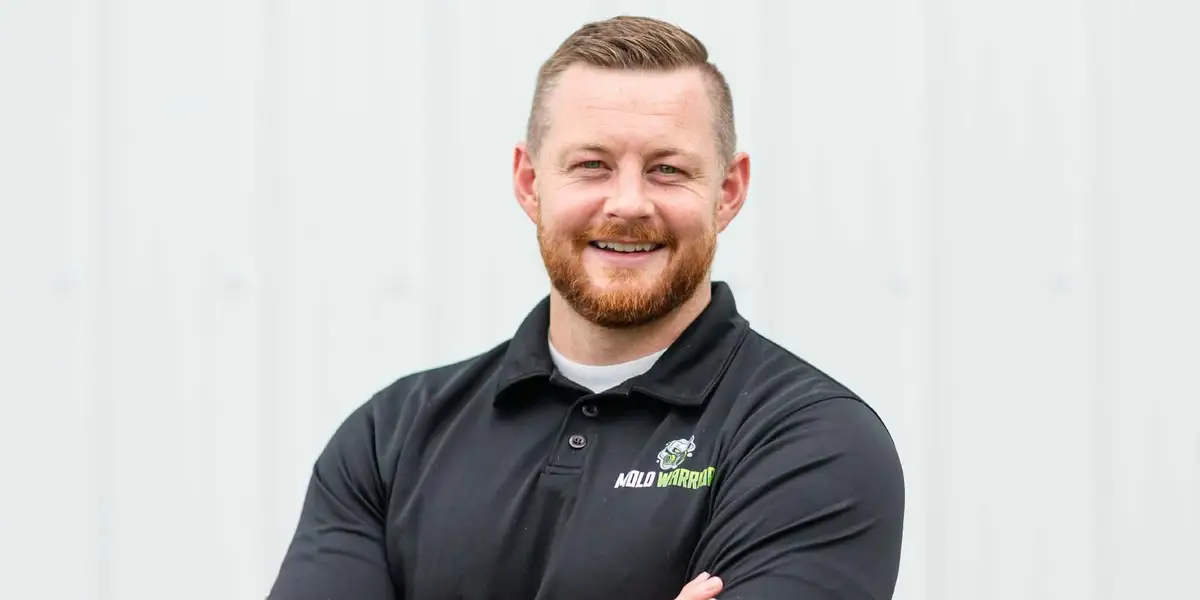
This as-told-to essay is based on a conversation with Sean Owen, 37, a Michigan-based former supply chain professional who now co-owns a mold remediation company. It’s been edited for length and clarity.
I had a corporate career at large companies like Whirlpool and SpaceX. Then, a mold remediation side hustle grew from a little business I ran with a friend in his garage to a company operating in six different markets.
I found that entrepreneurship in the blue-collar industry not only paid more, but I also preferred the lifestyle.
I started my career in supply chain after college
I graduated from Brigham Young University in 2019 and got into supply chain early on. I joined Whirlpool right out of college, and was based in Southern Michigan in their global supply chain leadership development program for three years. I enjoyed it.
In 2023, I began working for SpaceX, at the Starbase location in southern Texas. There was so much going on at the company, and the job itself was very exciting and fulfilling. I loved it.
Courtesy of Sean Owen
The hours, however, were crazy; on a good day, I was getting home at 8 p.m. I also didn’t have the best boss. Also, we lived just eight minutes from the border of Mexico, and soon after arriving there, we heard a news story about a car of Americans who crossed over the border and were kidnapped. With having a wife and kids, it didn’t feel like the ideal location to raise a family.
Due to those three factors, I realized the job wasn’t what I wanted. Later that year, we moved back to Michigan, where a former coworker of mine from Whirlpool helped me get a job with his new employer, Colson.
I partnered with my former coworker on a mold remediation company
One day, my old coworker and I went out to lunch, and I complimented his Ford F-150 and told him I’d always wanted one.
That conversation opened the door to a discussion about me helping him with his mold remediation business he’d started earlier that year called Mold Warrior. He’d found success working on it on the side during nights and weekends to make some extra money.
We continued to discuss the possibility of partnering on the business, and about a month later, in January 2024, we decided to officially do so. I didn’t have any experience with mold remediation, but I’m a handy guy, and I took a training course to get up to speed.
At first, we didn’t have formal roles; we decided to figure out the business together and became close friends through the process.
We kept it as a side hustle for a while and only did a handful of mold removal jobs. Then, we hired and trained a technician to help us, so we could continue our full-time jobs while handling logistics outside our regular working hours. We spent most of our time answering phones, doing inspections, building out quotes, communicating with clients, and branding the company.
We’d spend about 20 to 30 hours a week on Mold Warrior, switching off doing inspections at night so we’d each only be away from our families two to three nights a week.
We weren’t about to go all in until we knew we could support our families. We had goals to reach a consistent revenue target for a few months in a row before we would leave our full-time jobs. Getting two large water damage jobs helped us put a safety net in our bank accounts that made going all-in feel safer.
I didn’t leave my 9-to-5 until May 2025
My wife was very supportive, especially once I started sharing the revenue numbers with her and she saw that my take-home pay would be more than I’d made at my full-time job.
Before that, she just saw me talking on the phone with my friend at all hours of the day and would sometimes be kind of annoyed. Once she saw the business was legitimate, though, I was probably more nervous about jumping into it than she was. She was excited I was going to be home more often and would have more freedom.
My parents and siblings never gave me a hard time or questioned my decisions. Behind the scenes, they were probably thinking, “What is he doing?” but they never voiced that.
Our work experience has helped us find success
Today, I run the Michigan market. My friend runs the Columbus market, where he moved in 2024, and we have four franchises throughout the country.
I’ve been working in the field three to four days a week, doing inspections one day a week, and then having a lighter day of admin work where I catch up on emails. Right now, most of our jobs are residential, but we’ve had a handful of commercial projects.
We have four full-time employees: a customer service rep, a technician in Ohio, and two technicians in Michigan, where we’re looking to hire a third to keep up with demand.
We also have four part-time employees who work for us on an as-needed basis and hire high schoolers to help out part-time during the summer.
Our corporate backgrounds have translated nicely into putting forth a professional face in the blue-collar industry. A lot of our customers are affluent, so having experience presenting to high-level leaders has helped us a lot in communicating with CEOs and other professionals.
Courtesy of Sean Owen/Mold Warrior
There’s nothing I miss about the corporate environment
Now, I don’t have to worry about things like how I’m wording an email. There’s no office politics. I don’t have to deal with a manager because I am the manager. I don’t have to please anyone but my customers.
I do miss the excitement of working at Starbase around their Starship test flights. I keep up to date on SpaceX and have watched each of the test flights since leaving. While I’m watching, I miss working there, but then I remember how much work it was and how late I’d get home, and I snap out of it quickly.
Sometimes I feel that people treat me differently now that I work in a blue-collar industry, but I don’t care. If anything, it motivates me to keep dialing in my business so I can work less and make more money.
I get to make my own schedule, and I can work as much, or as little, as I want. I’m proud of the freedom I’ve created, which allows me to be with my family and help out my wife more with our four young kids. The goal is to make myself irrelevant — to keep growing it and creating a sellable company.
Do you have a story to share about pivoting from a corporate job to a blue-collar job? Contact this editor, Jane Zhang, at janezhang@businessinsider.com.