



ON November 14, SpaceX spectacularly demonstrated the return of the Starship spacecraft back to the landing site. The 70-metre Super Heavy booster, powered by 33 methane-fuelled engines, was to return to the launch tower and be caught by its mechanical arms, nicknamed chopsticks. It failed during the return manoeuvre and was lost. But the upper stage, the Starship spacecraft itself, completed its journey, re-entered the atmosphere and was stunningly caught by the tower’s giant arms.
Starship is a two-stage vehicle, with both stages designed for recovery and reuse. Had the booster also been caught, almost the entire launch vehicle would have been recovered for the first time.
But behind the televised spectacle is a serious question. Can rockets, like aircraft, be designed to fly again and again? And if so, does this reuse truly tip the economic scales in our favour? The concept of a reusable spacecraft is not new. The US Space Shuttle, which started flying in 1981, was a reusable spacecraft. The Soviets’ space shuttle, Buran, did an uncrewed orbital flight and an automated runway landing in November 1988. But these were reusable spacecraft rather than fully reusable launch vehicles since the rockets were use-and-throw.
Rather than recover the spacecraft, SpaceX’s Falcon has been focussed on recovering the first stage. The first successful vertical landing of a first stage happened in December 2015, with the first reflight of a recovered first stage occurring in March 2017.
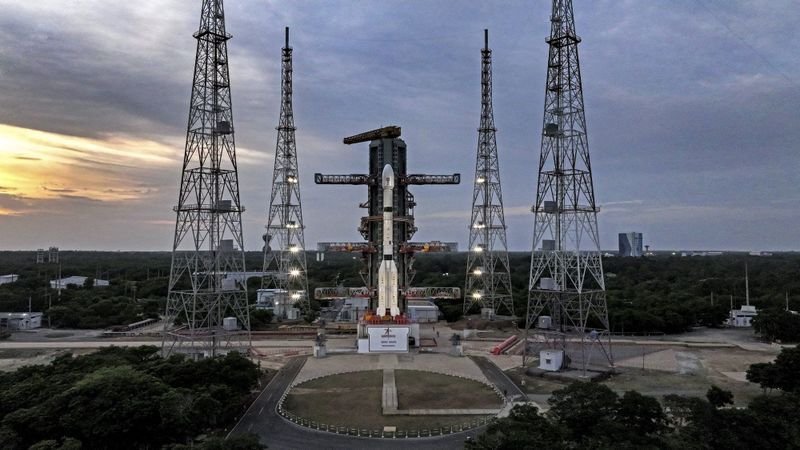
Where is ISRO in the reuse tech? The Polar Satellite Launch Vehicle (PSLV) and Launch Vehicle Mark-3 (LVM3), ISRO’s workhorses, burn solid fuel in their first stages; a one-way ticket, once lit, with no throttle and no return. They were never meant to be recovered. Reworking them for reuse would be unwieldy. Instead, ISRO is drawing a new blueprint: the Next Generation Launch Vehicle (NGLV), where reusability is woven in from the first line. Its first stage will sip controllable liquid methane, pirouette after separation, steer itself with grid fins, sprout landing legs and fire its engines for a gentle, upright touchdown.
There are no free lunches. Every kilogram of propellant and hardware needed to bring the rocket back is a kilogram taken off the payload. A 2025 study of the Starship vehicle showed that full reusability takes the payload to low Earth orbit (LEO) from 132 tonnes down to 59 (a 55% haircut). The NGLV is subject to the same maths. If you recover the first stage, you lift 14 tonnes. If you use a fully expendable configuration, you can lift 30 tonnes to LEO. The savings on the boosters are real, but so is the cost in terms of payload. Fewer satellites per flight, a much higher price per kg, and a very delicate balance between what you want to achieve and what you can afford.
Geography too has its own set of equations. If you are launching rockets out over the empty Atlantic Ocean from Florida, then you can go straight east. From Sriharikota you have to launch through a series of islands and landmasses. As former ISRO chairman S Somanath has pointed out, a Starship-type two-stage return is not a viable option for launch from Sriharikota. The stages would either have to go all the way around the inhabited land or burn a huge amount of fuel to come back. NGLV is a different kind of compromise, born of the realities of our coastline. It is a three-stage vehicle, but only the first stage comes back. The other two stages are just spent in the climb.
ISRO has another trick up its sleeve — Pushpak, a winged space plane, the Reusable Launch Vehicle (RLV). It is the upper stage and, after having placed the payloads in orbit, uses its wings to glide back to a runway and land like an aircraft.
Between 2023 and 2024, Pushpak completed three such helicopter drop-landings, each time landing with greater confidence. These were all dress rehearsals. The real test will come when Pushpak returns from orbit, punches through the fiery re-entry, and then attempts to land on a runway.
But catching a rocket is just the beginning. True reusability is about pit crew speed: inspect, refurbish, relaunch again and again. The more often a stage flies, the lower the cost per kg. If you are not flying frequently, the economics do not make sense months after recovery. Replacing the old satellites and placing new ones for the Starlink configuration keeps the SpaceX launch pad busy. ISRO’s rhythm is different: far fewer launches, different payloads, a different market.
For us, a fully reusable rocket may not yet be the answer. Recovering just the first stage and letting the rest go may be the sweet spot: a compromise between cost, complexity and the cadence of Indian spaceflight.