









The International Cricket Council is considering a broader role in regulating T20 franchise leagues, with proposals that could affect player limits, sponsorship, anti-corruption arrangements and the approval process for competitions.
The recommendations were prepared by an ICC franchise-leagues review group formed in July. Cricket board chiefs and chief executives are due to discuss them at a quarterly ICC meeting in Bali this weekend. They have not yet been approved, but if adopted they could significantly reshape the franchise-league landscape.
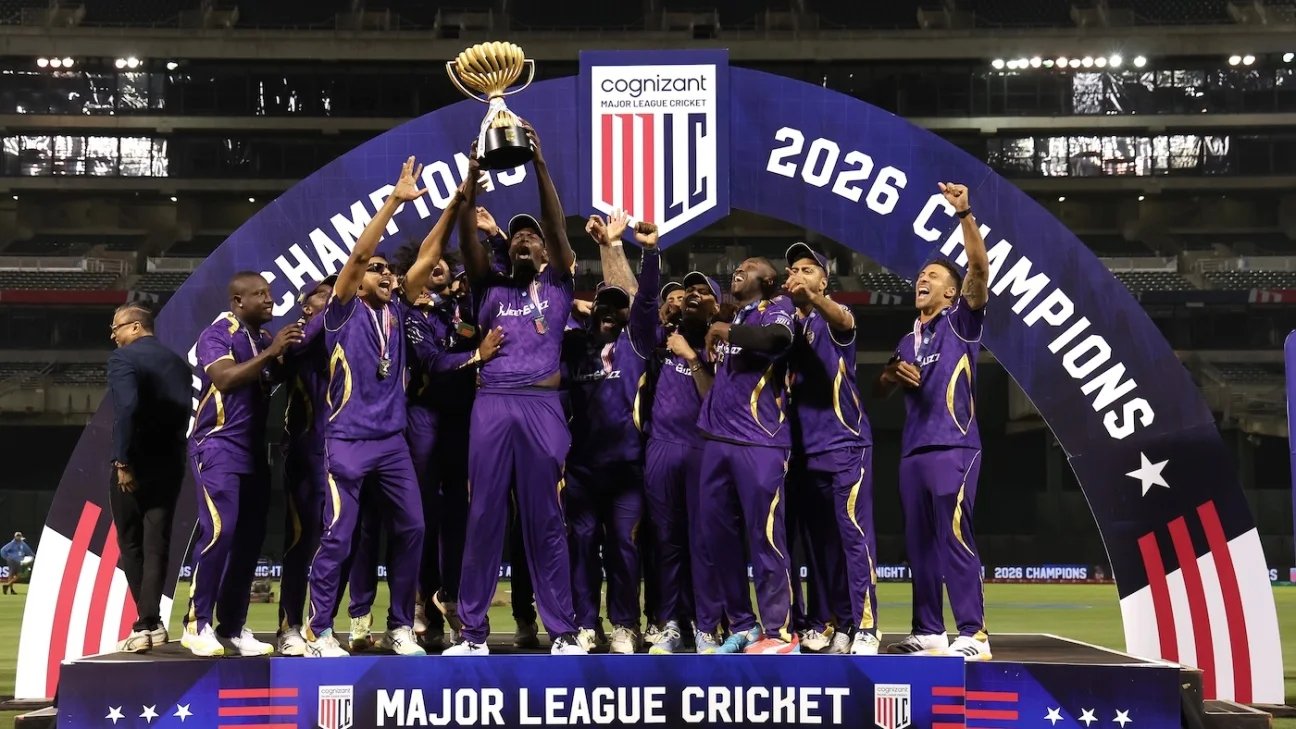
The most immediate effect could be on the UAE’s ILT20 and the United States’ Major League Cricket (MLC), both of which rely heavily on overseas players. The review group recommends ensuring existing leagues comply with current limits on overseas players in a playing XI. Under the rules, that would mean a maximum of four overseas players.
The ILT20 currently permits up to nine overseas players in an XI, including at least one from an ICC Associate Member. MLC allows up to six. Both leagues received exemptions when the ICC set its capping limits in 2023. If those exemptions were removed, the leagues would have to build teams around more locally qualified players, potentially affecting their commercial appeal and the opportunities available to overseas cricketers.
An official from one of the leagues described the proposal as “very concerning” and questioned whether the competition could operate with a four-player overseas limit. The official said the league had previously understood it would be protected by a grandfather clause for existing competitions.
The proposals could also have implications for leagues with substantial links to Indian franchise ownership. Five of the six ILT20 teams have owners also involved in the IPL or WPL, while four MLC teams are connected to IPL ownership groups.
The review group, led by Bangladesh Cricket Board president Tamim Iqbal, includes England and Wales Cricket Board chief executive Richard Gould, Cricket Australia chief executive Todd Greenberg and BCCI secretary Devajit Saikia. The group says it sought external legal advice on potential regulatory changes, particularly those affecting the ILT20 and MLC. According to its paper, the advice indicated that member boards would not have a strong legal basis to challenge the changes.
A wider aim of the recommendations is to give the ICC more oversight of how domestic franchise leagues are approved. Under the current system, a Full Member board sanctions leagues in its own territory—for example, the BCCI sanctions the IPL—and the ICC does not have the authority to intervene in that process. The review group proposes allowing the ICC to examine a Full Member’s decision and, if the board has not met its obligations, take over the sanctioning process. That could include rejecting an application or withdrawing an approval already granted.
The ICC could also intervene if it became aware of serious integrity concerns before a league begins or while it is operating. The review group says current regulations do not set out detailed conditions that domestic competitions must meet, resulting in different standards across member countries. It recommends a more consistent framework, including greater scrutiny of a league’s funding, player-payment protections and integrity safeguards.
Anti-corruption oversight is another central part of the proposals. A league would be sanctioned only if it used the ICC’s Anti-Corruption Unit or another integrity body approved by the ICC. For competitions judged to pose a high corruption risk, the ICC unit could be engaged at the organisers’ expense, on a not-for-profit basis. If adequate measures to reduce the risk could not be put in place, the application would be rejected.
The recommendations follow concerns that corruption approaches are increasingly being reported across franchise cricket. ICC anti-corruption chief Andy Ephgrave has said the unit is receiving more reports of approaches to players on the league circuit than in international cricket.
The review group also proposes restricting sponsorship by betting companies, including companies that act as surrogates for betting businesses. Such restrictions could affect SA20, which has a betting company as a sponsor, as well as smaller leagues where betting-related sponsorship is common. The paper argues that such deals can expose host boards to the risk of enabling illegal betting in countries where gambling is prohibited or unregulated, while also raising ethical and governance concerns.
Another recommendation is to charge a fee for ICC sanction of a league. An application would not be considered until the fee was paid. The money could help cover external due-diligence checks or corruption investigations.
Several related issues have been referred for further discussion by the chief executives’ committee. One is whether solidarity payments—fees paid by a league’s host board to the board from which an overseas player comes—should be standardised. The payments recognise the role of a player’s home board in identifying and developing talent. Current rules make them a condition of ICC sanction, but leave the amount to negotiation between boards, which can lead to disputes, including a recent stand-off between the Pakistan Cricket Board and the Abu Dhabi T10.
The review group has also raised concerns about legends leagues, which can blur the distinction between active and retired players. It says these competitions create significant integrity risks and has asked for guidance on whether they should fall under the ICC’s sanctioning system, and how to treat players who participate in them before returning to approved cricket.
A further question is whether to limit the number of leagues an ICC member can host. The paper says such a restriction could help preserve international cricket’s role in developing and promoting the sport. The discussion may have implications for the UAE, which hosts multiple competitions.
The chief executives’ committee is expected to consider the recommendations and, where appropriate, refer them to the ICC board for approval.