








Plenty of founders will tell you the hardest stretch isn’t the start, but the middle. The product works, the model holds and customers are paying, but the company needs real capital to become an operating business, and the market doesn’t reliably supply it.
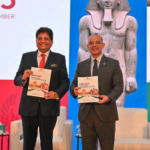
Egypt’s government has now put several proposals on the table for that stage. The latest came this week. After the B20 Summit in Washington, Planning and Economic Development Minister Ahmed Rostom met Bobby Franklin, president and CEO of the US National Venture Capital Association, and Brad Fierstein of Apollo Infrastructure Group, according to a report in Daily News Egypt dated November 14.
He told them about a dedicated fund for startups and invited US funds and institutions to invest in vehicles that target Egyptian companies.
Rostom’s Washington pitch wasn’t the first. At the end of June, Investment and Foreign Trade Minister Mohamed Farid told the annual investors meeting of Development Partners International, an Africa-focused private equity firm with more than $3.5 billion in assets and co-investments, that the Sovereign Fund of Egypt was studying a new mechanism for late-stage startups. It aims to close the funding gap at the growth and expansion stages.
Around October 25, a government statement reported by Arab Finance and Zawya said Rostom’s ministry would set up a joint investment fund for companies at different growth stages, together with the National Investment Bank through its subsidiary NI Capital, and development partners.
The same report refers to a wider goal of 5,000 startups and a financing initiative meant to mobilise $1 billion over five years. It doesn’t say whether that $1 billion is tied to this fund, and it gives no size or setup date.
Neither the October reports nor the Washington report links the two funds. The October coverage doesn’t mention Qimam, and the Washington coverage doesn’t mention NI Capital. Whether they’re the same vehicle is a question for the ministry.
The gap they’re aiming at
Egypt’s Planning Ministry says startups raised about $614 million in 2025, up 51% on 2024, in direct investment and debt financing. Magnitt data cited in the same statement puts $304 million of that in 69 venture capital deals. The ministry’s statement doesn’t break down the rest.
Africa: The Big Deal, which tracks the continent on its own definitions, puts Egypt’s 2025 debt funding at $278 million, close to half the ministry’s total by my arithmetic.
It also shows Kenya ahead of Egypt for the year, at about $984 million against Egypt’s Sh79.2 billion, roughly $618 million at the implied rate. The two trackers count differently, so treat the comparison loosely.
A report year-end review found that funding in the second half of 2025 was concentrated in a few large deals.
Only four startups raised between $50 million and $100 million, while 23 raised between $100,000 and $500,000.
The spread shows how uneven the market is. The review doesn’t break out the bands in between, so how thin the middle really is remains my inference.
Rostom described the target as the point where startups move from product development and business model testing to commercial expansion and entry into regional and international markets.
What Rostom proposed
The initiative has two parts. One is a dedicated financing fund for startups and entrepreneurs, linked to Qimam, the ministry’s programme for high-growth companies.
The other is an invitation to international venture funds and institutions to invest in funds that target Egyptian startups.
Rostom said financing alone isn’t enough. Companies also need investment-readiness support, stronger management and corporate governance standards to reach international investor networks.
In my reading, that means the fund is meant to pair money with preparation, so firms can take international capital when it arrives.
Daily News Egypt gives no fund size, no launch date and no outcome from the meetings. Farid’s remarks, as Zawya reports them, include neither a size nor a timeline for the Sovereign Fund’s mechanism.
Why the state is stepping in
Egypt’s government is unusually active in early-stage deals. Launch Base Africa counted at least seven disclosed state-linked early-stage investments in Egypt in 2025, against none in Kenya and one in Nigeria.
The Nigerian deal was a stake in a venture fund, not a direct startup investment, and the count covers only disclosed deals. It’s a useful comparison but a narrow one.
That makes the Washington trip look like an attempt to bring in outside capital alongside state money. That reading is mine. Neither minister has said so.
Currency risk is part of the backdrop. TechCabal reports that founders faced sharp currency swings in 2025 and that investors pulled back from early-stage bets. It describes the government’s financing push as a response to that.
What it means beyond Egypt
The mid-stage squeeze is commonly cited across African venture markets, so a model that works in Cairo would be watched well outside Egypt.
The key is recruiting foreign venture investors into a vehicle built around Egyptian deal flow. If it works, it offers other African governments a template for competing for global capital at the fund level.
Egypt has announced financing initiatives before, and the questions now are practical questions: how big the fund will be, who will manage it, which of the three announcements it belongs to, and whether any money has moved. Until there are answers, the proposals are intentions.
Don’t miss important articles during the week. Subscribe to techbuild weekly digest for updates